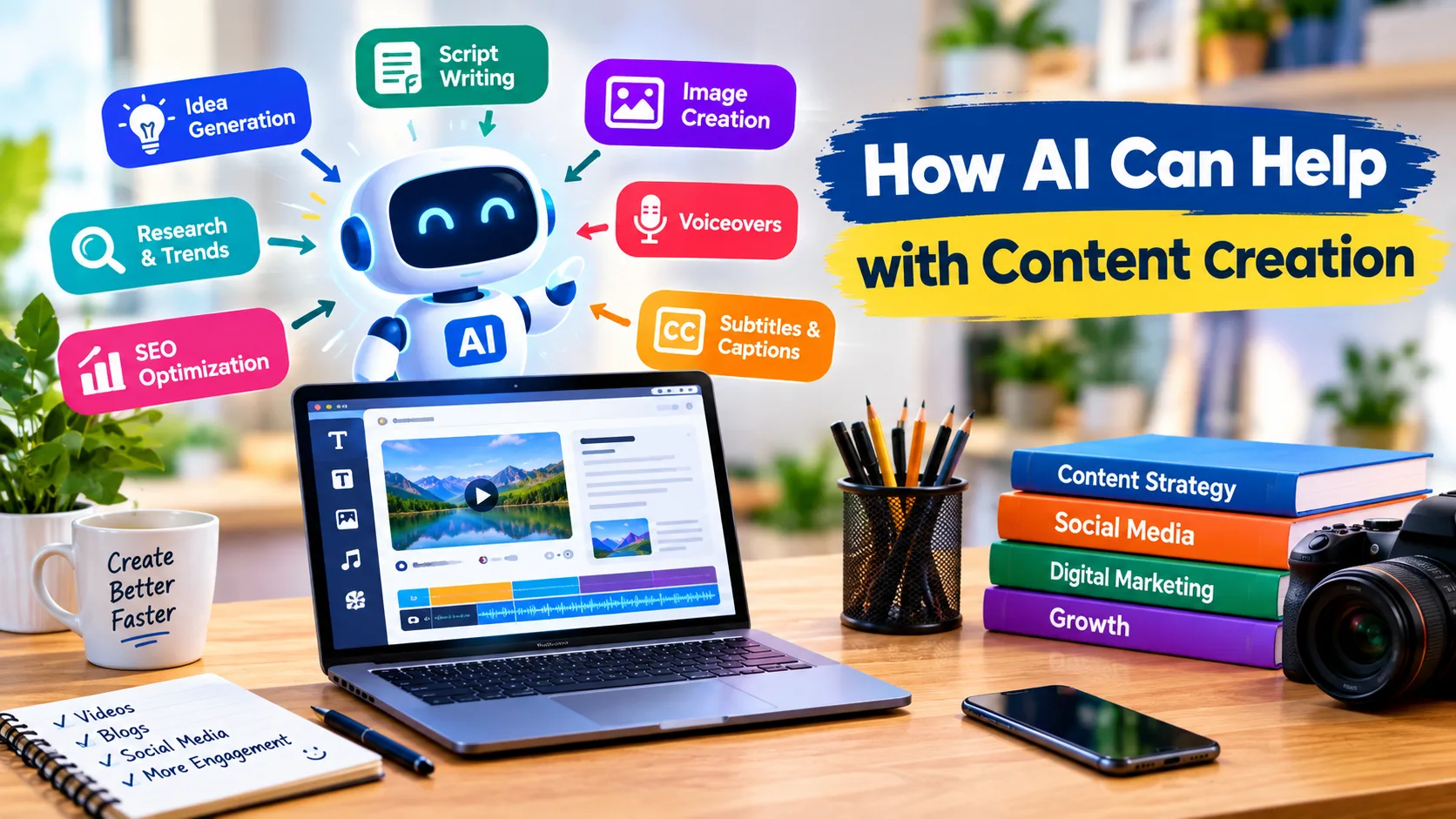
1.What is AI Content Creation
AI content creation can support many parts of the process. It can give suggestions, organize information, and turn a simple idea into useful content.
Generate Content Ideas
Finding fresh ideas can be difficult when you need to publish often. AI can suggest blog topics, social media posts, video ideas, email topics, and questions that customers may ask. Give AI your industry, audience, and topic, and it can create ideas to explore. This saves time.
AI content creation can help writers find fresh topics when they need new ideas.
Understand Your Audience
Good content should answer the right people's questions. AI can help organize common customer questions, interests, problems, and search topics. For example, a fitness business can use AI for workout or healthy habit topics. A human should still check whether the ideas fit the real audience and business goals.
Create Better Content Briefs
Before writing, a content brief can make the work more organized. AI can create an outline with a title, key points, headings, and questions. This gives the writer a clear path before starting. A good brief can also reduce missed points and make the final article easier to read.
AI content creation also makes it easier to organize ideas before writing.
2. Use AI for Writing and First Drafts
AI can help turn ideas into a first draft. It can create basic paragraphs, introductions, product descriptions, email drafts, and social posts. The first AI draft should not be published as it is. Human editing is needed to make it useful and natural.
Start With a Simple Draft
When a topic is clear, AI can create a starting draft in a short time. You can provide the audience, tone, length, and main points. The result gives you something to improve instead of starting from a blank page. This is especially useful for routine content that follows a clear structure.
Improve Tone and Clarity
Different audiences need different styles. AI can rewrite a paragraph in different tones. It can also make long sentences shorter and difficult words easier to understand.
With AI content creation, writers can make difficult content simpler and easier to read.
Create Different Content Types
One idea can become many types of content. AI content creation can turn a blog topic into an email, social media caption, short video script, or website section. This makes writing more flexible. However, each version should be checked so it feels natural on the platform where it will be used.
AI also shows AI content creation by making the writing process faster and easier.
3. Improve Content With AI Editing
Writing the first draft is only one part of content work. Editing helps remove mistakes and makes the message clearer. AI can act as a useful editing assistant, but the final decision should remain with the writer.
Fix Grammar and Spelling
Small grammar and spelling mistakes can reduce trust. AI can check sentences, word choices, and punctuation. Writers can use these suggestions to make content cleaner without changing the main message.
Make Content Easier to Read
Readers often leave content when it is hard to understand. AI can find long sentences, repeated words, and unclear sections. It can suggest shorter sentences, simple words, and better paragraph breaks. Still, a human should read the final version because a tool may change the meaning by mistake.
Check Structure and Flow
A useful article should move clearly from one idea to the next. AI can review headings, paragraphs, and transitions and suggest where information could be moved or added. This can improve readability. The writer should decide which suggestions actually make sense for the topic.
4. Plan a Consistent Content Strategy
Publishing useful content regularly is easier when there is a clear plan. AI can help organize topics and create a content calendar. It can also suggest a mix of content for different stages of the customer journey. The plan should follow business goals and audience needs.
Build a Content Calendar
AI can suggest a content calendar based on your goals. For example, a small business may plan blogs, social posts, emails, and videos for one month. The calendar shows what to create and when to publish. People should review the plan.
AI content creation can support a regular publishing schedule by helping plan content in advance.
Find Topic Gaps
A topic gap is an important question or subject that your current content does not cover well. AI can compare your existing topics with common questions and suggest areas to explore. This can help build a wider content library. Human research is still needed to confirm that each suggested topic is useful.
Match Content With Goals
Every piece of content should have a purpose. It may educate readers, answer questions, build trust, generate leads, or support sales. AI can connect topics with these goals. A human should make the final choice because business priorities can change and some topics may not fit the brand.
This is another way AI content creation while keeping the content plan clear and organized.
5. Repurpose Existing Content With AI
Creating every piece of content from the beginning can take a lot of time. Repurposing means using useful information from existing content in a new format. AI can make this process faster while helping keep the main message consistent.
Turn Articles Into Social Posts
A long blog post can provide several short social media posts. AI can identify key points, tips, facts, or questions and turn them into captions. A writer can add personal examples, brand language, or a stronger opening. This helps reach people who prefer short content.
Create Emails and Short Scripts
Existing content can also become an email newsletter, video script, podcast outline, or short presentation. AI can organize main points for each format. Adjust the wording for the audience and platform instead of copying the same text everywhere.
Update Old Content
Old articles may contain useful information but need fresh examples, clearer sections, or updated facts. AI can identify areas needing attention and suggest new wording. Before publishing, a person should check important facts and make sure the information is still accurate.
These simple uses show AI content creation without replacing the writer’s own ideas and judgment.
6. Keep Human Review in the Content Process
AI can often save time, but it does not understand every business or customer perfectly. Human review is important for quality, accuracy, and trust. AI-generated content should be treated as support, not as a final answer. It can reduce repetitive work, speed up drafting, and support more content formats.
Check Facts and Use AI for Repetitive Tasks
AI can sometimes provide incorrect, old, or incomplete information. Important facts should be checked against reliable sources. Dates, numbers, research, prices, and claims need attention. A human should verify information before it is shared with readers.
AI is useful for tasks that follow a pattern. It can create outlines, summarize notes, suggest titles, rewrite sentences, and prepare content versions. Saving time on these tasks gives writers more time to focus on research, ideas, strategy, and creative work.
Add Experience, Balance Speed With Quality
Real experience can make content more helpful. AI may provide general information, but it does not have your customer stories, business lessons, or unique examples. Add real details where appropriate. This can make the content feel more useful and less like a generic machine-written article.
Fast content is not always good content. Use AI to work faster, but keep quality as the goal. Review each piece for accuracy, usefulness, originality, and clear language before publishing.
Protect Brand Voice and Build a Better Workflow
A brand needs a clear and consistent voice. AI can follow a requested style, but it may still sound general. Human review keeps the right tone and message. It also gives the final content a personal touch that can build trust with readers.
The strongest workflow gives both humans and AI clear roles. A person can choose the topic, audience, goal, and message. AI can help with ideas, drafts, editing, and repurposing. Then the person reviews, improves, and approves it. This simple process can make content work faster without losing the human touch.
A good AI content creation workflow keeps human ideas and AI support working together.
Conclusion
Learning AI content creation can make content work faster and more organized. AI can support idea generation, writing, editing, planning, and repurposing, but it should not work alone. Human review is needed to check facts, improve quality, add real experience, and protect the brand voice. This approach keeps the process useful, clear, and human.
Frequently asked questions
How can AI help with content creation?
AI can help generate ideas, create drafts, improve writing, edit content, plan topics, and repurpose existing content into different formats.
Can AI write a complete article?
Yes, AI can create a complete first draft, but human review is important to check facts, improve quality, add real examples, and make the content sound natural.
Is AI-generated content good for SEO?
AI can help create SEO-friendly content, but good SEO also needs useful information, proper keyword use, original ideas, accurate facts, and a good user experience.
Can AI help repurpose existing content?
Yes. AI can turn a blog post into social media posts, email content, video scripts, captions, or other formats, saving time and effort.
Why is human review important when using AI?
Human review helps find incorrect information, improve the brand voice, add personal experience, and make sure the final content is accurate, useful, and easy to understand.