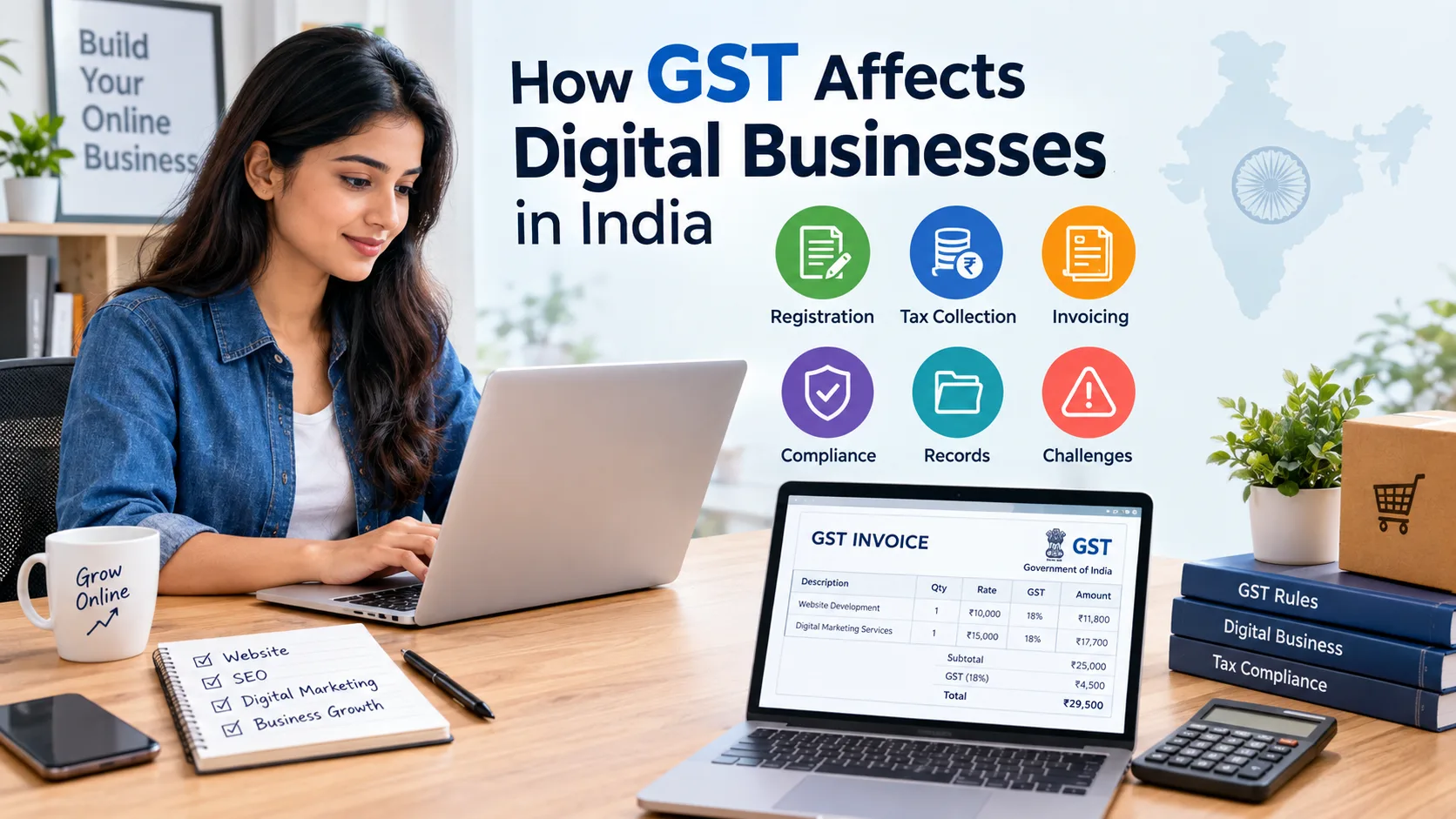
How GST Affects Digital Businesses in India
Digital businesses have changed the way people shop, work, learn, communicate, and use services. But running a business online also comes with tax responsibilities. How GST Affects Digital Businesses in India is an important topic for online sellers, software companies, digital agencies, app businesses, freelancers, and other service providers.
GST can affect business registration, customer billing, tax collection, invoices, record keeping, and regular compliance. The rules may seem complicated at first, but the basic ideas are easier to understand when explained step by step.
What Is GST for Digital Businesses?
GST is a tax charged on the sale of goods and services in India. For digital businesses, it can apply to activities such as online selling, software services, website development, digital marketing, and subscriptions. Businesses may need to manage
GST registration, tax collection, invoices, records, and compliance
depending on their business and applicable GST rules.
Understanding GST in Simple Words
GST stands for Goods and Services Tax. It is an indirect tax charged on the supply of goods and services in India.
For example, imagine a company that provides website development services. When the company makes a taxable supply, GST may need to be charged according to the applicable rules.
Similarly, an online store selling products, a software company selling subscriptions, or a digital agency providing marketing services may have GST responsibilities.
The exact requirement depends on factors such as the type of business, turnover, nature of supply, and other applicable GST provisions.
Why GST Matters Online
Digital businesses can have customers from different cities and states. Some businesses may also sell through e-commerce platforms or provide services to customers outside India.
Because of this, business owners need to understand:
GST registration
Applicable GST rates
Tax invoices
Tax collection
Input tax credit
GST records
Return filing
Place-of-supply rules
A business should always check the current GST rules that apply to its specific situation rather than relying on general information.
GST Registration for Digital Businesses
GST registration may be required for digital businesses depending on their turnover, business type, and applicable GST rules. Online sellers, service providers, and certain e-commerce businesses should check whether registration applies to them. Once registered, the business receives a GSTIN and must follow the relevant GST compliance requirements.
When Registration May Be Required
GST registration depends on the business's turnover, type of supply, location, and other conditions under GST law.
Certain businesses can have registration requirements even when they operate mainly online. Businesses selling through certain e-commerce operators may also be subject to specific GST provisions.
After successful registration, a business receives a GST Identification Number, commonly called a GSTIN.
The official CBIC GST registration rules explain the registration process and information required from taxpayers.
What Businesses Should Keep Ready
A business applying for GST registration may need information and documents related to its business and authorized persons.
It is useful to keep important information organized, such as:
PAN details
Business address
Bank details
Contact information
Business documents
Identity and address documents where required
Keeping these details ready can make the registration process easier.
A Simple Example
Suppose a small company starts selling software subscriptions online.
At first, the owner may focus mainly on developing the product and finding customers. As the business grows, GST registration and compliance may become important depending on the applicable rules.
This is why tax planning should be considered while building the business, rather than only after problems appear.
How GST Affects Digital Businesses in India: Tax Collection and Invoicing
GST can affect how digital businesses collect tax from customers and show it on invoices for taxable goods or services. Proper invoices should include relevant details such as GSTIN, taxable value, GST amount, invoice number, and date. Read More
How GST Appears on an Invoice
One of the most visible ways How GST Affects Digital Businesses in India can be understood is through customer billing.
When GST applies to a taxable supply, the business may need to show the applicable tax on the invoice.
For example, a digital marketing company may provide a service to a customer. The invoice can show the service value and applicable GST amount separately.
A proper tax invoice contains important details such as the supplier's GSTIN, invoice number, date, description of goods or services, taxable value, and tax amount, as applicable under the rules.
Why Accurate Invoices Matter
An invoice is more than just a payment request. It is an important business record.
A wrong GSTIN, incorrect tax amount, missing information, or duplicate invoice can create problems when records are checked later.
Digital businesses should therefore use reliable billing or accounting systems and review invoices regularly.
Automation Can Save Time
Online businesses can have many transactions every month. Creating every invoice manually can take a lot of time.
Accounting and billing software can help businesses organize invoices, payments, and tax information. However, software should not replace proper review. Business owners should still check whether the information being recorded is correct.
GST Compliance and Common Challenges
GST compliance means keeping proper records, managing invoices, tracking tax, and completing required filings on time. Digital businesses may face challenges such as changing rules, filing deadlines, invoice errors, and handling transactions across different states.
Maintaining Proper Records
GST compliance does not stop after registration.
Businesses may need to maintain records of sales, purchases, invoices, tax collected, eligible input tax credit, and other relevant information.
For example, a digital agency with 50 customers needs a clear system to track its invoices and payments. Without proper records, it can become difficult to understand how much tax has been collected or what information needs to be reported.
Common GST Challenges
Digital businesses may face challenges such as:
Understanding GST rules
Maintaining correct invoices
Tracking transactions
Managing filing deadlines
Checking input tax credit
Handling customers in different states
Understanding e-commerce-related requirements
Managing complex international transactions
The GST portal provides facilities for reporting outward supplies and related return information.
How TZAP Marketing Can Help Your Digital Growth
GST compliance itself should be handled according to applicable tax rules and, where needed, with advice from a qualified tax professional. But your digital business setup and online growth also need the right support.
TZAP Marketing can help businesses with digital solutions such as website development, SEO, digital marketing, and other online growth services. A well-built website and organized digital presence can make it easier for a business to present its services, connect with customers, and grow online.
If you are building a digital business and also want to improve your online presence, you can discuss your website, SEO, or digital marketing requirements with TZAP Marketing.
Conclusion
How GST Affects Digital Businesses in India depends on the business model, type of supply, turnover, customer location, and other applicable GST rules. For one business, GST may mainly involve registration and invoices. For another, it may involve more detailed compliance and record keeping.
The simple approach is to keep accurate records, issue correct invoices, monitor tax information, and complete applicable compliance work on time.
At the same time, digital businesses need a strong online presence to grow. A professional website, SEO, useful content, and digital marketing can help a business reach more people and build trust.
If you are planning to start or grow a digital business, TZAP Marketing can support you with website development, SEO, digital marketing, AI solutions, and other digital growth services. The goal is simple: build a useful digital presence that supports your business as it grows.
Frequently asked questions
Do all digital businesses need GST registration?
No. GST registration depends on factors such as turnover, business activity, type of supply, location, and other applicable GST provisions.
Does an online business need to issue a GST invoice?
A registered business making taxable supplies generally needs to issue invoices according to the applicable GST rules. CBIC provides specific invoice requirements.
Can GST apply to digital services?
Yes. GST can apply to taxable digital services, but the exact treatment depends on the nature of the service and the applicable rules.
Why is GST record keeping important?
Good records help a business track sales, purchases, invoices, tax information, and compliance requirements. They also make it easier to find and correct mistakes.
Does selling through an e-commerce platform change GST requirements?
It can. Certain e-commerce transactions can have specific GST provisions. Businesses should check the rules that apply to their particular business model.
Can GST rules change?
Yes. GST rules, procedures, rates, and compliance requirements can change. Businesses should check current official information before making important tax decisions.