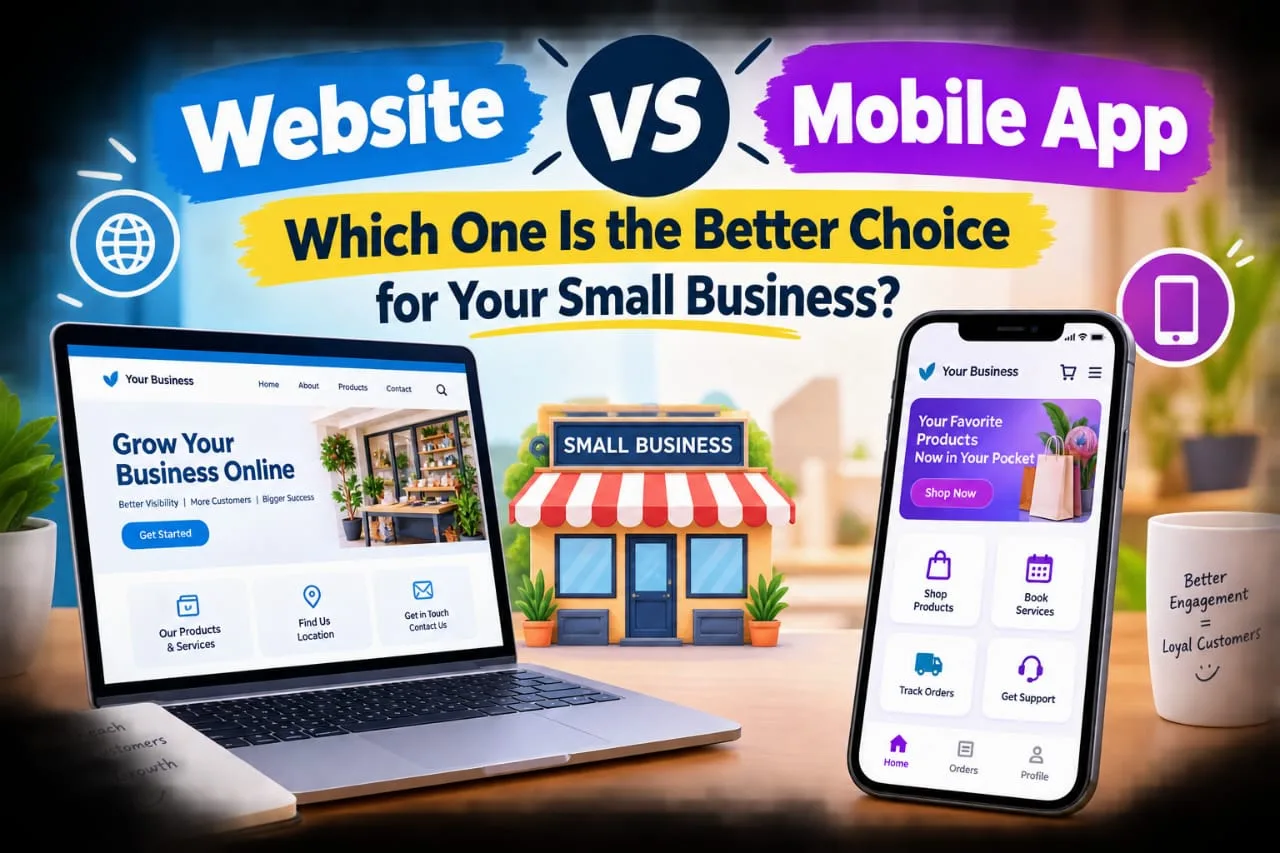
Today, almost every small business wants to be easy to find online. Customers often search on Google before buying a product or using a service. Because of this, many business owners ask an important question: Should I build a website or a mobile app?
Both options can help a business, but they are useful in different situations. A website is usually a good starting point for businesses that want online visibility and easy customer access. A mobile app can be more useful when customers need to use the business regularly.
This guide explains the main differences between a website and a mobile app, including cost, customer reach, use case, maintenance, target audience, and business needs.
Website for a Small Business
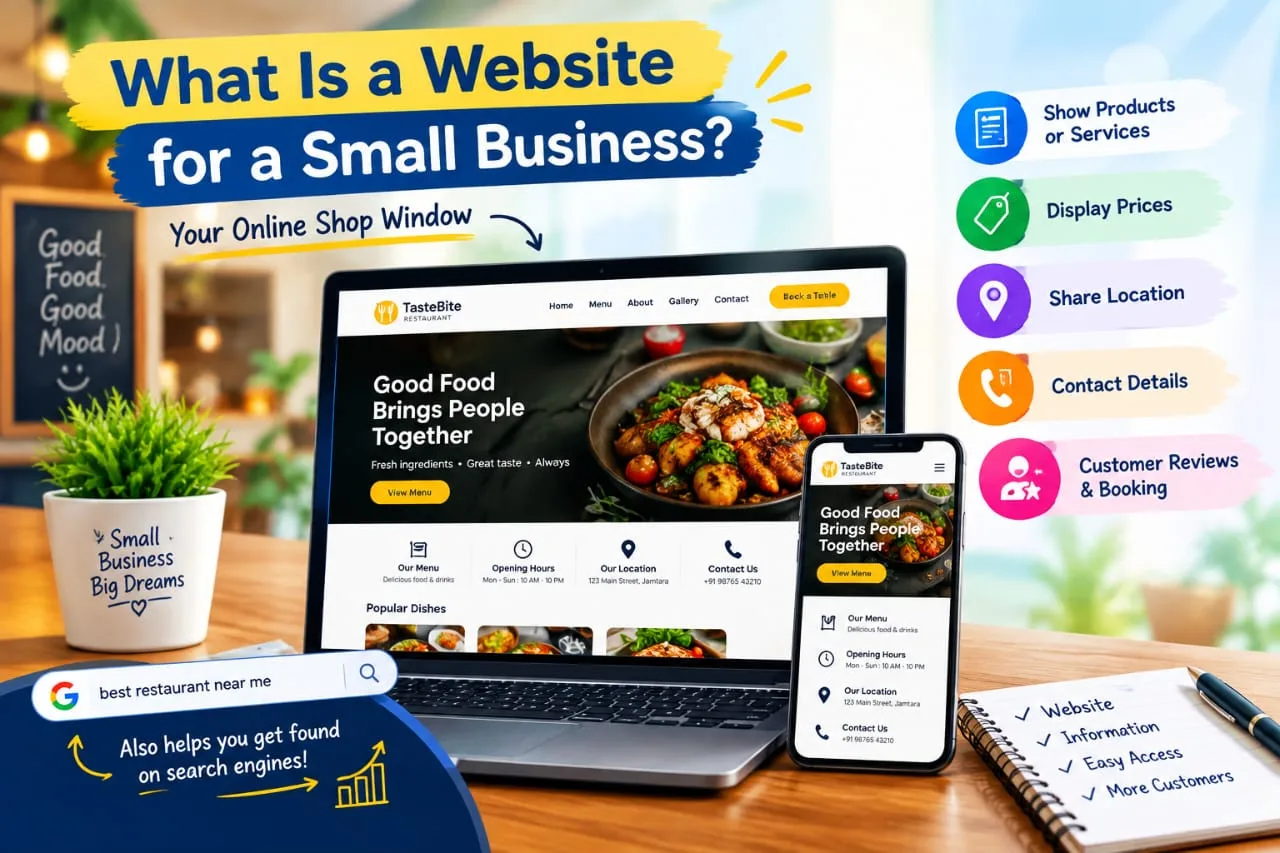
A business website is an online place where customers can learn about a company, its products, services, prices, location, and contact details.
For example, a local restaurant can use a website to show its menu, opening hours, location, and contact information. A service business can show its services and allow customers to contact the business.
One major benefit of a website is that customers can open it directly through a browser. They usually do not need to install anything.
A website can also help a business appear in search engines when it has useful and relevant content.
Mobile App for a Small Business
A mobile app is software made for smartphones and tablets. Customers normally download the app and use it for specific business activities.
For example, an online store may use an app for shopping, order tracking, offers, and customer accounts.
Apps can provide features such as notifications, saved accounts, loyalty programs, and faster access to frequently used services.
However, an app normally needs more development work than a basic website. The business also needs to think about updates, testing, security, and support.
Website vs Mobile App: The Main Difference
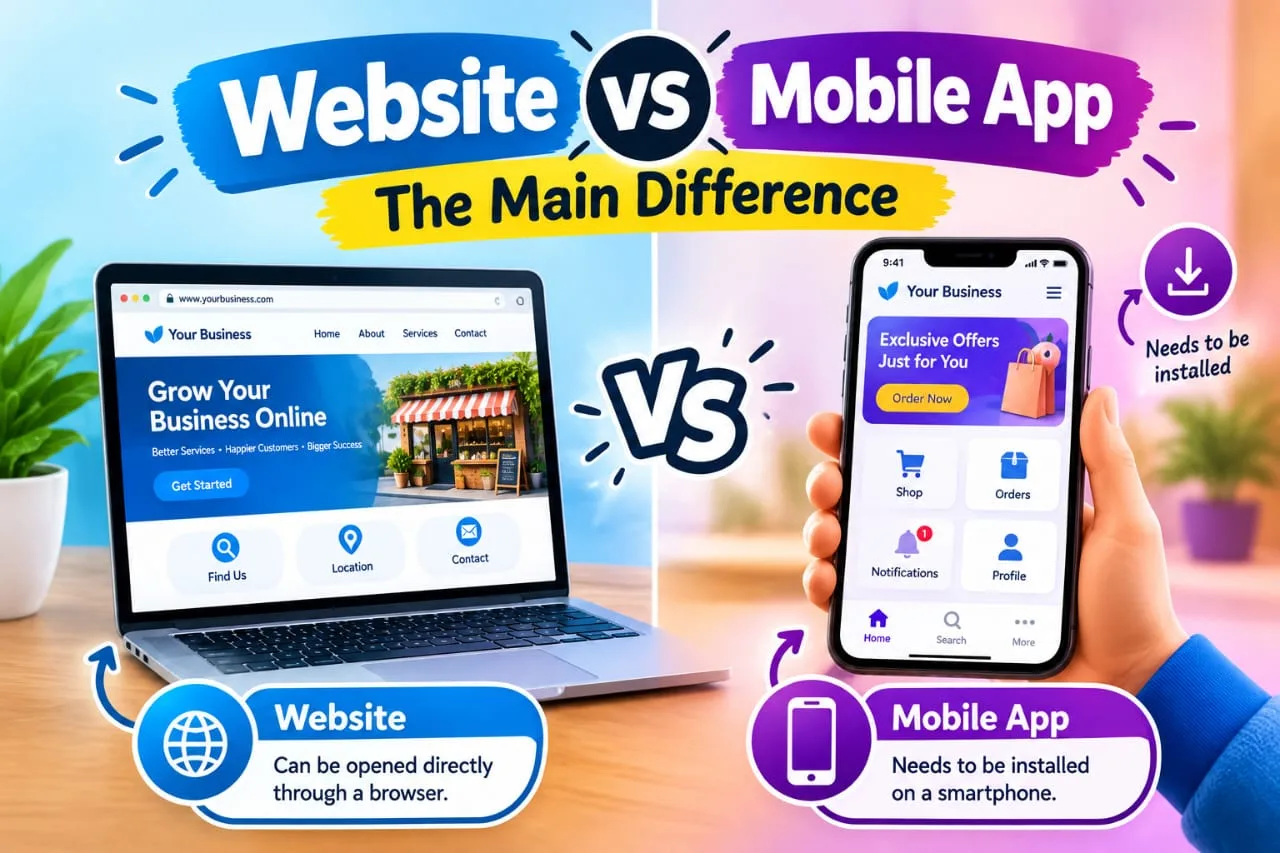
The main difference is how customers access and use them.
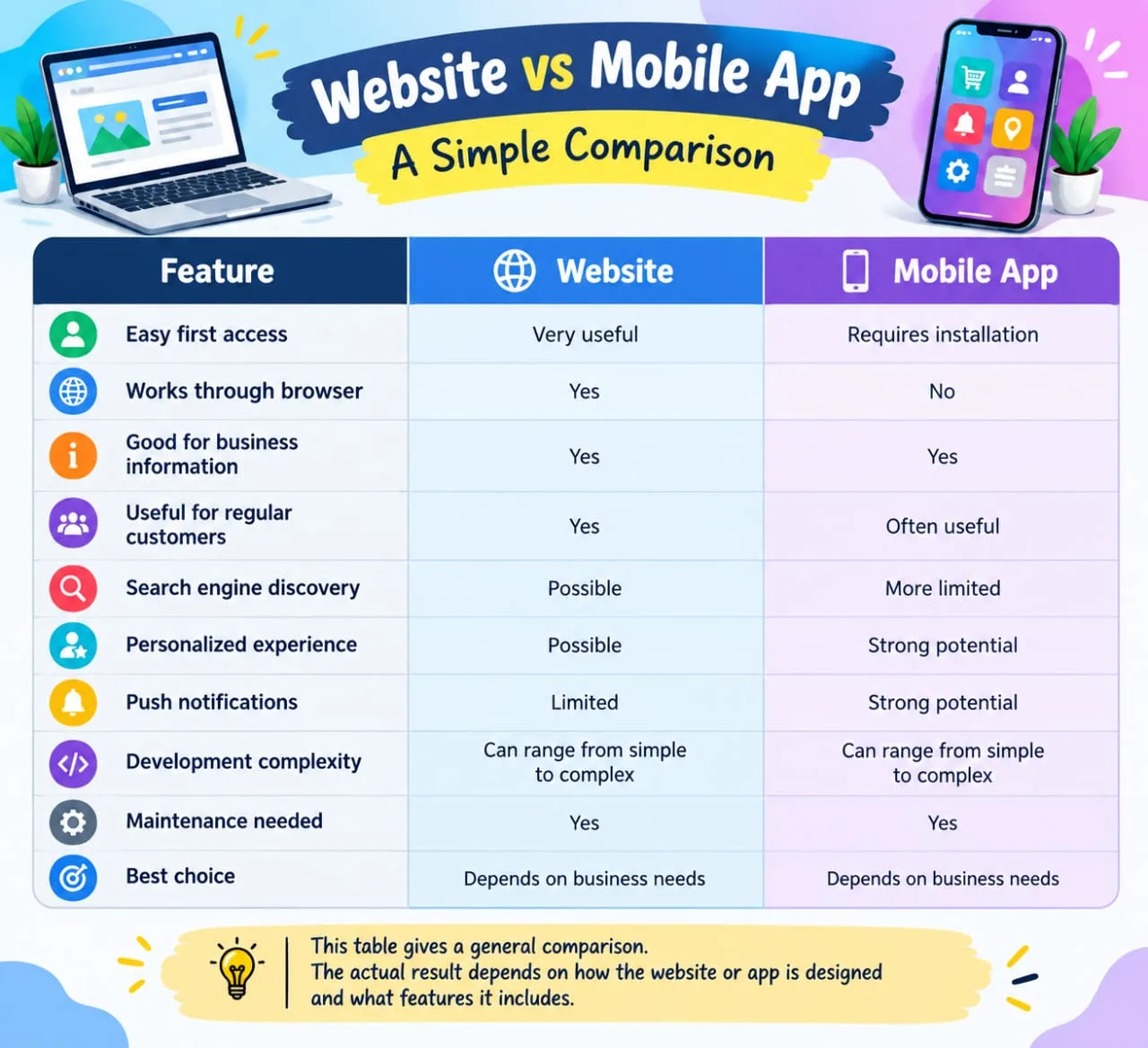
A website works through a web browser and can be opened from different devices. A mobile app is installed on a smartphone and is designed mainly for regular app users.
A website is often better for information, search visibility, and reaching new customers.
An app can be better for regular customers, personalized services, notifications, and repeated use.
This does not mean that one option is always better. The right choice depends on the business.
Website vs Mobile App for Customer Reach
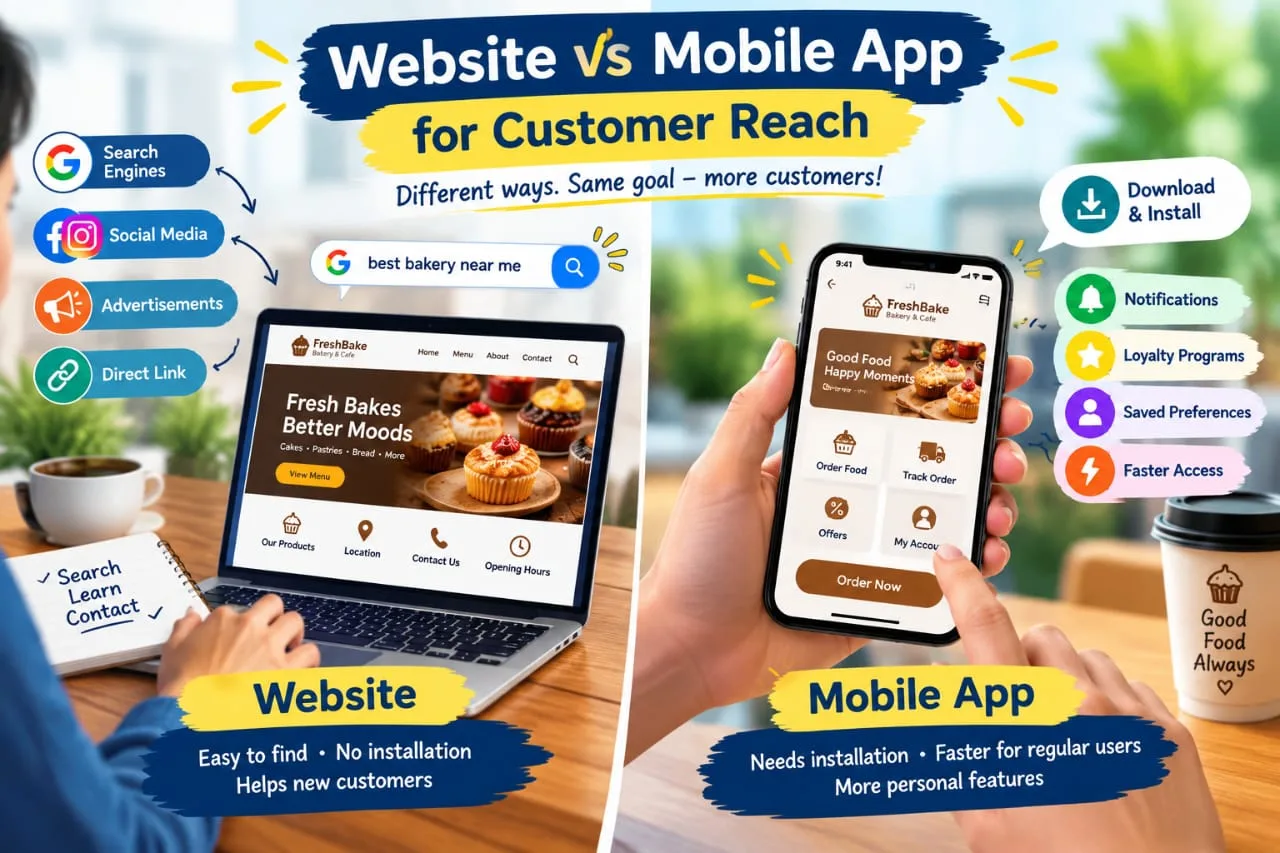
For many small businesses, reaching new customers is important. A website can be useful because people can find it through search engines, social media, advertisements, or a direct link.
For example, imagine a customer searches for “best bakery near me.” A bakery with a useful website may provide information about its products, location, and contact details.
A mobile app works differently. Customers normally need to know about the app and install it before using it. This can make an app less suitable as the first online step for some small businesses.
For businesses that already have many regular customers, an app can become more useful.
Easier for Customers
A website is generally simple to access. Customers can click a link and open it in their browser.
They do not always need to download an app or create an account.
An app can provide a smoother experience for customers who use the service frequently. Once installed, customers can open the app directly from their phone.
For example, a customer who orders from the same online store every week may find an app convenient.
So, the question is not only “Which is easier?” but also “How often will customers use it?”
Website vs Mobile App: Cost
Cost is an important factor for a small business.
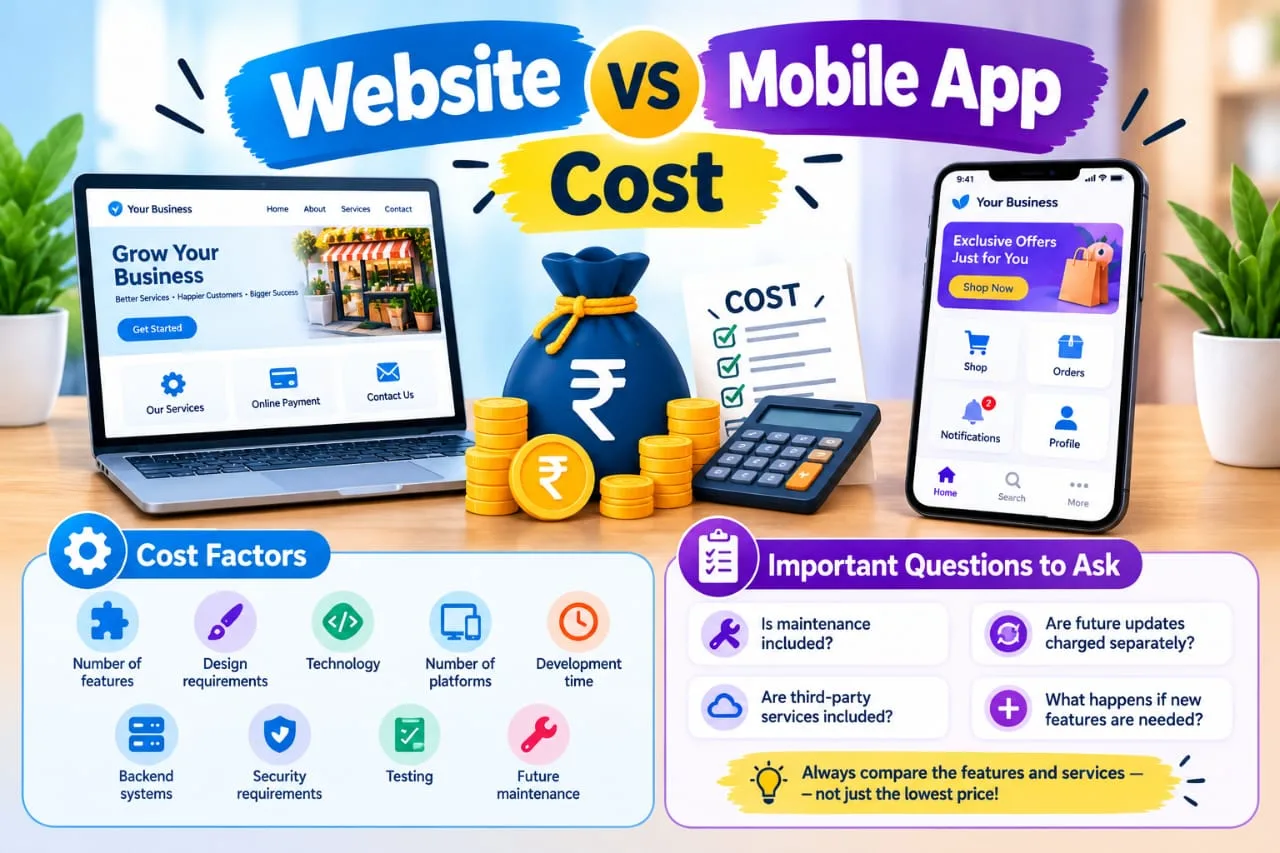
The cost of a website depends on its design, number of pages, features, hosting, security, and development requirements. A simple business website can be much easier to build than a large online platform.
Mobile app development can require more work because the app needs to be designed for mobile devices, tested properly, maintained, and updated.
The cost can also change depending on whether the business needs features such as:
- Login and user accounts
- Online payments
- Booking
- Notifications
- Order tracking
- Customer dashboards
- Admin panels
Instead of choosing based only on the lowest price, business owners should compare the features, quality, support, and long-term cost.
Website vs Mobile App: Use Case
The best choice depends strongly on how the business works.
A website can be a good choice for:
- Local businesses
- Restaurants
- Coaching services
- Freelancers
- Professional services
- Small shops
- Companies that mainly need online information
A mobile app can be useful for:
- Online shopping platforms
- Delivery services
- Booking systems
- Loyalty programs
- Customer-based services
- Businesses with frequent repeat users
For example, a local electrician may only need a website with services, contact information, and a booking option. A food delivery business may benefit more from an app because customers may use the service regularly.
When Should a Small Business Choose a Website
A small business should consider starting with a website when its main goal is online visibility and customer information.
A website can help customers understand what the business does, find contact details, check services, and learn more before making a decision.
A website is also a practical starting point when the business has a limited budget.
For example, a new clothing store may first create a website to show its products, business information, and contact details. Later, if online orders increase, the business can consider developing an app.
Starting small can help the business understand what customers actually need.
When Should a Small Business Choose a Mobile App
A mobile app may make sense when customers already use the business regularly and need features that work better inside an app.
For example, a business that provides regular orders, bookings, loyalty rewards, or personalized notifications may find an app useful.
Before developing an app, the business should ask:
Will customers use this app regularly?
If customers may only visit the business once or twice, asking them to install an app may not provide much value.
But if customers use the service every week or every day, an app can make repeated use easier.
Website vs Mobile App: Maintenance
Both websites and apps need regular maintenance.
A website may require updates for content, security, software, performance, and backups.
A mobile app may require updates when operating systems change or when new features are added. Bugs also need to be fixed through updates.
This means the development cost is not the only cost. Business owners should also think about long-term maintenance and support.
Before choosing a development company, ask what support they provide after the website or app is launched.
Website vs Mobile App: Target Audience
Understanding the target audience is very important.
If the business wants to reach new people through Google searches, a website can be a strong option.
If the business mainly serves existing customers who use its service regularly, a mobile app may provide more value.
For example, a small travel company may use a website to attract people searching for travel services. After building a strong customer base, it could consider an app for bookings, updates, and customer support.
The right technology should match customer behavior.
Can a Small Business Have Both
Yes. A business can have both a website and a mobile app.
However, having both does not always make sense from the beginning.
A business can start with a website and understand its customers first. If customers later need regular mobile features, the business can develop an app.
For example, an online store can use a website to attract new customers through search engines. After getting regular customers, it may create an app for easier shopping, order tracking, and notifications.
This approach can help the business spend money according to its actual needs.
How to Choose the Right Option for Your Business
Before making a decision, ask these five simple questions:

How an App Development Company Can Help
A professional App Development Company can help a business understand whether it really needs an app.
Before selecting a company, check its experience, portfolio, pricing, technology, communication, and support.
Ask to see previous projects and understand what type of businesses they have worked with.
Do not choose a company only because it offers the cheapest price. A very low initial price may not include important services such as maintenance, updates, security, or support.
Also ask how the company communicates during development. Clear communication can help avoid confusion about features, deadlines, and changes.
A good development partner should first understand the business problem and then suggest the right technology.

Common Mistakes Small Businesses Should Avoid
Small businesses can make several mistakes when choosing between a website and an app.
Choosing an app only because it looks modern:
An app is not automatically better just because it is an app.
Ignoring customer needs:
Technology should solve a real customer problem.
Looking only at development cost:
Maintenance, updates, security, and support can also affect the total cost.
Choosing without checking the portfolio:
Previous work can help you understand the company's experience.
Adding too many features:
Start with important features instead of building everything at once.
Ignoring communication and support:
A business may need help even after the project is launched.
Final Decision: Website or Mobile App
There is no single answer for every small business.
If your main goal is to build an online presence, attract new customers, show business information, and appear in search results, a website may be the better starting point.
If your customers use your service regularly and need personalized features, notifications, accounts, bookings, or repeated actions, a mobile app may be more useful.
For many small businesses, starting with a website and adding an app later can be a practical approach.
The decision should always be based on business goals, customer needs, budget, features, and long-term plans.
Conclusion
Choosing between a website and a mobile app is an important decision for a small business. Both can support business growth, but they solve different problems.
A website can help a business build an online presence and reach new customers. A mobile app can provide a convenient experience for customers who use the business regularly.
Before choosing, compare the use case, target audience, cost, maintenance, features, and future needs. If you are working with an App Development Company, check its experience, portfolio, communication, pricing, technology, and support.
The best technology is not always the most expensive or advanced one. Choose the technology that fits your business—not the business that fits the technology.
App Development Company in Siliguri - click for more information https://share.google/bmQRFE056dMimAR1L
Frequently asked questions
What Is a Website for a Small Business?
A business website is an online place where customers can learn about a company, its products, services, prices, location, and contact details. For example, a local restaurant can use a website to show its menu, opening hours, location, and contact information. A service business can show its services and allow customers to contact the business. One major benefit of a website is that customers can open it directly through a browser. They usually do not need to install anything. A website can also help a business appear in search engines when it has useful and relevant content.
What Is a Mobile App for a Small Business?
A mobile app is software made for smartphones and tablets. Customers normally download the app and use it for specific business activities. For example, an online store may use an app for shopping, order tracking, offers, and customer accounts. Apps can provide features such as notifications, saved accounts, loyalty programs, and faster access to frequently used services. However, an app normally needs more development work than a basic website. The business also needs to think about updates, testing, security, and support.
When Should a Small Business Choose a Website?
A small business should consider starting with a website when its main goal is online visibility and customer information. A website can help customers understand what the business does, find contact details, check services, and learn more before making a decision. A website is also a practical starting point when the business has a limited budget. For example, a new clothing store may first create a website to show its products, business information, and contact details. Later, if online orders increase, the business can consider developing an app. Starting small can help the business understand what customers actually need
Can a Small Business Have Both?
Yes. A business can have both a website and a mobile app. However, having both does not always make sense from the beginning. A business can start with a website and understand its customers first. If customers later need regular mobile features, the business can develop an app. For example, an online store can use a website to attract new customers through search engines. After getting regular customers, it may create an app for easier shopping, order tracking, and notifications. This approach can help the business spend money according to its actual needs.
How an App Development Company Can Help
A professional App Development Company can help a business understand whether it really needs an app. Before selecting a company, check its experience, portfolio, pricing, technology, communication, and support. Ask to see previous projects and understand what type of businesses they have worked with. Do not choose a company only because it offers the cheapest price. A very low initial price may not include important services such as maintenance, updates, security, or support. Also ask how the company communicates during development. Clear communication can help avoid confusion about features, deadlines, and changes. A good development partner should first understand the business problem and then suggest the right technology.