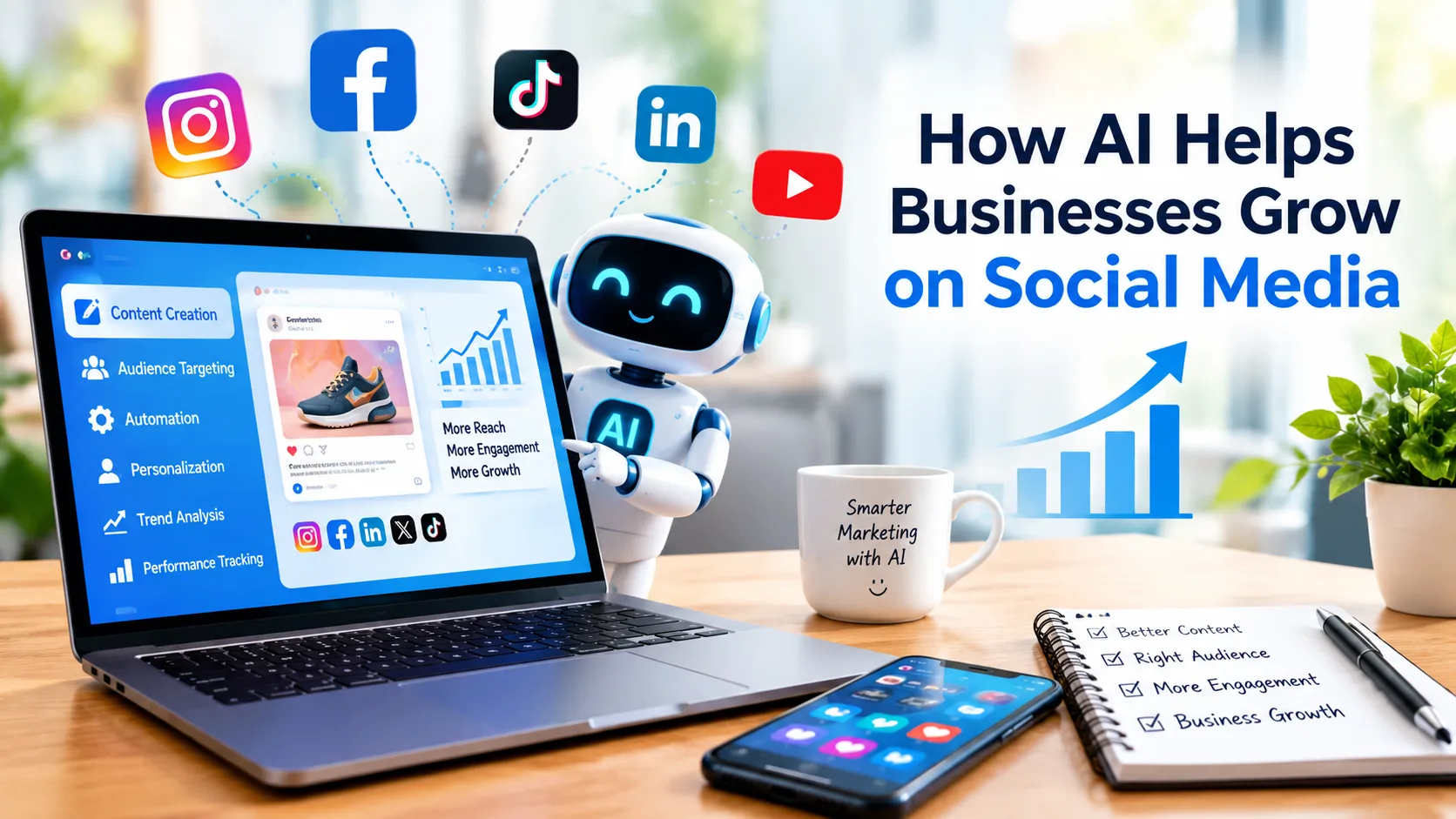
AI is becoming increasingly important for businesses that want to reach people, create useful content, and understand customer needs. It can support content creation, audience targeting, automation, personalization, trend analysis, and performance tracking. AI can reduce repetitive work and help teams use social media data more effectively. Small businesses and growing brands can use AI tools to plan posts, study engagement, and improve their daily social media work while keeping human ideas and review at the center.
1. AI For Social Media Content Creation
AI makes social media content creation easier by helping businesses plan, write, and improve different types of posts. Creating fresh content every day can take time, especially for small teams. AI can suggest topics, captions, short scripts, and content formats based on simple instructions. This helps businesses stay active with less planning time.
Generate New Content Ideas
AI can study common topics, customer interests, and past engagement to suggest new content ideas. For example, a clothing store can ask an AI tool for post ideas about seasonal clothes, styling tips, customer questions, and product benefits.
The team can select the best ideas and add its own experience before publishing.
Create Captions and Short Scripts
AI can also help write captions and short video scripts. A business can provide basic product information and ask AI to turn it into a simple social media message.
For example, a bakery can use AI to create a short Instagram caption for a new cake. The business can check the facts, change the wording, and add its brand style before publishing the post.
2. Using AI to Understand and Target Audiences
Understanding the right audience is important for social media growth. A business may have many followers, but different groups can have different interests. AI can study audience behavior and help businesses find useful patterns.
AI can analyze information such as engagement, interests, clicks, views, and interactions. These insights can help a business understand what different customer groups want to see and which messages may be more relevant to them.
Find the Right Audience
AI tools can help businesses identify audience groups based on interests and online behavior. For example, a fitness business may find that some users prefer workout videos while others interact more with healthy food tips.
The business can create more focused content instead of showing every follower the same message.
Improve Social Media Advertising
AI can also support social media advertising by analyzing campaign data and audience responses.
For example, an online sports shoe store may create separate campaigns for runners, gym users, and casual buyers. Each campaign can use content that matches its audience.
3. Automating Social Media Marketing Tasks
Social media marketing includes many regular tasks. Businesses need to schedule posts, check comments, monitor messages, and review campaign data. Doing these tasks manually can take time.
AI-powered tools can support some of these activities, leaving more time for planning and creative work.
Schedule and Manage Posts
AI can help businesses plan and schedule content for different social media platforms. Some tools can suggest posting times by studying audience activity.
For example, a small business can prepare several posts for the week and schedule them in advance. This helps the business maintain a regular posting routine.
Support Customer Responses
AI can help with common customer questions through automated replies or chat tools. A business can use AI to answer basic questions about products, services, business hours, or order processes.
Human employees can handle questions that need personal attention.
4. Using AI for Social Media Personalization
Personalization means giving users content or messages that match their interests and needs. AI can help businesses study user behavior and use those insights to make social media communication more relevant.
AI becomes more useful for businesses when it helps them personalize content and communication. Instead, they can create different content for different customer groups based on their interests and previous interactions.
Show Relevant Content
AI can help identify which types of content different users prefer. For example, users who often watch product videos may respond well to more video content, while users who interact with educational posts may prefer tips and guides.
These patterns can help businesses plan useful content without losing their brand voice.
Create Personalized Messages
Businesses can also use AI to create more relevant messages for different customer groups. For example, an online fashion store may create different content for new visitors and returning customers.
A new visitor may see information about popular products, while an existing customer may receive content related to products they have viewed before. Businesses should review these messages before publishing them.
5. Using AI to Track Social Media Trends
Social media trends can change quickly. New topics, formats, hashtags, sounds, and customer interests can become popular in a short time. AI can help businesses monitor these changes and find trends that are useful for their industry.
Trend analysis helps businesses understand what people are discussing and which content is receiving attention.
Identify Popular Topics
AI tools can analyze large amounts of social media information and help identify topics that are becoming popular. A business can use these insights to find content ideas related to its industry.
For example, a digital marketing company may notice growing interest in short educational videos. It can create simple videos that explain marketing tips in an easy way.
Understand Competitor Activity
AI can also help businesses study public competitor content and engagement patterns. The purpose is not to copy competitors but to understand common industry topics and formats.
A business can then create original content based on customer needs, its own experience, and its brand message.
6. Tracking Social Media Performance with AI
Creating content is only one part of social media marketing. Businesses also need to measure results. AI can help collect and analyze performance information from social media campaigns.
It can help businesses understand metrics such as views, reach, likes, comments, shares, clicks, and engagement. These numbers show which content attracts attention and where improvements may be needed. This is another way the impact of AI on social media can be measured.
Measure Content Results
AI can help identify which posts perform well and which receive less attention. For example, a business may discover that short educational videos receive more shares than simple image posts.
The business can use this information when planning future content. This creates a data-based approach to social media marketing.
Find Useful Patterns
AI can process performance data quickly and identify patterns in audience activity and engagement.
For example, if a business sees that its audience interacts more with posts published at a certain time, it can consider this pattern when planning its social media schedule.
7. Benefits of Using AI for Social Media Growth
AI can support content creation, audience research, automation, personalization, trend analysis, and performance tracking.
How AI Helps Businesses Grow on Social Media depends on how well businesses combine AI tools with human ideas and clear business goals. AI should support marketing teams, not replace human decision-making.
Save Time and Improve Productivity
AI can reduce time spent on content ideas, captions, scheduling, basic analysis, and simple responses.
This gives businesses more time for creative planning and customer relationships. How AI Helps Businesses Grow on Social Media also becomes easier to manage when repetitive work is reduced.
Make Better Marketing Decisions
AI can turn social media data into useful information. Businesses can use these insights to understand audiences and adjust content.
For example, if educational content gets more shares than promotional posts, a business can create more useful educational content while still promoting its products in a natural way.
Improve Customer Experience
AI can help businesses provide faster and more relevant communication. Personalized content and quick answers can make social media interactions easier for customers.
Human review helps maintain accuracy, brand voice, and a natural customer experience.
Conclusion
Using AI for social media marketing is mainly about making the process more useful, organized, and data-driven. AI can help businesses create content, understand audiences, automate tasks, personalize communication, identify trends, and track performance. These tools can save time and support better marketing decisions. When businesses combine AI tools with human creativity, careful review, and clear goals, they can create useful social media experiences and stronger connections with their audiences.
Frequently asked questions
How does AI help businesses grow on social media?
AI helps businesses create content, understand audiences, automate tasks, personalize communication, analyze trends, and track social media performance.
Can AI create social media content for businesses?
Yes. AI can help create content ideas, captions, post descriptions, and short video scripts. Businesses should review AI-generated content before publishing it.
How does AI help with social media audience targeting?
AI can analyze audience interests, engagement, clicks, and behavior. Businesses can use these insights to create more relevant content and advertising campaigns.
Can AI automate social media marketing tasks?
Yes. AI-powered tools can support content scheduling, basic customer responses, and performance analysis. This can save time for social media teams.
How does AI help businesses personalize social media content?
AI can study user interests and previous interactions. Businesses can use these insights to create different content and messages for different customer groups.