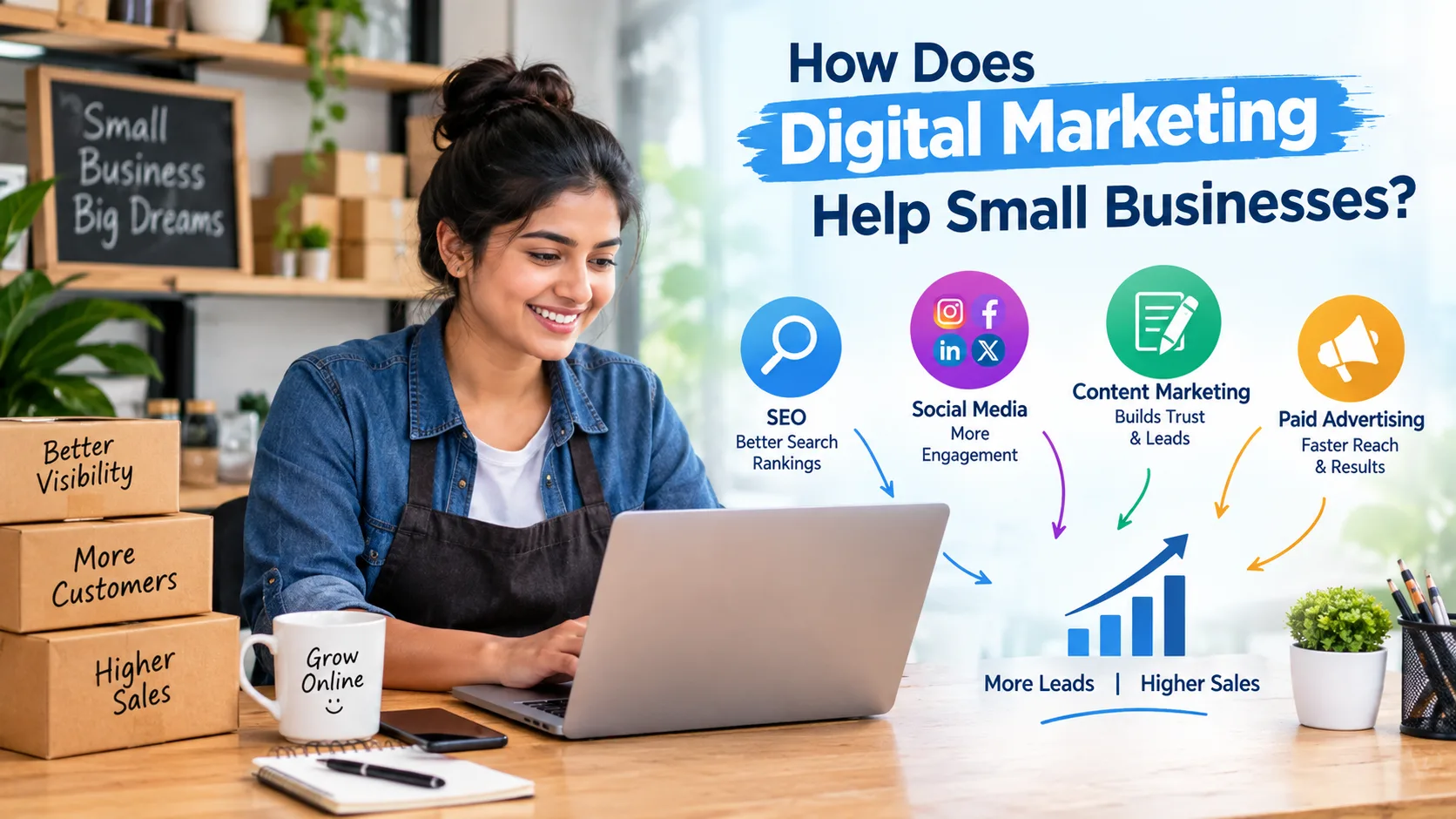
How Does Digital Marketing Help Small Businesses? It helps small companies become easier to find, connect with the right customers, generate leads, and increase sales through online channels. Instead of depending only on local promotion or word of mouth, businesses can use search engines, social media, useful content, and paid advertising to reach people who already need their products or services. A clear digital strategy also helps small businesses understand customer behavior, improve online visibility, and use marketing budgets more carefully.
1. How Digital Marketing Builds Online Visibility
How Does Digital Marketing Help Small Businesses? One major benefit is stronger online visibility. Customers often search online before contacting a business, comparing products, reading information, or making a purchase. A strong digital presence helps a small business appear where potential customers are already looking.
Digital marketing connects a business with several online channels. These channels can work together to make the brand easier to discover and remember.
Search Engine Presence
Search engines can bring people to a business website when they search for related products, services, or information. A properly optimized website can appear for relevant searches and attract visitors without relying only on offline promotion.
Consistent Online Presence
A business can also improve visibility through social media profiles, useful website pages, and consistent brand information. Keeping business details clear and updated makes it easier for customers to understand what the company offers and how to contact it.
2. Using SEO to Reach Relevant Customers
SEO is an important part of digital marketing because it helps websites appear in search results for relevant terms. Small businesses can use SEO to reach people who are actively looking for their products, services, or solutions.
Keyword Research
Keyword research helps a business understand what potential customers search for online. Small businesses can focus on relevant and specific keywords that match their products, services, location, and customer needs. Choosing useful keywords helps attract more targeted visitors.
On-Page SEO
On-page SEO includes improving page titles, headings, descriptions, website content, images, and internal links. The information should be clear, useful, and easy for both visitors and search engines to understand.
Local SEO
Local SEO can be especially useful for small businesses that serve a particular city or area. Accurate business information, location-focused content, and useful local pages can help customers discover nearby products and services.
3. How Does Digital Marketing Help Small Businesses? Through Social Media
Social media gives small businesses a direct way to communicate with existing and potential customers. Platforms can help businesses share offers, product information, educational posts, updates, and customer-focused content.
Building Customer Connections
Regular social media activity can make a business more familiar to its audience. Businesses can answer questions, respond to comments, share useful information, and understand common customer interests. This interaction can support stronger customer relationships.
Reaching a Targeted Audience
Social media allows businesses to create content for specific customer groups online. A small company can focus on people interested in particular products, services, topics, or locations. This makes social media useful for reaching audiences without trying to speak to everyone.
Supporting Sales
Social media can also support sales by showing products, explaining benefits, sharing customer experiences, and directing users to a website or contact page. Clear calls to action can help interested visitors take the next step.
4. Content Marketing for Trust and Lead Generation
Content marketing focuses on creating useful information that answers customer questions and supports their buying decisions. For small businesses, good content can attract visitors, explain products or services, and create opportunities for lead generation.
Educational Content
Businesses can publish guides, articles, tips, and simple explanations related to their industry. Useful content can help customers understand a problem and learn how a product or service may solve it.
Product and Service Content
Clear service pages and product information help visitors understand what a business offers. Content should explain important features, benefits, pricing information when appropriate, and the next step for contacting the business.
Turning Visitors Into Leads
Content can support lead generation through contact forms, inquiry buttons, newsletter sign-ups, and other clear actions. When useful information is combined with an easy way to contact the business, website visitors have more opportunities to become leads.
5. Paid Advertising for Faster Reach
Paid advertising can help small businesses reach potential customers without waiting for organic traffic to grow. Search ads, social media ads, and other online advertising formats can place a business in front of selected audiences.
Search Advertising
Search advertising can show a business when users search for specific products or services. This can be useful when the business wants to reach people who already have a clear need and may be ready to contact or buy.
Social Media Advertising
Social media advertising can help businesses reach selected audiences based on factors such as interests, location, or other available targeting options. Different ad formats can promote products, services, offers, or lead forms.
Managing the Budget
Small businesses should set a clear advertising budget and define the goal before starting a campaign. Testing different messages, audiences, and landing pages can help identify what works. Tracking results is important so money is spent on activities that support business goals.
6. Generating Leads and Increasing Sales
Digital marketing can support the complete customer journey, from first discovery to inquiry and purchase. A small business can use different channels to attract attention, provide useful information, build trust, and encourage customers to take action.
Lead Generation
Lead generation means creating opportunities to collect inquiries from interested customers. Website forms, phone calls, messages, bookings, and email sign-ups can all become useful lead sources when they are easy to access.
Improving Customer Experience
A simple website, clear service information, quick contact options, and helpful content can reduce confusion. When customers can quickly find answers and understand the next step, they may be more comfortable contacting the business.
Supporting Sales Growth
Digital marketing can bring relevant visitors to products and services and help businesses stay connected with interested customers. Follow-up emails, social media communication, useful content, and clear offers can support the path from lead to sale.
7. Measuring Digital Marketing Results
Measuring results helps small businesses understand whether their marketing activities are producing useful outcomes. Digital platforms can provide information about website traffic, search performance, social media activity, leads, advertising results, and sales.
Tracking Important Metrics
Businesses can monitor metrics such as website visits, keyword performance, engagement, leads, conversion rate, cost per lead, and sales. The right metrics depend on the business goal and the marketing channel being used.
Improving Marketing Decisions
Regular measurement helps businesses identify strong and weak areas. If a page receives traffic but few inquiries, the business can review its content or call to action. If an advertising campaign produces leads at a high cost, its targeting or message may need adjustment.
Using Data for Growth
Data can help small businesses make more informed marketing decisions instead of relying only on assumptions. Reviewing results regularly allows a business to improve SEO, social media, content marketing, and paid advertising based on actual performance.
Simple reporting helps owners understand which activities deserve more attention. This makes it easier to adjust content, advertising, and customer communication while keeping marketing focused on clear, measurable business goals.
A clear digital plan also helps a small business use each channel for a specific purpose. SEO can bring search traffic, social media can build regular communication, content can answer customer questions, and paid advertising can create faster exposure. When these activities support the same business goal, customers can receive a more consistent experience across different online platforms. This approach can also make marketing work easier to organize and review.
How Does Digital Marketing Help Small Businesses? It gives them several practical ways to reach people at different stages of the buying journey. A customer may first discover a business through search, learn more through an article, see an update on social media, and later respond to an advertisement. Connecting these touchpoints can help businesses provide useful information without depending on one channel alone.
How Does Digital Marketing Help Small Businesses? It can also make customer-focused marketing more measurable. A business can compare traffic, engagement, leads, and sales across channels and identify where improvements are needed. For example, strong traffic with low conversions may show that a landing page needs clearer information or a stronger action. Regular review helps keep digital activities aligned with customer needs and business objectives.
Conclusion
How Does Digital Marketing Help Small Businesses? It helps them improve online visibility, reach relevant customers, generate leads, and support sales through SEO, social media, content marketing, and paid advertising. Each channel has a different role, but they can work together as part of one strategy. Small businesses can use useful content to attract people, SEO to improve search visibility, social media to build connections, and paid advertising to reach selected audiences. By measuring results and improving campaigns regularly, businesses can make their digital marketing efforts more focused and effective.
Frequently asked questions
How Does Digital Marketing Help Small Businesses?
Digital marketing helps small businesses improve online visibility, reach relevant customers, generate leads, build customer relationships, and increase sales through online channels.
Why Is SEO Important for Small Businesses?
SEO helps small businesses appear in search engine results when potential customers search for related products or services. It can bring relevant organic traffic to a website.
How Can Social Media Help a Small Business?
Social media helps small businesses connect with customers, share products and services, promote offers, answer questions, build brand awareness, and reach targeted audiences.
Can Content Marketing Generate Leads for Small Businesses?
Yes. Useful content such as articles, guides, tips, and service information can attract visitors and encourage them to contact the business through forms, calls, messages, or other channels.
Is Paid Advertising Useful for Small Businesses?
Yes. Paid advertising can help small businesses reach selected audiences more quickly. Businesses can use search and social media ads to promote products, services, offers, and lead-generation campaigns.