A social media marketing strategy. This question matters for businesses using social media with a purpose instead of posting without a plan. A strong strategy explains what a business wants to achieve, who it wants to reach, where those people spend time, and what content can help them. It also includes posting, audience engagement, and performance tracking. With the right approach, businesses can build awareness, create relationships, attract visitors, and support long-term growth through social media.
1. Set Clear Social Media Goals
The first step in building a strong social media plan is deciding what the business wants to achieve. For businesses developing a social media marketing strategy , setting clear goals is important. Posting every day is not a goal by itself. A business should understand why it is using social media and what result it expects from its efforts. Clear goals make social media activities easier to plan, manage, and measure.
A business may want to increase brand awareness, attract website visitors, generate leads, improve engagement, or increase sales. The right goal depends on the business and its current needs.
Choose Specific Goals
Goals should be simple, clear, and measurable. Instead of saying “get more customers,” a business can set a goal such as “generate 50 social media leads in three months.” This gives the team a clear target and makes progress easier to check.
Match Goals With Business Needs
Social media goals should support wider business goals. For example, a new business may focus on awareness and audience growth. An established online store may focus more on website traffic, conversions, and customer retention.
2. Understand Your Target Audience
Understanding the target audience is one of the most important parts of social media marketing. A target audience is the group of people most likely to need, use, or buy a product or service. Knowing this group helps a business create content that feels useful and relevant. This is also an important part of understanding a strong social media strategy. because the strategy should be based on the people a business wants to reach.
Audience research can include age, location, language, job, interests, common problems, buying habits, and preferred content types. Businesses can also study comments, reviews, questions, polls, and messages to understand what people need.
Create a Simple Audience Profile
A business can create a simple customer profile based on its research. For example, a fitness business may target working adults who want short and practical workout ideas. This information can guide topics, images, captions, and posting times.
Listen to Audience Needs
Customer questions can provide useful content ideas. If followers often ask about prices, features, or how a service works, the business can create posts that answer those questions. Listening to the audience helps businesses avoid creating content based only on assumptions.
3. Choose the Right Social Media Platforms
Not every business needs to use every social media platform. Managing too many channels can reduce content quality and make regular posting difficult. A better approach is to select platforms where the target audience is active and where the business can create useful content. When considering How to Build a Strong Social Media Marketing Strategy?, choosing the right platforms helps businesses focus their time and resources where they can be most useful.
Each platform has different users, content styles, and communication habits. Some platforms are useful for short videos, while others work well for professional updates, visual posts, or community discussions. Businesses should consider their audience, goals, resources, and content skills before making a choice.
Select Platforms Based on Audience
Research where customers spend their time online. If a business mainly serves professionals, a professional networking platform may be useful. If its audience enjoys short visual videos, a video-focused platform may offer better opportunities.
Start Small and Improve
A business can begin with two or three suitable platforms instead of joining every channel. This gives the team enough time to learn what works and maintain a consistent presence. More platforms can be added later when the business has enough time and resources.
4. Create Useful Social Media Content
Content is the main part of a social media marketing plan. Good content should provide value while supporting business goals. A clear content plan helps businesses avoid random posting and gives the team a better idea of what to publish.
A strong social media marketing strategy can include different content types, such as educational posts, product information, customer stories, short videos, tips, questions, behind-the-scenes content, and company updates. The right mix depends on the audience, platform, and business type.
Build a Content Calendar
A content calendar shows what will be posted, where it will be posted, and when it will go live. It can be planned weekly or monthly. A simple calendar can include the topic, format, caption idea, visual requirement, platform, and publishing date.
Focus on Quality and Relevance
Every post does not need to promote a product. Helpful content can answer questions, solve small problems, explain a topic, or share practical tips. Useful posts can encourage people to follow the business because they expect helpful information from it.
5. Maintain Consistency and Engage With Followers
Consistency means maintaining a regular social media presence and using a clear brand style. It does not mean posting many times every day. A realistic schedule that a business can maintain is more useful than a busy schedule that stops after a few weeks.
Businesses should also remember that social media is a two-way communication channel. Publishing content is only one part of the process. Replying to followers and understanding their feedback can help build stronger relationships. This communication also supports the wider process of your social media strategy. because audience interaction can provide useful information for future content.
Follow a Realistic Posting Schedule
The right posting frequency depends on the platform, audience, and available resources. A business can begin with a manageable schedule and adjust it after checking performance. A content calendar can make regular publishing easier.
Reply and Build Relationships
Businesses should reply to comments and messages, answer questions, thank customers, and respond professionally to feedback. Quick and helpful communication can make followers feel heard and can support better customer relationships.
Handle Negative Comments Carefully
Not every comment will be positive. Businesses should avoid emotional replies and personal arguments. A calm response, useful information, and a private conversation when needed can help handle difficult situations professionally.
6. Use Data to Improve Your Social Media Strategy
Tracking performance helps businesses understand what is working and what needs improvement. A business should not judge a social media campaign only by its follower count. Different goals require different measurements.
Useful metrics can include reach, impressions, engagement rate, video views, profile visits, website clicks, leads, conversions, and sales. The most useful metrics depend on the goal selected at the beginning.
Review Performance Regularly
Businesses can review their social media results weekly or monthly. This helps them identify posts that received strong engagement, created website traffic, or generated useful customer actions. They can also identify topics and formats that did not perform as expected.
For example, a business may discover that educational posts receive more comments while short videos bring more profile visits. These patterns can help the team make better decisions about future content.
Test and Improve Content
Data can guide small changes instead of large changes made without evidence. If short videos receive more engagement than long text posts, a business can test more short videos. If educational posts create more website visits, the content plan can include more educational topics.
The goal is not to change everything after one weak post. Social media results can change because of timing, topic, audience interest, and platform behavior. Looking at patterns over time provides a more useful view of performance.
7. Build a Long-Term Social Media Strategy
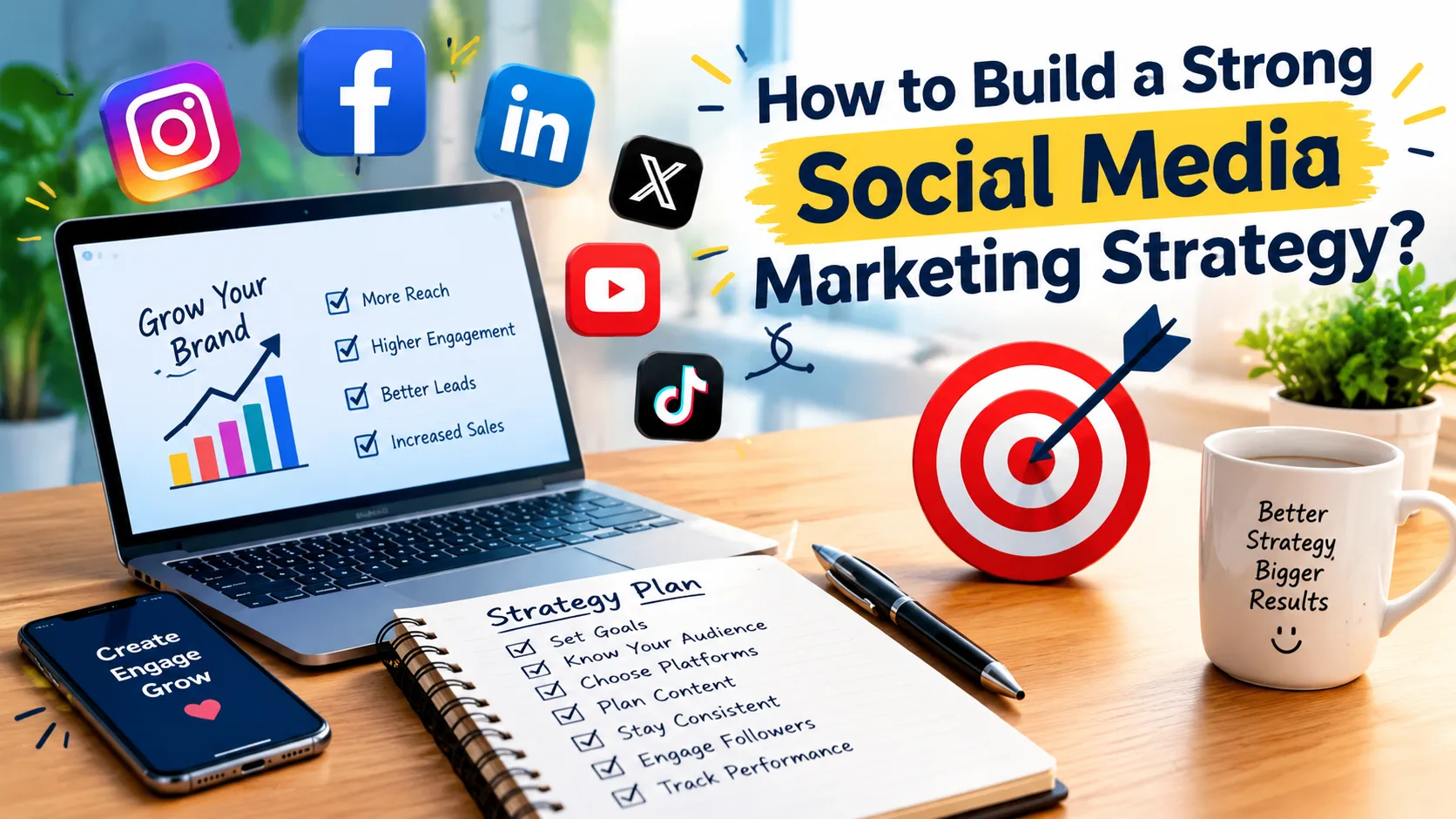
A successful social media plan should be treated as an ongoing process rather than a one-time task. Businesses need to set goals, understand customers, choose suitable platforms, publish useful content, communicate with followers, and review results regularly. For businesses asking how to build a strong social media marketing strategy, the process becomes easier when each step is connected.
Audience research can guide content topics. Content performance can guide future planning. Customer questions can create new educational posts, while business goals can determine which metrics matter most.
Keep Improving the Strategy
Businesses should review their strategy when goals, customer needs, products, or market conditions change. A new product may require a new content plan. A change in audience behavior may require a different platform or content format.
Use Time and Resources Wisely
Small businesses do not need a large team to start. They can use simple design tools, scheduling tools, analytics dashboards, and a basic content calendar. The important thing is to focus on activities that support business goals instead of spending time on unnecessary tasks.
Build Trust Over Time
Social media growth usually needs patience. Regular helpful content, honest communication, and good customer service can support trust. Businesses should focus on creating a useful experience instead of trying to make every post go viral. Consistent effort can support long-term brand awareness, customer relationships, and business growth.
Conclusion
Building a strong social media marketing strategy becomes easier when businesses follow a clear and repeatable process. For businesses developing a social media marketing strategy, the key steps are setting measurable goals, understanding the target audience, choosing suitable platforms, planning valuable content, staying consistent, engaging with followers, and tracking performance. The strategy should be reviewed when customer needs or performance data show that changes are useful. With practical planning and consistent effort, social media can support awareness, traffic, leads, customer relationships, and long-term growth.
Frequently asked questions
What is a social media marketing strategy?
A social media marketing strategy is a plan that helps a business set goals, understand its audience, choose platforms, create content, engage with followers, and measure results.
How to Build a Strong Social Media Marketing Strategy?
To build a strong strategy, set clear goals, understand your target audience, choose the right platforms, plan useful content, stay consistent, engage with followers, and track performance.
Which social media platforms should a business use?
A business should choose platforms where its target audience is active. It is better to focus on a few suitable platforms than to use every platform without a clear plan.
Why is consistency important in social media marketing?
Consistency helps businesses maintain a regular presence, keep their audience engaged, and build familiarity and trust over time.
How can businesses measure social media marketing performance?
Businesses can track metrics such as reach, engagement, video views, website clicks, leads, conversions, and sales to understand how their social media efforts are performing.