Why Your Digital Marketing Strategy Matters
Digital marketing gives businesses several ways to connect with potential customers. However, using too many channels without a clear plan can create inconsistent messaging and unnecessary costs. A strategy provides direction and helps teams decide where to focus their time and resources.
For example, a local service business may benefit from local SEO and social media, while an online store may focus more heavily on SEO, paid advertising, email and product-focused content. The right approach depends on the customer journey, business model and audience.
A good strategy also helps businesses understand which activities are producing results. Instead of spending money across every available platform, companies can focus on channels that support their most important goals.
Start With Clear Business Goals
The first step is to define what you want your marketing to achieve. Different goals require different approaches.
Common goals include:
- Increasing website traffic.
- Generating qualified leads.
- Increasing online sales.
- Building brand awareness.
- Improving customer retention.
- Growing an email list.
A business should choose specific and measurable goals. Instead of saying “get more customers,” a company could aim to generate 100 qualified leads in three months. A clear target makes it easier to choose channels and measure progress.
Goals can also change over time. A new business may initially focus on awareness and traffic. Once it has a steady audience, it may focus more on conversions, repeat purchases and customer retention.
Understand Your Target Audience
A marketing strategy works best when it is built around the people a business wants to reach. Start by identifying customer needs, problems, interests and buying behavior.
Consider questions such as:
- Who are your ideal customers?
- What problems are they trying to solve?
- What information do they search for?
- Which social platforms do they use?
- How do they usually make buying decisions?
For example, a business selling professional software may target decision-makers who spend more time searching Google, reading industry content and comparing solutions. A fashion brand may depend more on visual social platforms, influencers and email promotions.
Understanding the audience helps businesses choose channels based on real customer behavior instead of assumptions. It also helps marketers create messages that feel more relevant to potential customers.
Set a Realistic Marketing Budget
Budget plays an important role in channel selection. Businesses should consider both advertising costs and the time needed to create and manage content.
SEO and content marketing can take time to produce results, but they can build long-term organic visibility. PPC can generate traffic quickly, but it requires ongoing advertising spend. Social media may require content creation, community management and paid promotion. Email marketing usually needs an email platform, list-building activities and regular campaigns.
A limited budget does not mean a business cannot build an effective strategy. It means the business should prioritize the channels most closely connected to its goals and audience.
Businesses should also avoid spending the entire budget on advertising before understanding whether the offer and landing page can convert visitors. Testing a smaller campaign first can provide useful information before increasing investment.
Choose SEO for Long-Term Search Visibility
Search engine optimization can be useful for businesses that want to attract people who are actively searching for information, products or services.
SEO may include:
- Keyword research.
- Helpful content.
- On-page optimization.
- Technical improvements.
- Internal linking.
- Local SEO.
For example, a dentist in a local city could create pages around services such as dental cleaning, emergency dentistry and teeth whitening. If the content matches local search intent, it can help attract relevant visitors over time.
SEO is usually a long-term activity. Businesses should not expect immediate results from every page. Consistent content, technical improvements and performance measurement are important.
SEO can be particularly useful when customers regularly search for solutions before making a purchase. It can help a business become visible at different stages of the buying journey.
Use Social Media to Build Engagement
Social media can help businesses build awareness, communicate with customers and create a community around their brand.
The best platform depends on the target audience and content type. A visual brand may benefit from image and video-focused platforms. A B2B company may focus more on professional networks and educational content.
Social media content can include:
- Educational posts.
- Short videos.
- Product demonstrations.
- Customer stories.
- Behind-the-scenes content.
- Polls and questions.
Businesses should avoid posting only promotional messages. Useful and engaging content can encourage people to interact with the brand and remember it when they are ready to buy.
Social media can also provide useful feedback. Comments, questions and engagement patterns can show what customers care about and help businesses improve future content.
Use Content Marketing to Educate and Build Trust
Content marketing focuses on creating useful information for a target audience. It can support SEO, social media, email marketing and lead generation at the same time.
Content can take many forms, including blog posts, guides, case studies, videos, checklists and infographics.
For example, a digital marketing company could publish a guide explaining how small businesses can improve local search visibility. The guide can attract search traffic, be shared on social media and become part of an email campaign.
Good content should answer real customer questions and provide practical value. It should also support a clear business goal rather than being created only to publish something regularly.
A strong content strategy can also help businesses build authority. When customers consistently find useful answers from a company, they may become more familiar with the brand and more likely to consider its products or services.
Use Email Marketing for Relationships and Retention
Email marketing can be useful after a business has attracted a visitor or collected a lead. It provides a direct way to communicate with subscribers.
Businesses can use email for:
- Welcome messages.
- Educational newsletters.
- Product updates.
- Special offers.
- Abandoned cart reminders.
- Customer follow-ups.
Segmentation can make email campaigns more relevant. For example, an online store can send different messages to new subscribers, existing customers and people who have previously viewed specific products.
Email marketing can be especially valuable for customer retention because businesses can continue communicating with people who have already shown interest.
The key is to provide useful and relevant messages instead of sending frequent promotional emails without value.
Use PPC When You Need Faster Traffic
Pay-per-click advertising can help businesses reach potential customers quickly through paid search and other advertising platforms.
PPC can be useful when:
- A business is launching a new product.
- A company wants immediate website traffic.
- A seasonal offer needs promotion.
- A business wants to test a new market.
- Organic rankings are still developing.
However, paid advertising should be managed carefully. Businesses need relevant keywords, strong ad copy, useful landing pages and clear conversion tracking.
Sending paid traffic to a weak landing page can waste the advertising budget. Before increasing ad spend, businesses should make sure the page clearly explains the offer and provides an easy next step.
PPC can also be useful for testing messages. If one offer or headline performs better than another, the results can provide insights for other marketing channels.
Match Channels to Your Industry
Industry can influence which channels are most effective. A local restaurant may depend on local search, social media, reviews and promotional email. An online software company may focus on SEO, educational content, webinars, email and PPC. A professional services company may rely on search visibility, case studies, referrals and thought leadership.
This does not mean every business in an industry should use exactly the same strategy. Competition, audience behavior, pricing, location and sales cycle also matter.
Businesses should study where their customers spend time and how competitors attract attention. The goal is to identify opportunities rather than simply copy competitors.
Create a Balanced Channel Mix
Most businesses do not need to choose only one marketing channel. A balanced strategy can connect different activities.
For example, SEO can bring visitors to a helpful blog article. A visitor can then join an email list. Social media can promote the same content, while PPC can reach people who are ready to take action.
Each channel should have a clear role. SEO may support discovery, social media may support engagement, content may build trust, email may support retention and PPC may support faster customer acquisition.
When channels work together, businesses can create a smoother customer journey. Someone may first discover a brand through search, interact with it on social media and later become a customer through email or a paid campaign.
Measure Results and Improve the Strategy
A digital marketing strategy should be measured regularly. The right metrics depend on the business goal.
Useful metrics include:
- Organic traffic.
- Leads generated.
- Conversion rate.
- Cost per lead.
- Return on ad spend.
- Email open and click rates.
- Social engagement.
- Sales and revenue.
For example, if a PPC campaign generates many clicks but few leads, the business should review the landing page, offer, targeting and conversion process.
If an SEO page receives impressions but few clicks, the title and meta description may need improvement.
Testing is also important. Businesses can compare different headlines, calls to action, landing pages, audiences and offers. Small improvements can make a meaningful difference over time.
The strategy should be reviewed regularly rather than judged from a single day's results.
Avoid Common Digital Marketing Mistakes
Several mistakes can make a strategy less effective. One common mistake is trying to use every channel without enough resources. Another is focusing on vanity metrics such as follower counts while ignoring leads and sales.
Businesses should also avoid changing strategies too quickly. Some channels, especially SEO and content marketing, require time to show results.
At the same time, poor performance should not be ignored. Regular reviews can help identify what should be improved, reduced or stopped.
Another common mistake is creating content without understanding the target audience. Every campaign should have a clear purpose and a measurable outcome.
A Simple Process for Choosing the Right Strategy
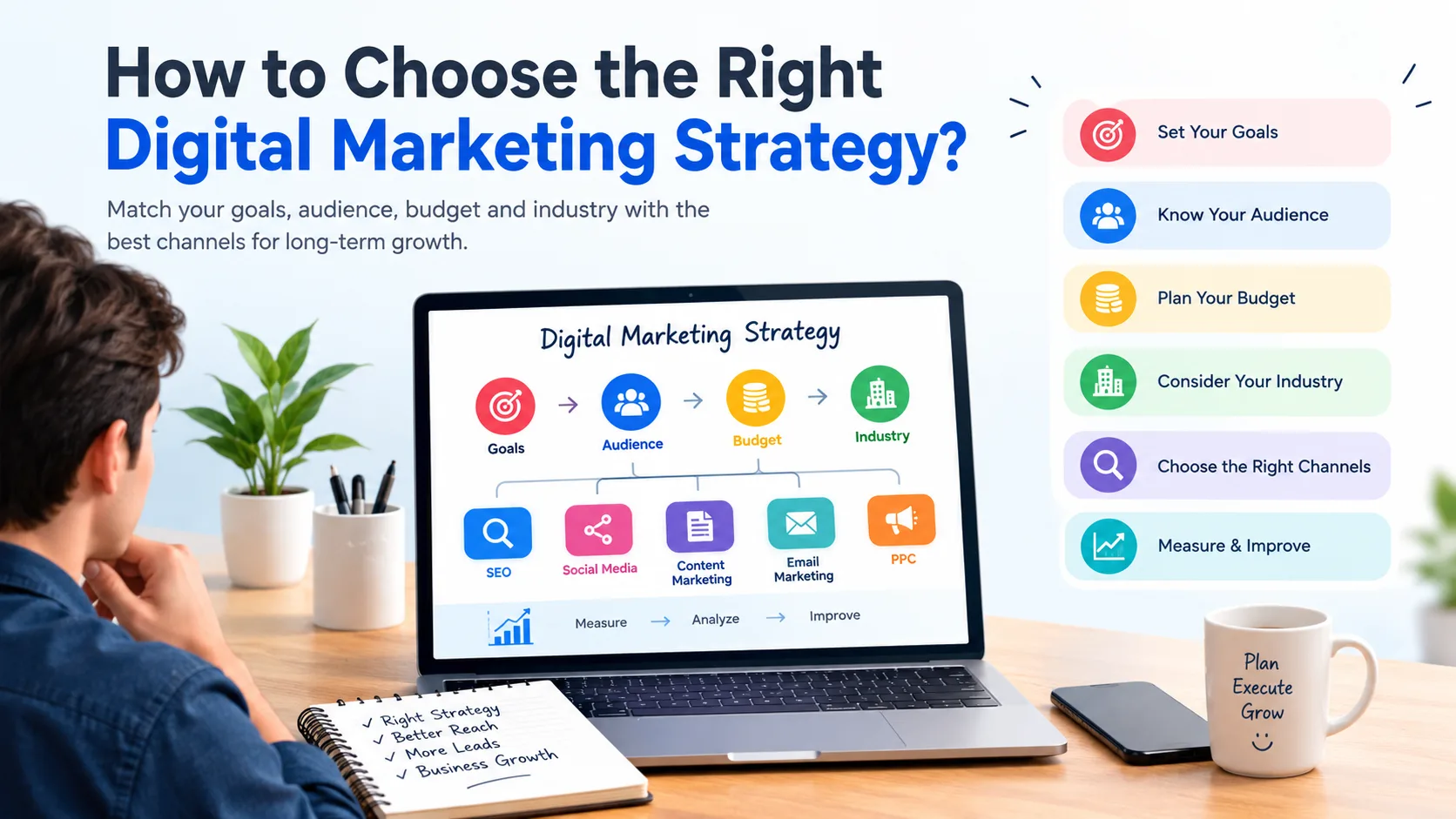
Choosing the right approach starts with alignment. Businesses should match their marketing channels to their goals, audience, budget and industry.
A simple decision process is:
- Define the business goal.
- Identify the target audience.
- Set the available budget.
- Select channels that match customer behavior.
- Create useful content and offers.
- Set measurable KPIs.
- Review performance and improve the strategy.
If you are asking, Start with the channel that best matches your immediate business goal. Start with the channel that best matches your immediate business goal. A company focused on long-term search visibility may prioritize SEO. A business seeking quick traffic may test PPC. A brand focused on community may invest more heavily in social media.
There is no universal strategy that works for every business. A company should begin with the channels most likely to produce meaningful results and expand only when it has the resources to manage them properly.
Conclusion
Choosing the right digital marketing strategy depends on the business, its goals, target audience, budget and industry.
SEO can support long-term visibility, social media can build engagement, content marketing can create trust, email can strengthen customer relationships and PPC can provide faster access to targeted traffic. Measuring results across these activities helps businesses understand what is working and where improvements are needed.
The best strategy is focused, measurable and flexible. By reviewing performance regularly and adapting to customer needs, businesses can build a digital marketing approach that supports sustainable growth.
Frequently asked questions
How do you choose the right digital marketing strategy?
Choose a digital marketing strategy based on your business goals, target audience, budget and industry. Start by defining your goal, identify where your customers spend time online, select suitable channels, set measurable KPIs and regularly review the results
What are the most important digital marketing channels?
Important digital marketing channels include SEO, social media, content marketing, email marketing and PPC. The right combination depends on your audience, business goals, budget and customer behavior.
Is SEO better than PPC for digital marketing?
SEO and PPC serve different purposes. SEO can support long-term search visibility, while PPC can help businesses generate targeted traffic more quickly. Businesses can use either or both depending on their goals and resources.
How much budget is needed for a digital marketing strategy?
There is no single budget that works for every business. The budget should consider advertising costs as well as the time and resources required for content creation and channel management. Businesses with limited budgets should prioritize channels that are closely connected to their goals and audience
How do you measure the success of a digital marketing strategy?
Success can be measured using metrics such as organic traffic, leads generated, conversion rate, cost per lead, return on ad spend, email engagement, social engagement, sales and revenue. The most useful metrics depend on the specific business goal.