Effective Marketing Strategies for Business Growth
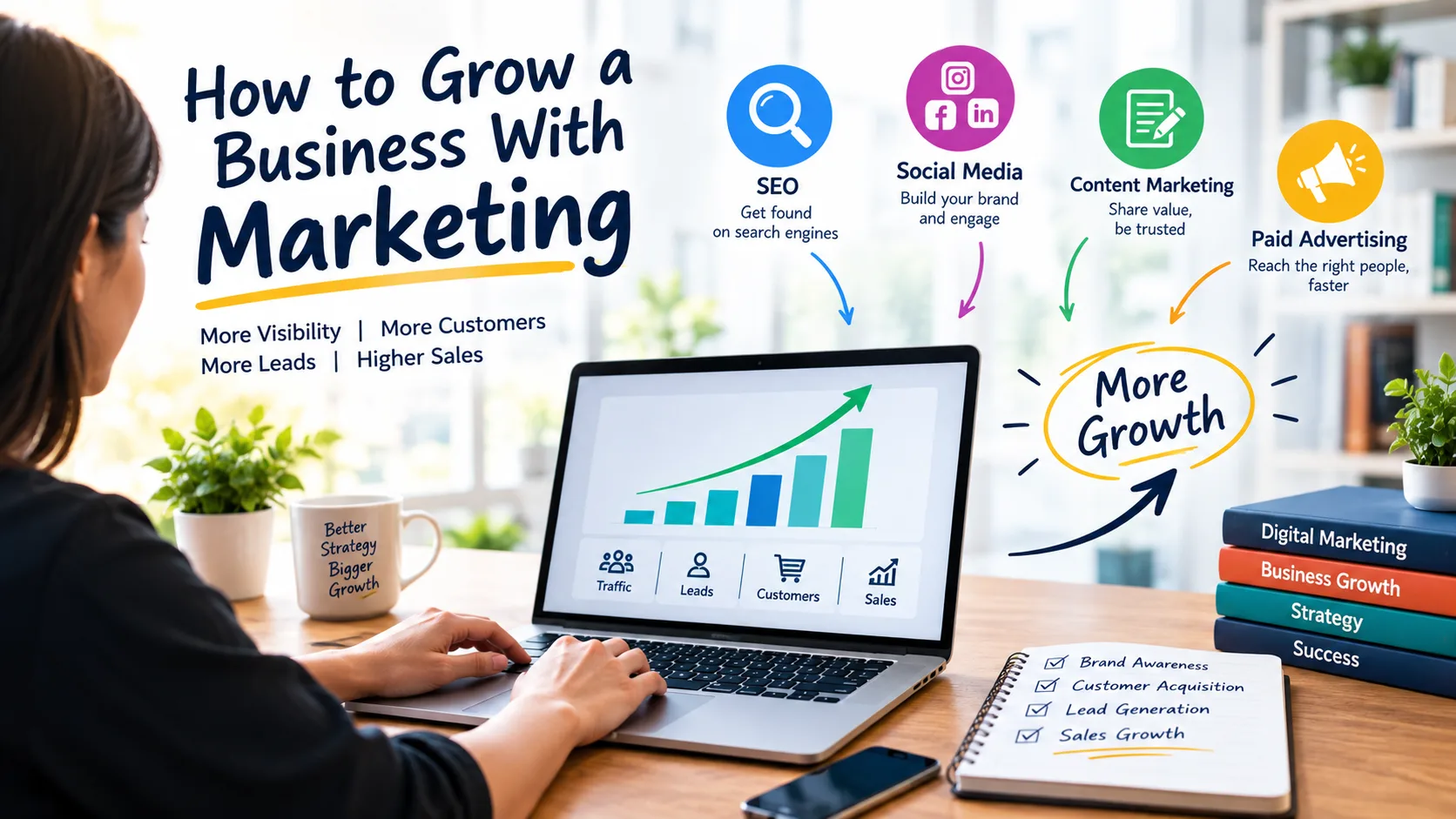
The right marketing strategy can help a business become more visible, reach potential customers, generate qualified leads, and increase sales. From SEO and social media to content marketing and paid advertising, each channel can play an important role in building sustainable business growth.
Why Marketing Is Important for Business Growth
Marketing helps a business connect its products or services with people who may need them. Even if your product is excellent, customers may not find you without proper promotion.
A strong marketing strategy can help you:
- Increase brand awareness
- Reach new customers
- Generate qualified leads
- Build customer trust
- Increase website traffic
- Improve online visibility
- Encourage repeat purchases
- Increase sales and revenue
The goal is not simply to promote a business everywhere. The goal is to reach the right audience at the right time with the right message.
How to Grow a Business With Marketing
A business can use several marketing strategies together instead of depending on one channel. The best approach depends on the industry, target customers, budget, and business goals.
Here are some important strategies businesses can use.
1. Build a Strong Brand Presence
Brand awareness is one of the first steps toward business growth. Customers are more likely to consider a business when they recognize its name and understand what it offers.
Start by creating a clear brand identity. Your website, social media profiles, advertisements, and other marketing materials should communicate a consistent message.
Focus on:
- A clear business name and message
- Professional visual identity
- Consistent brand communication
- A useful and trustworthy website
- Clear information about your products or services
Your brand should make it easy for customers to understand what you do and why they should consider your business.
2. Use SEO to Attract Organic Traffic
Search engine optimization, or SEO, is an important long-term marketing strategy. It helps your website appear when potential customers search for relevant products, services, or information on search engines. Start with keyword research to understand what your audience searches for. Then create useful pages and content around those topics.
Important SEO activities include:
- Keyword research
- Helpful website content
- On-page SEO
- Technical SEO
- Internal linking
- Local SEO
- Mobile-friendly design
- Website speed improvement
- Quality backlinks
SEO may take time, but it can help businesses attract relevant visitors without paying for every click.
Grow Your Business Through Social Media
Social media gives businesses a direct way to communicate with their audience. Platforms such as Instagram, Facebook, LinkedIn, and YouTube can help businesses increase visibility and build relationships with potential customers.
However, simply posting every day is not enough. Your content should provide value.
You can share:
- Product demonstrations
- Customer questions and answers
- Behind-the-scenes content
- Educational tips
- Short videos
- Industry updates
- Customer stories
- Offers and announcements
Different platforms can work better for different audiences. A B2B company may focus more on LinkedIn, while a fashion or food business may find visual platforms more useful.
The important thing is to understand where your target customers spend their time.
Create Useful Content
Content marketing helps businesses attract people by answering their questions and solving their problems.
Instead of constantly telling people to buy something, create content that helps them make better decisions.
For example, a software company could publish articles such as:
- How to Choose Business Software
- Common Small Business Technology Problems
- How Automation Can Save Business Time
- Website vs Mobile App: What Does a Business Need?
Useful content can attract search traffic, build credibility, and support customers during different stages of the buying journey.
Content can include blog posts, videos, guides, case studies, infographics, newsletters, and social media posts.
The key is consistency. A few genuinely useful pieces of content can be more valuable than publishing large amounts of low-quality content.
Use Paid Advertising for Faster Reach
SEO and content marketing can take time. Paid advertising can help businesses reach potential customers more quickly.
Businesses can use platforms such as Google Ads and social media advertising to promote products and services.
Paid campaigns can be used for:
- Website traffic
- Lead generation
- Product sales
- App downloads
- Brand awareness
- Local business promotion
However, paid advertising should be carefully planned. Businesses need to define their audience, budget, keywords, landing pages, and conversion goals before spending money.
Improve Lead Generation
Getting website visitors is useful, but turning visitors into leads is even more important.
A lead could be someone who fills out a contact form, requests a quote, calls your business, signs up for a newsletter, or sends an inquiry.
Make lead generation simple by using clear calls to action such as:
- Request a Quote
- Book a Consultation
- Get Started
- Contact Us
- Download the Guide
- Schedule a Demo
Your landing pages should explain the offer clearly and remove unnecessary distractions.
For service businesses, a simple contact form with relevant fields can make it easier for potential customers to start a conversation.
Build Trust Before Asking for a Sale
Customers often research a business before making a purchase. Your online presence should therefore give them enough information to feel confident.
- Customer reviews
- Testimonials
- Case studies
- Helpful content
- Clear pricing information
- Business contact details
- Professional website design
- Transparent policies
- Examples of previous work
Never create fake reviews or misleading claims. Genuine customer experiences are more useful for building long-term trust. A business should also keep its Google Business Profile and other important business information accurate and updated.
Use Email Marketing for Customer Retention
Marketing should not stop after someone becomes a customer. Email marketing can help businesses maintain relationships with existing customers and encourage repeat purchases.
- Product updates
- Helpful tips
- Newsletters
- Special offers
- New product announcements
- Educational content
- Follow-up messages
For example, an online store can send customers recommendations based on their previous purchases, while a service company can send useful information related to its services. The goal should be to provide relevant value rather than sending unnecessary promotional emails.
Measure Marketing Results
One of the biggest mistakes businesses make is investing in marketing without measuring performance.
- Website traffic
- Search impressions
- Leads generated
- Conversion rate
- Cost per lead
- Customer acquisition cost
- Social media engagement
- Sales revenue
- Return on advertising spend
For example, if an advertisement receives many clicks but generates very few inquiries, the problem may be the landing page, offer, audience, or messaging. Data helps businesses understand what is working and where improvements are needed.
Create a Marketing Strategy That Fits Your Business
There is no single marketing strategy that works for every business. A local shop may focus on Google Business Profile, local SEO, social media, and customer reviews. An online software company may focus more on SEO, content marketing, email marketing, webinars, and paid search. Start with a few channels instead of trying everything at once.
Learning How to Grow a Business With Marketing starts with choosing the channels that match your audience, budget, and business goals.
- Goal: Generate more qualified leads
- Audience: Small business owners
- SEO: Create helpful search-focused content
- Social media: Share educational posts and videos
- Paid advertising: Promote high-intent services
- Conversion: Use clear contact forms and calls to action
- Measurement: Track leads and sales
Review the results regularly and improve the strategy based on real data.
Common Marketing Mistakes to Avoid
Marketing can become expensive or ineffective when businesses do not have a clear plan.
Some common mistakes include:
- Targeting everyone instead of a specific audience
- Using too many marketing channels at once
- Publishing low-quality content
- Ignoring SEO
- Focusing only on followers instead of leads
- Running ads without tracking conversions
- Using unclear calls to action
- Ignoring existing customers
- Expecting immediate results from every strategy
Marketing works better when it is treated as an ongoing process rather than a one-time activity.
How TZAP Marketing Can Support Business Growth
Businesses often need more than one digital marketing service to grow online. TZAP Marketing can help businesses work on areas such as websites, SEO, digital marketing, advertising, and other digital growth needs. A good digital strategy should connect these activities instead of treating them as separate tasks. A well-structured website can support SEO, useful content can bring organic traffic, social media can increase visibility, and paid campaigns can support lead generation. any doubt Contact us
Conclusion
Understanding How to Grow a Business With Marketing starts with knowing your audience, setting clear goals, and choosing the right marketing channels. SEO can bring long-term organic traffic, social media can build awareness, content marketing can educate customers, and paid advertising can provide targeted reach. The most important part is consistency and measurement. Instead of trying every strategy at once, start with the channels that match your customers and business goals. Track the results, learn from the data, and improve your approach over time.
Frequently asked questions
How can marketing help a small business grow?
Marketing can increase brand awareness, attract new customers, generate leads, and support sales through channels such as SEO, social media, content, and advertising.
Is SEO important for business growth?
Yes. SEO can help a business attract people who are actively searching for related products, services, or information.
Is social media enough to grow a business?
Social media can support business growth, but most businesses benefit from combining it with other channels such as SEO, content marketing, email, or paid advertising.
How much should a business spend on marketing?
There is no fixed amount. The budget depends on the business type, goals, audience, competition, and marketing channels being used.
How long does marketing take to show results?
The timeframe varies. Paid advertising can generate results quickly, while SEO and content marketing generally require more time and consistent effort.
How to Grow a Business With Marketing?
Businesses can use SEO, social media, content marketing, email, and paid advertising to increase visibility, generate leads, and improve sales.