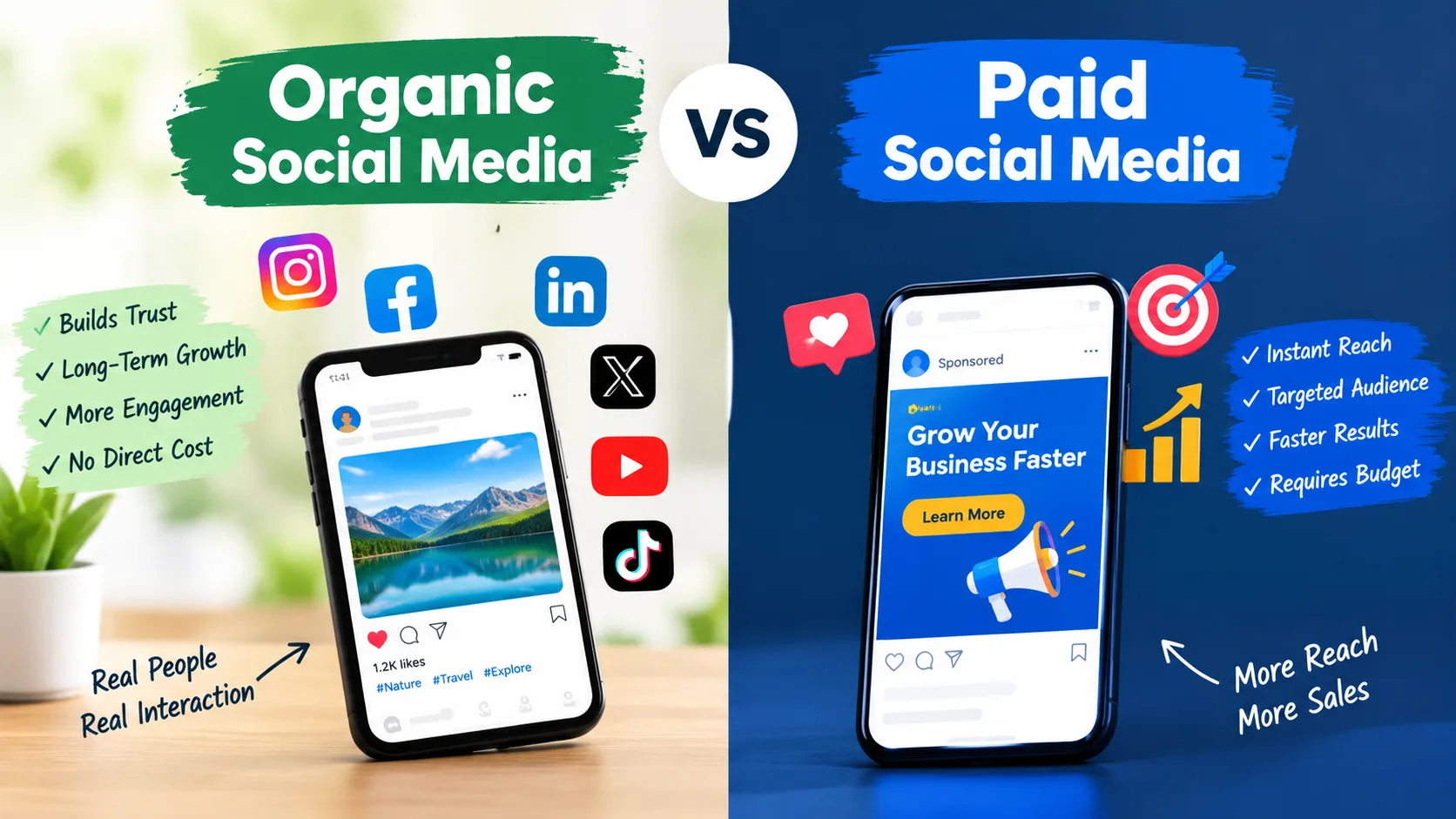
1. What Is Organic Social Media?
Organic social media is content a business shares on its social media pages without paying the platform for promotion. It can include photos, videos, stories, educational posts, polls, reviews, and business updates.
Organic marketing focuses on building relationships over time. It can help businesses create a community and keep customers interested in the brand.
How Organic Social Media Works
When a business publishes a post, followers may see it in their feeds. Other users may discover it through shares, recommendations, searches, or platform algorithms.
Reach depends on content quality, audience interest, engagement, and the platform. For example, a bakery can share new cake photos, customer reviews, offers, and behind-the-scenes videos without paying for an ad.
Benefits of Organic Content
Businesses do not have to pay for every post. Organic content can build trust and show a brand's personality.
Regular, useful posts help customers become familiar with a business. People may like, comment, share, save, or follow content they find useful.
Organic content can support long-term brand awareness and customer relationships.
Limitations of Organic Social Media
Organic reach can be limited. Having many followers does not mean every follower will see every post.
Building an audience also takes time. Businesses need to post regularly and create content their audience wants to see. Organic social media therefore requires patience and consistency.
2. What Is Paid Social Media?
Paid social media means paying a social media platform to show advertisements to a specific audience. Businesses can create ads for website visits, leads, sales, app downloads, or brand awareness.
Paid advertising gives businesses more control over who sees their content and when the campaign runs.
How Paid Social Media Works
Businesses create an advertisement, choose an audience based on factors such as location, age, interests, or online behavior, and set a budget and campaign period.
For example, a clothing store can show an ad to people in a specific city who may be interested in fashion. The ad can send them to the store's website or product page.
Benefits of Paid Advertising
Paid social media can help businesses reach more people in less time. It is useful for promoting new products, offers, events, and services.
Targeting is another benefit. Businesses can create campaigns for different customer groups and measure clicks, views, leads, and conversions. Paid ads can also reach people who do not follow the business.
Limitations of Paid Social Media
The biggest limitation is cost. Businesses need to spend money to keep ads running.
Paid campaigns also need planning. A business may spend money without good results if the audience, ad, offer, or landing page is unsuitable. Regular monitoring is important.
3. Organic Social Media vs Paid Social Media: Main Differences
The easiest way to understand the difference is to compare how each method reaches people, what it costs, how quickly it works, and what it is normally used for.
Difference in Reach
Organic content mainly reaches existing followers and may reach more users through shares, recommendations, and algorithms.
Paid content can reach people who do not follow the business. This can help a company introduce its products or services to a new audience.
Difference in Cost
Organic posting does not require an advertising payment for each post. However, businesses may still spend money on content creation, design, photography, or social media management.
Paid social requires an advertising budget. The cost can depend on the platform, audience, goal, competition, and campaign length.
Difference in Speed
Organic growth usually takes time because a business must build an audience through regular content and engagement.
Paid advertising can provide faster reach because businesses can promote content to a selected audience when a campaign starts. However, faster reach does not guarantee better results.
| Factor | Organic Social Media | Paid Social Media |
|---|---|---|
| Cost | No direct ad payment | Requires ad budget |
| Reach | Followers + algorithmic discovery | Selected target audience |
| Speed | Usually gradual | Can increase reach quickly |
| Main use | Brand building & engagement | Campaigns, leads & promotion |
| Long-term role | Consistent content | Campaign-based promotion |
4. Cost, Reach, and Results Explained
Cost and reach are important when deciding how to use social media. A lower cost does not always mean faster results, and a larger ad budget does not automatically guarantee success.
Organic Reach Takes Time
Organic growth usually happens step by step. A business can start with a small audience and grow through useful content and regular engagement.
For example, a fitness coach can share workout tips, healthy food ideas, and exercise videos. If people find the content useful, they may follow and share it.
This approach can create long-term value, but it requires patience and consistency.
Paid Reach Can Be Faster
Paid advertising can help a business reach a larger or more specific audience quickly.
For example, a new restaurant can run a local ad for nearby people and promote a new menu, discount, or opening offer.
Paid campaigns are useful when a business has a clear goal and wants to reach potential customers within a specific period.
Measuring Results
Both organic and paid content can be measured.
For organic content, businesses can check likes, comments, shares, saves, followers, profile visits, and website traffic.
For paid campaigns, they can also track impressions, clicks, cost per result, leads, conversions, and return on advertising spend.
5. Benefits and Limitations of Both Methods
Both approaches have useful features, but neither is perfect for every business. The right choice depends on goals, audience, budget, and marketing plans.
Benefits of Using Organic Social Media
Organic content helps businesses build customer relationships. It provides a place to answer questions, share updates, show products, and communicate with the audience.
It also supports brand awareness. Regular useful content can make people more familiar with a business and help build a community.
Benefits of Using Paid Social Media
Paid campaigns help businesses reach specific groups and promote important offers.
They are useful for product launches, seasonal sales, lead generation, website traffic, events, and other campaigns with a clear goal.
Paid ads can also help businesses test different audiences and messages.
Common Limitations
Organic growth can be slow, and reach can change because of platform algorithms.
Paid advertising can become expensive when campaigns are not planned or monitored properly.
Businesses should focus on useful content, clear goals, suitable audiences, and regular performance checks.
6. When Should a Business Use Each Method?
The best social media strategy depends on what a business wants to achieve. Some businesses may benefit from regular organic content, while others may need paid campaigns for specific goals.
Use Organic Social Media for Brand Building
Organic content is useful when the main goal is to build a brand and stay connected with existing customers.
A small business can share tips, product information, customer stories, company updates, and behind-the-scenes content.
This can make the brand feel more personal and help create stronger customer relationships.
Use Paid Social Media for Specific Campaigns
Paid advertising can be useful when a business wants customers to take a specific action.
For example, an online store may promote a new product, a training company may generate course leads, or a local business may advertise a limited-time offer.
Paid campaigns work better with a clear audience, message, budget, and goal.
Use Both for Better Coverage
Businesses do not always have to choose one method. Using both can create stronger coverage.
Organic content can build trust and keep the brand active, while paid campaigns can increase reach and support specific goals.
For example, a business can share useful organic content and then use paid advertising to promote an important offer to a wider audience.
7. How to Build the Right Social Media Strategy
A good social media strategy starts with understanding the business and its customers. Businesses should decide what they want their social media activity to achieve instead of simply posting or spending money on ads.
Set Clear Business Goals
Start by deciding what you want from social media.
Your goals could include:
- Building brand awareness
- Getting website visitors
- Generating leads
- Increasing online sales
- Getting more bookings
- Building customer relationships
A clear goal makes it easier to choose the right content and campaign.
Know Your Target Audience
Understand who your customers are, what they need, and which platforms they use.
For example, a professional service may focus on LinkedIn, while a fashion or food brand may focus more on Instagram.
Knowing your audience helps you create content and ads that are relevant to the people you want to reach.
Track and Improve Your Results
Do not publish content or run ads without checking results.
See which posts get the most engagement and which campaigns bring useful traffic, leads, or sales.
Use these results to improve future content and campaigns. Your strategy should change when your audience, goals, or performance changes.
8. Organic Social Media vs Paid Social Media: Which One Do You Need?
When comparing organic social media vs paid social media, remember that both can support business growth in different ways.
Organic content is useful for building relationships, sharing information, and creating a strong brand presence. It normally takes more time to build results but can support long-term engagement.
Paid social media is useful when a business wants to reach a specific audience, promote an offer, generate leads, or increase traffic during a campaign. It requires a budget and careful management.
Choose Based on Your Goals
If your goal is long-term brand building and customer engagement, regular organic content can be an important part of your strategy.
If your goal is targeted reach, quick promotion, leads, or sales, paid advertising can support those goals.
Create a Balanced Approach
For many businesses, using both methods can provide better coverage.
Organic content keeps the brand active and helps build relationships, while paid campaigns can increase reach when there is an important business goal.
The key is to understand your audience, set clear goals, create useful content, and check results regularly.
Conclusion
Understanding organic social media vs paid social media can help businesses make better marketing decisions. Organic social media focuses on relationships, useful content, and long-term brand value, while paid social media focuses on targeted reach and specific campaigns.
Neither method has to work alone. A business can use organic content to connect with its audience and paid advertising to reach new customers or promote important offers.
The right mix depends on your goals, audience, budget, and business needs. Start with a clear strategy, create useful content, track results, and improve your approach over time. This can help your business get more value from social media marketing.
Frequently asked questions
What is the difference between organic social media and paid social media?
Organic social media means sharing content without paying for promotion. Paid social media uses advertisements to reach a selected audience. Organic growth is usually slower, while paid promotion can provide faster reach.
Is organic social media free?
Yes. You can create and publish organic posts without paying for ads. However, creating quality content may still require time, tools, or other resources.
Is paid social media better than organic social media?
Neither method is always better. Organic social media is useful for building relationships and brand awareness, while paid social media can help with targeted campaigns, leads, sales, and website traffic.
How can a business use organic and paid social media together?
A business can use organic content to build trust and engage followers, then use paid ads to promote important products, offers, events, or campaigns to a wider and more targeted audience.
Which social media strategy is best for a small business?
The right strategy depends on the business goals, target audience, budget, and type of product or service. Many small businesses can use organic content for regular engagement and paid ads for specific campaigns.