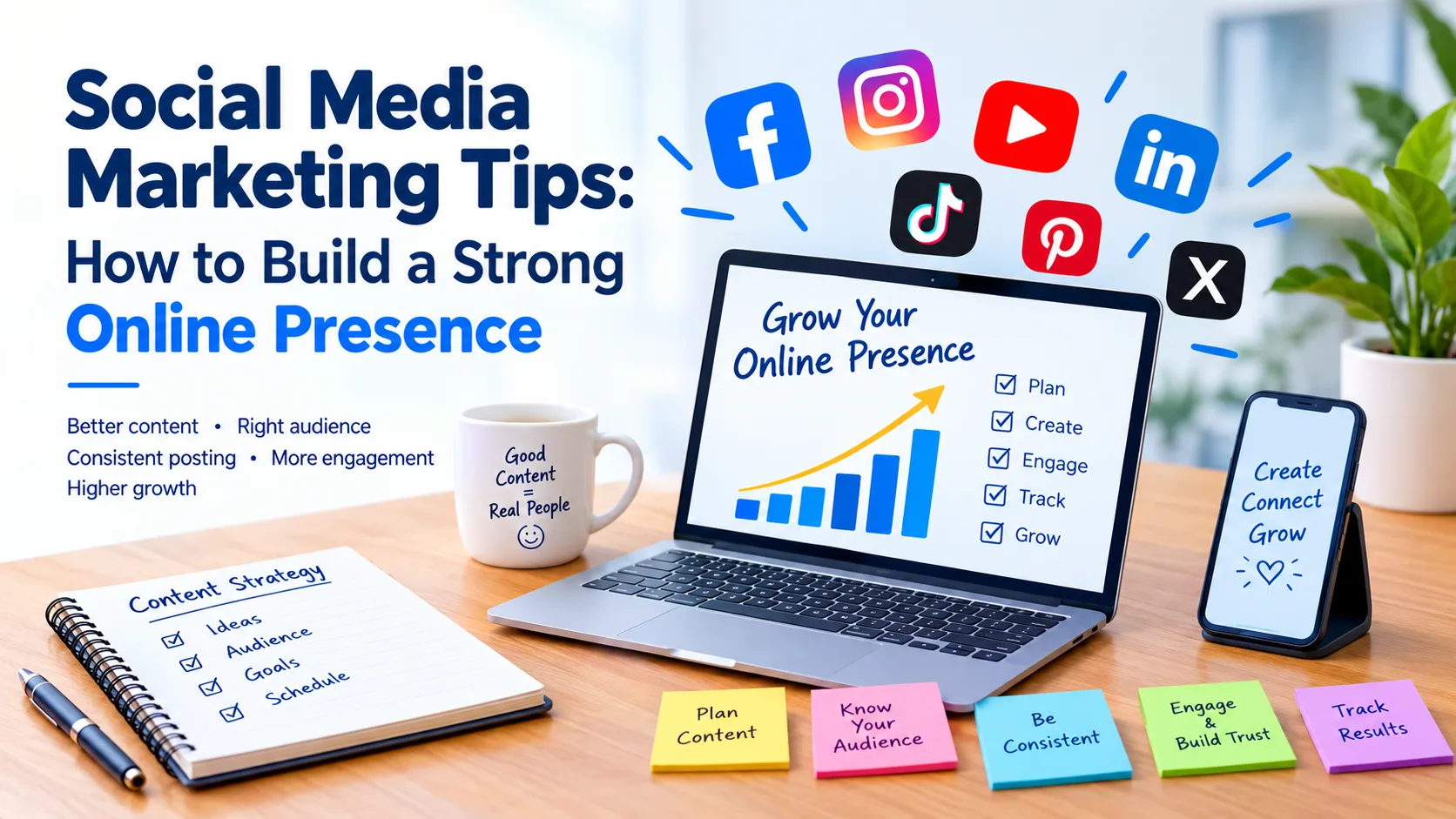
1. Start With a Clear Content Strategy
Before creating posts, decide what you want your social media pages to achieve. Your goal could be to increase brand awareness, bring visitors to your website, get more enquiries, promote products, or build a community around your business.
Once the goal is clear, plan the type of content you will share. A useful content strategy can include:
Educational posts that answer common questions
Product or service information
Customer stories and experiences
Short tips and useful facts
Behind-the-scenes content
Videos and demonstrations
Special offers and announcements
Industry news and updates
Try not to make every post a sales message. People usually follow business pages because they want useful information, interesting content, or solutions to their problems. A good balance between helpful and promotional posts can make your page feel more natural.
You can also create a simple weekly content plan. For example, Monday can be an educational post, Wednesday can be a short video, Friday can be a customer-focused post, and Sunday can be a simple question or discussion post. readmore
2. Know Your Target Audience
One of the most important Social Media strategy is to understand who you are trying to reach. A business cannot create useful content if it does not know its audience.
Think about your ideal customer. Consider their age, location, interests, problems, buying habits, and the type of information they usually look for online.
For example, a local clothing store may focus on young customers who are interested in fashion. A software company may create content for business owners, managers, or working professionals. A local restaurant may focus on people living or working near its location.
You do not need complicated research to begin. Start by checking the people who already follow your page. Look at which posts receive more comments, shares, views, or saves. These actions can give you clues about what your audience finds useful.
You can then adjust your content according to those interests.
3. Choose the Right Social Media Platforms
You do not need to be active on every social media platform. It is better to manage a few platforms properly than to create many accounts that receive little attention.
Different platforms can work better for different types of content and audiences.
For example:
Instagram can be useful for photos, short videos, reels, and visual products.
Facebook can help businesses connect with local communities and customers.
LinkedIn can be useful for professional services and B2B businesses.
YouTube works well for detailed videos, tutorials, reviews, and demonstrations.
Pinterest can help businesses that depend heavily on visual ideas and inspiration.
Start with the platforms where your target audience is most active. Once your content process becomes easier, you can expand to other channels.
4. Create Consistent and Useful Content
Consistent and useful content helps keep your audience interested and connected with your business.
Focus on sharing valuable information regularly while using different content formats to keep your social media active and engaging.
Post Consistently
Consistency is one of the simplest but most useful these tips for businesses. A page that posts once every few weeks can easily become inactive in the eyes of its audience.
You do not necessarily have to post several times every day. Instead, create a schedule that your business can maintain.
For example, a small business could start with three quality posts each week. The important thing is to follow the schedule regularly.
Create your posts in advance whenever possible. A monthly or weekly content calendar can help you decide:
What you will post
Which platform you will use
When the post will go live
Who will create the content
What action you want people to take
A content calendar also reduces the stress of deciding what to post at the last minute.
Create Content That Helps People
People are more likely to remember a business when its content gives them something useful. Instead of only talking about your company, focus on the problems your customers face.
For example, a digital marketing company can share simple SEO tips, website advice, content ideas, or social media lessons. A fitness business can share workout guidance and healthy lifestyle information. A clothing brand can provide styling ideas.
Think about questions customers ask before buying from you. These questions can become social media posts.
You can also turn one idea into different formats. A detailed topic can become a short video, an image post, a carousel, a story, and a short text post.
This saves time while helping you stay active across different platforms.
Use Visual Content
Visual content can make social media posts easier to understand and more attractive. Images, short videos, infographics, charts, carousels, and simple graphics can help communicate information quickly.
However, visual content does not always need to be complicated. A clean design with readable text can often work better than a crowded graphic.
When creating visuals, keep a few things in mind:
Use clear and readable text.
Keep the design simple.
Use good-quality images.
Maintain a consistent brand style.
Make sure the message is easy to understand.
Use video when it adds value.
Short videos can be useful for showing products, explaining services, answering questions, or sharing quick tips. If a video is useful without sound, consider adding captions so people can understand it easily.
5. Focus on Engagement and Trust
Engaging with your audience helps build stronger relationships and makes your business feel more approachable.
Authentic communication and regular interaction can help create trust and encourage people to stay connected with your brand.
Focus on Engagement, Not Just Followers
Having a large number of followers does not automatically mean that a business has a strong online presence. What matters is how people interact with the content.
Reply to comments and messages when possible. Thank people who share your posts. Ask questions that encourage discussion. You can also use polls, quizzes, and simple questions in stories.
For example, instead of posting only:
“Check out our new service.”
You could ask:
“What is the biggest challenge you face when promoting your business online?”
This gives people a reason to respond.
Engagement also helps businesses understand their customers better. Comments and messages can reveal common problems, questions, and opinions that may help you improve future content.
Build Trust Through Authentic Content
People want to know that there are real people behind a business. Authentic content can help make a brand feel more approachable.
Share company updates, team activities, project progress, customer experiences, work processes, or simple behind-the-scenes moments when appropriate.
Avoid making every post sound like an advertisement. A natural voice can help customers understand the personality of your business.
You should also avoid copying what competitors are doing. Look at other businesses for general ideas, but create your own topics, examples, visuals, and opinions. Original content gives your brand its own identity.
6. Use Hashtags, Keywords, and Calls to Action
Use relevant hashtags and keywords to help people discover your content naturally.
Add clear calls to action so your audience knows what to do next, such as visiting your website or contacting your business.
Use Hashtags and Keywords Carefully
Hashtags and keywords can help organize and discover content, but they should be used naturally. Adding a large number of unrelated hashtags can make a post look messy.
Choose terms that are connected to your business, topic, location, or audience.
For a local business, location-based terms can sometimes be useful. For example, a marketing company in Durgapur may use relevant terms connected to digital marketing and Durgapur.
The same idea applies to captions. Use words that clearly explain what the post is about instead of trying to add popular terms that have no connection to the content.
Encourage People to Take Action
Every post does not need to sell something, but many posts should have a clear purpose. Tell people what they can do next.
A call to action could ask people to:
Visit your website
Read an article
Send a message
Contact your business
Save the post
Share the information
Comment with their opinion
Learn more about a service
Keep your call to action simple. One clear action is usually easier to understand than several different instructions in the same post. readmore
7. Track Your Social Media Performance
One of the most important Social Media Marketing Tips is to check your results regularly. Posting without checking performance makes it difficult to understand what is working.
Most major social media platforms provide basic analytics. Depending on the platform, you may be able to check:
Reach
Impressions
Likes
Comments
Shares
Saves
Video views
Profile visits
Website clicks
Follower growth
Do not focus only on likes. A post with fewer likes may still bring more website visitors or enquiries.
For example, if educational posts receive many saves and shares, you may want to create more educational content. If short videos receive more views than static posts, you can test more video ideas.
Review your results every week or month and make small improvements based on the data.
8. Keep Improving Your Strategy
Social media changes regularly. The type of content that works today may not produce the same results later. This is why businesses should test different ideas instead of following one fixed plan forever.
Test Different Content Ideas
Try different topics, formats, posting schedules, captions, and calls to action. Then compare the results.
Make Small Improvements Over Time
Do not change everything at once. If you test too many things together, it becomes difficult to understand what caused a change in performance.
Small improvements over time can create a stronger social media presence. readmore
How TZAP Marketing Can Help Your Business
Managing social media can take time, especially when you are also running a business. TZAP Marketing helps businesses build their online presence through practical digital marketing services.
From social media marketing and SEO to website development, Google Ads, content creation, and website optimization, TZAP Marketing can help businesses create a more connected online strategy.
Instead of treating each marketing activity separately, businesses can work on their website, content, search visibility, advertising, and social media together. This can make it easier to maintain a clear brand message across different online channels.
If you want to improve your business presence online, you can explore the digital marketing services offered by TZAP Marketing and choose the areas that match your business goals.
Conclusion
Building a strong online presence does not happen overnight. It requires useful content, a clear understanding of your audience, regular posting, active engagement, good visuals, and regular performance tracking. These Social Media approach can help businesses create a simple and practical approach to social media without making the process unnecessarily complicated. Focus on helping your audience, stay consistent, learn from your results, and improve your strategy over time. A strong online presence is built through regular effort and meaningful communication, not just the number of posts or followers.
Frequently asked questions
What is social media marketing?
Social media marketing is the process of using social media platforms to share content, connect with an audience, promote products or services, and build a relationship with customers. Businesses can use platforms such as Instagram, Facebook, LinkedIn, YouTube, and others based on their audience and goals.
How often should a business post on social media?
There is no single posting schedule that works for every business. A company should choose a frequency it can maintain consistently. For many small businesses, starting with a few useful posts each week can be easier than trying to publish many posts every day.
How can I increase engagement on social media?
Create content that is useful or interesting to your audience, ask simple questions, reply to comments, respond to messages, and use formats such as short videos, stories, polls, and carousels. Understanding what your audience responds to can help you create better content.
How do I know whether my social media strategy is working?
Check performance data such as reach, engagement, shares, saves, profile visits, website clicks, and enquiries. Compare results over time and identify which topics and formats are getting better responses. Use those findings to improve your next content plan.