Social media marketing helps businesses connect with people, share useful content, and promote products or services online. Platforms such as Facebook, Instagram, LinkedIn, and YouTube help businesses reach customers. A good social media plan can improve brand awareness, reach a wider audience, build customer relationships, generate leads, bring visitors to a website, and support sales. It can also help small businesses become more visible online.
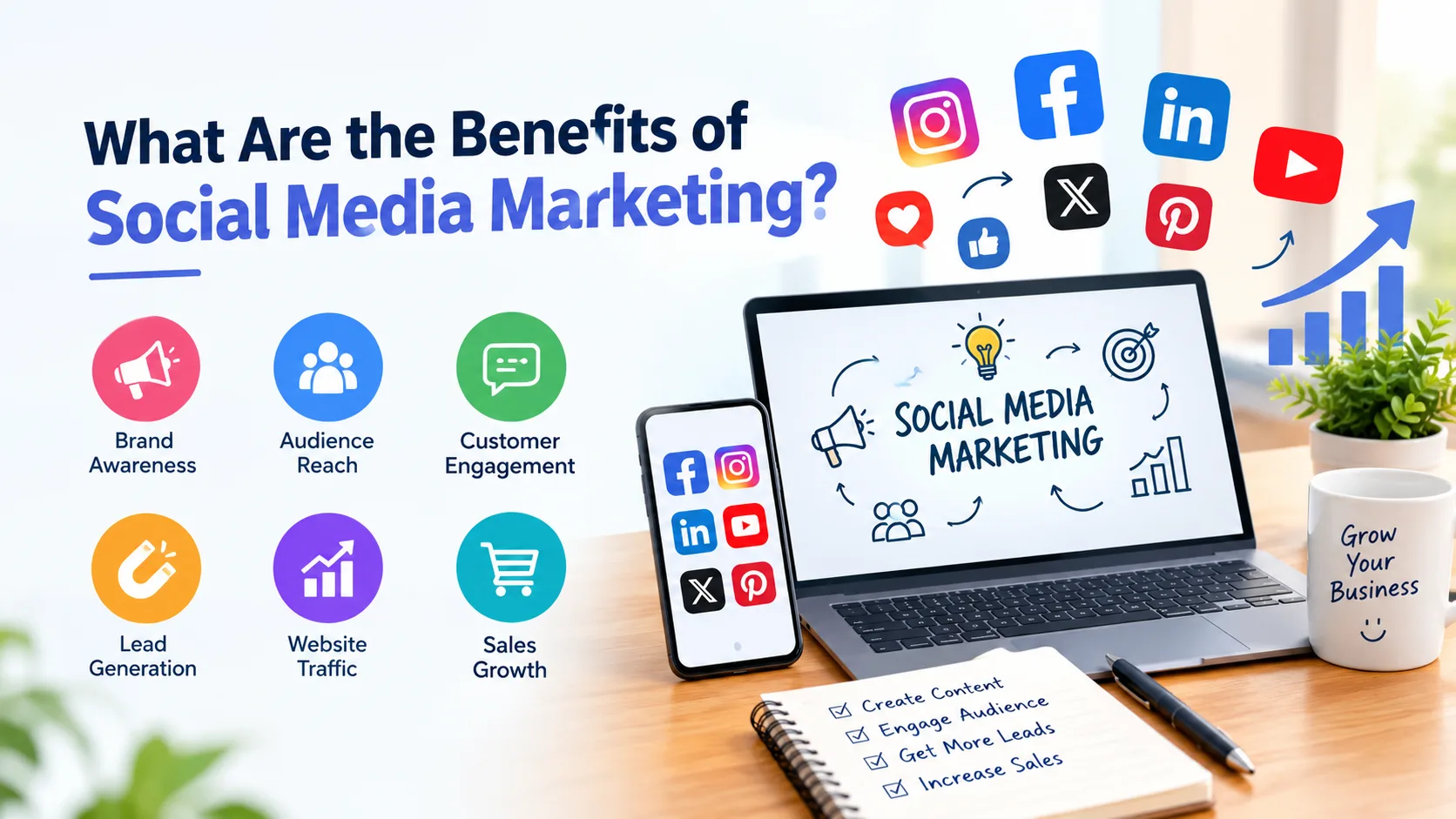
Key Advantages of Social Media Marketing for Businesses
Social media marketing can support many important business goals. It is not only about posting pictures or advertisements. Businesses can use social platforms to introduce their brand, share useful information, answer customer questions, and promote their products or services. Businesses can get better results when they have a clear goal and create content for a specific audience.
Builds Brand Awareness
Regular posts help people notice and remember a business. A company can share its products, services, logo, useful tips, customer stories, and behind-the-scenes content. For example, a local clothing store can post new arrivals and simple styling ideas on Instagram. Regular visibility can make the brand easier to remember.
Reaches More People
Social media helps businesses reach people beyond their local area. Paid campaigns can target people by location and interests. A small bakery, for example, can show pictures of its cakes to people living nearby and attract new customers.
Customer Engagement and Better Relationships
Customer engagement means communicating with people instead of only promoting products. Social media gives customers a quick way to comment, ask questions, send messages, and give feedback. Businesses can use these conversations to understand customer needs and build better relationships.
Respond to Customers
Fast and polite replies can make customers feel valued. A business should answer questions about prices, delivery, availability, or services clearly. If someone comments on a product post, a helpful response can continue the conversation and create a better customer experience.
Share Customer-Focused Content
Businesses can share reviews, testimonials, common questions, and customer content with permission. For example, a restaurant can repost a customer's food photo. Real experiences can help other people understand the business.
Lead Generation Through Social Media
Lead generation means finding people who may be interested in a product or service. Social media can help businesses collect enquiries through messages, forms, landing pages, offers, and calls to action. The next step should be simple so interested users know what to do.
Use Clear Calls to Action
A call to action tells people what action to take. Examples include “Visit our website,” “Send us a message,” “Book a consultation,” or “Download the guide.” A digital marketing agency can share a useful SEO tip and invite interested business owners to contact the team.
Offer Useful Information
People may respond when they receive useful information first. Free checklists, guides, demonstrations, webinars, and educational posts can attract potential customers. For example, an accounting company can share a simple tax checklist and invite readers to ask for more information. This gives value and creates an opportunity.
Drive More Website Traffic
Social media can send interested users to a business website. A post can link to a product page, blog article, service page, registration form, or contact page. This moves people to a place where they can learn more. Website visits can also introduce people to other products, services, and useful information.
Promote Helpful Website Content
A business can share blog posts, guides, case studies, and videos from its website. For example, a web development company can publish an article about website speed and share it on LinkedIn and Facebook. People who find the topic useful may click the link and read the complete article.
Make Links Easy to Follow
The message around a link should explain what users will find after clicking. A clear sentence can give people a reason to visit. Businesses can also track visits from social media to learn which posts bring more traffic.
Increase Sales With Social Media
Social media can support sales by helping people discover products, understand benefits, compare options, and contact a business. Every post should not be a sales message. A balanced mix of educational, entertaining, customer-focused, and promotional content can keep people interested.
Show Products in Real Use
Photos, short videos, demonstrations, and customer stories can make products easier to understand. For example, a home decor store can show how one product looks in different rooms. A clothing business can show different ways to wear the same outfit. Practical content helps buyers understand a product.
Use Offers Carefully
Discounts, bundles, seasonal promotions, and limited-time offers can encourage action. Businesses should clearly explain the price and deadline. They should avoid misleading claims and give customers enough information to make an informed decision.
Practical Ways to Use Social Media Effectively
The results of social media depend on how consistently and thoughtfully a business uses it. A simple plan can help businesses avoid random posting and focus on useful goals. Each activity should connect to a real business purpose.
Set Clear Goals
A business should decide whether it wants more awareness, engagement, leads, website visitors, or sales. Clear goals make it easier to choose content and measure results. For example, a new business may focus on awareness first, while an established business may focus more on leads.
Track Performance
Businesses can review reach, views, engagement, clicks, enquiries, and conversions. These numbers show what works today. If short videos receive more engagement than images, a business can create more videos while continuing to test other formats.
Stay Consistent
A regular posting schedule helps businesses stay visible. Content does not need to be complicated. A weekly plan can include educational tips, product information, customer stories, short videos, and one promotional post. Consistency makes social media easier to manage.
Understand Your Audience
Businesses should learn what their audience wants to see, what questions they ask, and which problems they need to solve. This information can guide content. For example, a software company can make simple tutorial videos when customers often ask how to use a particular feature.
Build Long-Term Value With Social Media
Social media can provide value beyond short-term promotions. Regular communication helps a business remain familiar to its audience and maintain customer relationships. This long-term value matters because people may need several interactions before buying.
Build Trust With Useful Content
Businesses can share helpful information instead of making every post about selling. Educational posts, product tips, customer stories, company updates, and answers to common questions can show that a business understands its audience. Useful content can encourage people to follow and interact with a brand.
Learn From Customer Feedback
Comments and messages can show what customers like, dislike, or want to know. Businesses can use this feedback to improve content, services, products, or support. For example, if many customers ask the same question, the business can create a short post or video that answers it clearly.
Conclusion
Social media marketing offers several benefits, including stronger brand awareness, wider audience reach, better customer engagement, more leads, increased website traffic, and support for sales. Businesses can get better results by choosing the right platforms, creating useful content, responding to customers, using clear calls to action, and tracking performance. Social media works best as a long-term marketing channel. With a simple plan, regular effort, and useful content, businesses can build relationships, reach potential customers, and support steady online growth.
Frequently asked questions
What are the main benefits of social media marketing?
The main benefits include better brand awareness, wider audience reach, customer engagement, lead generation, website traffic, and increased sales. It also helps businesses communicate directly with customers.
How does social media marketing help a business grow?
Social media marketing helps businesses reach potential customers, promote products or services, build relationships, and bring more visitors to their websites. Regular and useful content can support long-term business growth.
Which social media platforms are best for businesses?
The best platform depends on the target audience and business type. Instagram is useful for visual content, LinkedIn works well for professional and B2B businesses, and YouTube is useful for videos and tutorials.
Can social media marketing generate leads?
Yes. Businesses can generate leads through contact forms, direct messages, landing pages, offers, free guides, and clear calls to action. Useful content can encourage interested people to contact the business.
How does social media marketing increase sales?
Social media marketing can increase sales by helping customers discover products, understand their benefits, view demonstrations, and access special offers. Businesses can also use social media to guide interested customers to product or service pages.