Digital marketing means promoting a business, product, or service through the internet and digital devices. It helps businesses reach people where they spend time, such as search engines, social media, websites, and email. Businesses use different digital channels to attract visitors, share useful information, build trust, and turn interested people into customers. Unlike traditional marketing, digital marketing can also help businesses measure results and understand what works better.
How Does Digital Marketing Work for Businesses?
Digital marketing is the process of using online channels to promote a business and connect with potential customers. These channels include search engines, social media platforms, websites, email, online advertisements, and useful content.
The main goal is not only to make people see an advertisement. It is also to help them understand a product, trust a business, and take an action. This action may be visiting a website, filling out a form, making a call, or buying a product.
Digital marketing usually follows a simple process. First, a business identifies its target customers. Then, it chooses suitable digital channels to reach them. After that, it creates useful messages or offers and sends them to the right audience.
Businesses can then check the results. They can see how many people visited a website, clicked an advertisement, opened an email, or purchased something. This information helps them improve future marketing activities.
Understanding the Target Audience
Every business has a different audience. A clothing store may target young shoppers, while a software company may target business owners.
Knowing the audience helps a business create better content and choose the right marketing channels.
Reaching People Online
People search for information, watch videos, use social media, and check emails every day. Digital marketing allows businesses to become visible during these activities.
This makes online marketing useful for both small and large businesses.
How Does Digital Marketing Help Businesses Reach Customers?
Digital marketing helps businesses connect with people at different stages of their buying journey. The digital marketing process becomes easier to understand by looking at how a person moves from first discovering a brand to becoming a customer.
Some people may not know about a business yet, while others may already be interested in its products.
A good strategy gives each group the right information. For example, a new customer may first see a social media post. Later, the person may visit the website and read a helpful article.
After learning more, the person may receive an email or see an online advertisement. These different touchpoints can help the customer feel more confident about the business.
Digital marketing also allows businesses to reach people based on useful information such as interests, search behavior, location, or previous website activity, depending on the platform and its settings.
Building Awareness
The first step is often making people aware of a brand. Social media posts, videos, search results, and advertisements can introduce a business to new people.
The purpose is to get attention and encourage people to learn more.
Turning Interest Into Action
After attracting visitors, businesses need to guide them toward an action. A clear website, useful information, strong product details, and simple contact options can help.
This stage is important because traffic alone does not always create customers.
SEO Helps People Find a Business on Search Engines
Search Engine Optimization, or SEO, is a major part of digital marketing. It helps websites appear in search engine results when people search for related information, products, or services.
For example, someone may search for “best shoes for running.” A shoe business can create useful content around this topic and optimize its website to reach people searching for similar information.
SEO focuses on providing helpful content and making a website easier for search engines and users to understand.
Keyword Research
Keyword research means finding the words and phrases people use when searching online. Businesses can use these terms in useful website content.
The goal is to match content with what users actually want to know.
On-Page and Technical SEO
On-page SEO includes headings, page titles, content, images, links, and keyword use. Technical SEO focuses on areas such as website speed, mobile usability, site structure, and search engine access.
Good SEO can bring relevant visitors without paying for every click.
Social Media and Content Marketing Build Trust
Social media marketing helps businesses communicate with customers through platforms where people regularly spend time. Businesses can share posts, images, videos, stories, offers, and educational content. Social media is another important channel businesses can use to connect with their audience.
Content marketing works closely with social media. It focuses on creating useful information that helps people solve problems or understand a topic.
Together, these methods can help a business become more familiar to its audience.
Social Media Marketing
Businesses can use social media to introduce products, answer questions, share updates, and communicate with followers.
Regular and useful posts can help a brand stay visible. However, content should be created for the audience instead of only promoting products.
Content Marketing
Content can include blog posts, videos, guides, infographics, and other useful materials. Good content answers common questions and provides clear information.
Helpful content can bring visitors to a website and build trust over time.
Email Marketing Keeps Customers Connected
Email marketing is another important digital marketing channel. It allows businesses to communicate directly with people who have chosen to receive their emails.
Businesses can use emails to share product updates, useful information, special offers, newsletters, and reminders.
Email marketing can be useful because communication does not depend only on social media algorithms or search rankings. However, businesses should send relevant messages and respect customer preferences.
Building an Email List
An email list contains people who have agreed to receive communication from a business. Businesses can encourage visitors to join by offering useful newsletters, guides, updates, or other valuable resources.
A quality email list is usually more useful than simply having a large number of contacts.
Sending Useful Emails
Emails should have a clear purpose. A business may send a helpful guide one week and a product update later.
Personal and relevant messages can make emails more useful. Businesses should avoid sending too many unnecessary emails.
PPC Advertising Can Bring Targeted Traffic Quickly
Pay-Per-Click, or PPC, is a form of online advertising where advertisers generally pay when someone clicks an advertisement. PPC can appear on search engines, websites, social platforms, and other digital channels.
For example, a business selling laptops can create an advertisement for people searching for laptops online. When users click the advertisement, they can be sent to a product or landing page.
PPC can provide quick visibility, but businesses need to manage their budgets carefully.
How PPC Works
A business creates an advertisement, selects an audience or relevant search terms, sets a budget, and sends users to a chosen page.
The platform then displays the advertisement based on its advertising system, competition, relevance, and other factors.
Measuring PPC Results
Businesses can measure clicks, impressions, conversions, cost per click, and other useful numbers.
These results help marketers understand whether an advertising campaign is reaching the right audience and producing useful actions.
How Digital Marketing Turns Visitors Into Customers
The final goal of digital marketing is often to turn attention and interest into useful business results. These results may include purchases, phone calls, registrations, app downloads, bookings, or enquiries.
The role of digital marketing becomes easier to understand when we look at the complete customer journey. A person may discover a business through SEO, learn more through content, follow it on social media, receive an email, and finally make a purchase.
Different channels can support different parts of this journey.
Tracking and Measuring Results
Digital marketing provides many numbers that businesses can study. These may include website visitors, search traffic, social engagement, email opens, advertisement clicks, leads, and sales.
Businesses can use these numbers to find which activities are working and which areas need improvement.
Improving the Customer Journey
A business should make it easy for visitors to understand what to do next. Clear buttons, simple navigation, useful product information, and easy contact options can improve the customer experience.
A visitor should not have to search for basic information or struggle to complete an action.
Why Businesses Use Digital Marketing
Businesses use digital marketing because it can help them reach specific audiences, share information, build relationships, and measure marketing activities.
This also explains why different digital channels are often used together. A small business can use local SEO and social media, while a larger company may use SEO, content, email, PPC, and several other channels together.
The right combination depends on the business, audience, goals, budget, and industry.
Conclusion
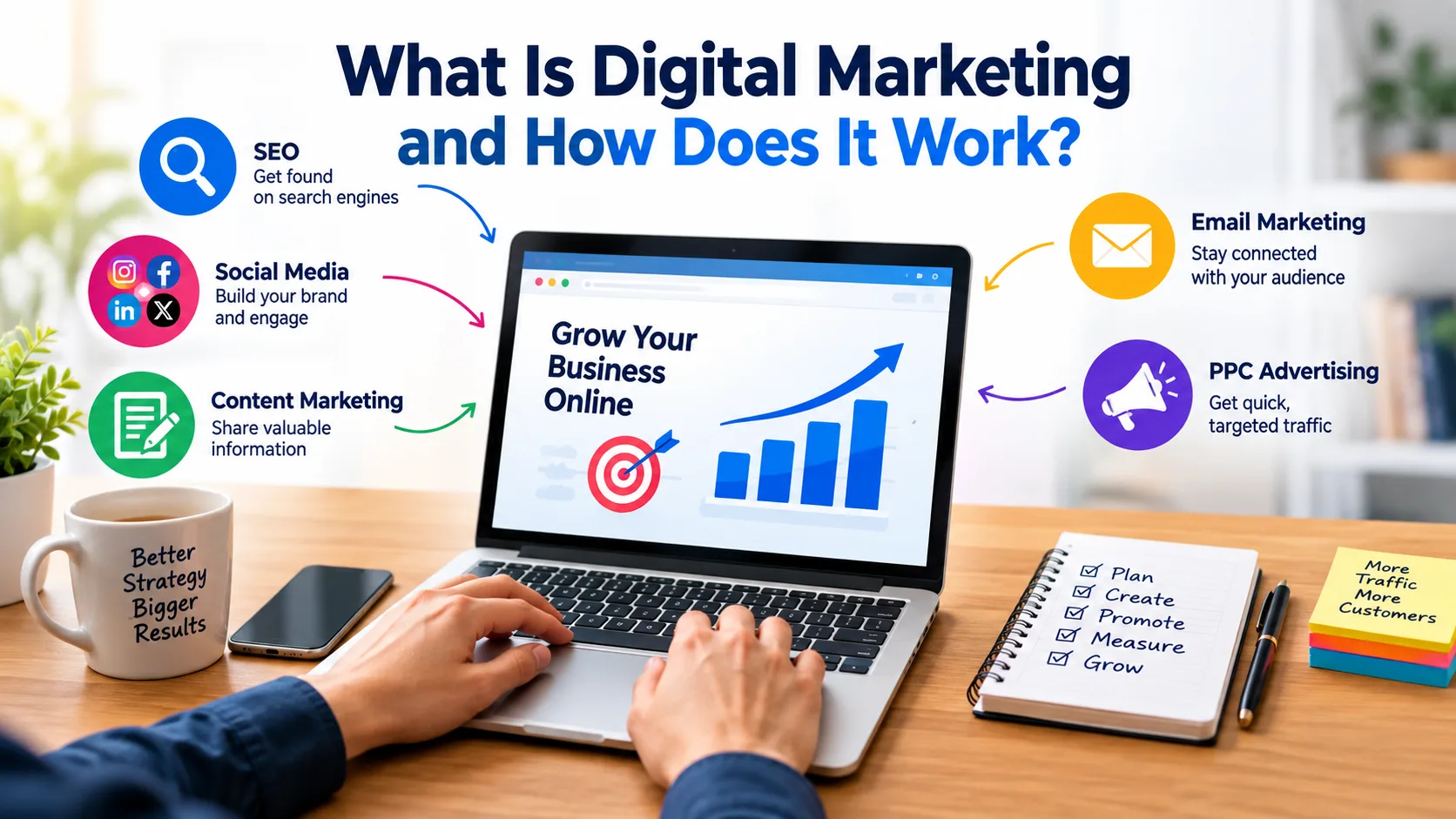
What Is Digital Marketing and How Does It Work? is a simple question with a broad answer. Digital marketing uses online channels to help businesses reach people, provide useful information, build trust, and encourage action. SEO helps people find websites through search engines, while social media and content marketing help businesses communicate with their audiences. Email marketing keeps customers connected, and PPC can provide targeted paid traffic. By measuring results and improving each channel, businesses can create a stronger online presence and support long-term growth.
Frequently asked questions
What Is Digital Marketing and How Does It Work?
Digital marketing is the process of promoting a business, product, or service through online channels. It uses SEO, social media, content, email, and PPC to reach potential customers and encourage them to take action.
Why Do Businesses Use Digital Marketing?
Businesses use digital marketing to reach specific audiences, build brand awareness, share useful information, connect with customers, and generate leads or sales.
How Does SEO Help in Digital Marketing?
SEO helps a website appear in search engine results when people search for related information, products, or services. It can bring relevant visitors to a website without paying for every click.
What Is the Role of Social Media in Digital Marketing?
Social media helps businesses communicate with their audience through posts, images, videos, stories, and other content. It can increase brand awareness and help businesses build relationships with customers.
What Is PPC in Digital Marketing?
PPC, or Pay-Per-Click, is online advertising where advertisers generally pay when someone clicks an advertisement. It can help businesses get targeted traffic and measure clicks, conversions, and advertising costs.