App Development Technologies: Tools and Frameworks You Need to Know help developers build, test, and maintain modern mobile applications. Different technologies support Android, iOS, and cross-platform apps. Programming languages create app logic, while frameworks provide useful structures and features. Databases store important information, and testing tools help find problems before launch. Businesses should choose technologies based on app type, budget, performance, development time, team skills, and future plans. Understanding these choices helps businesses build reliable apps and manage them effectively today.
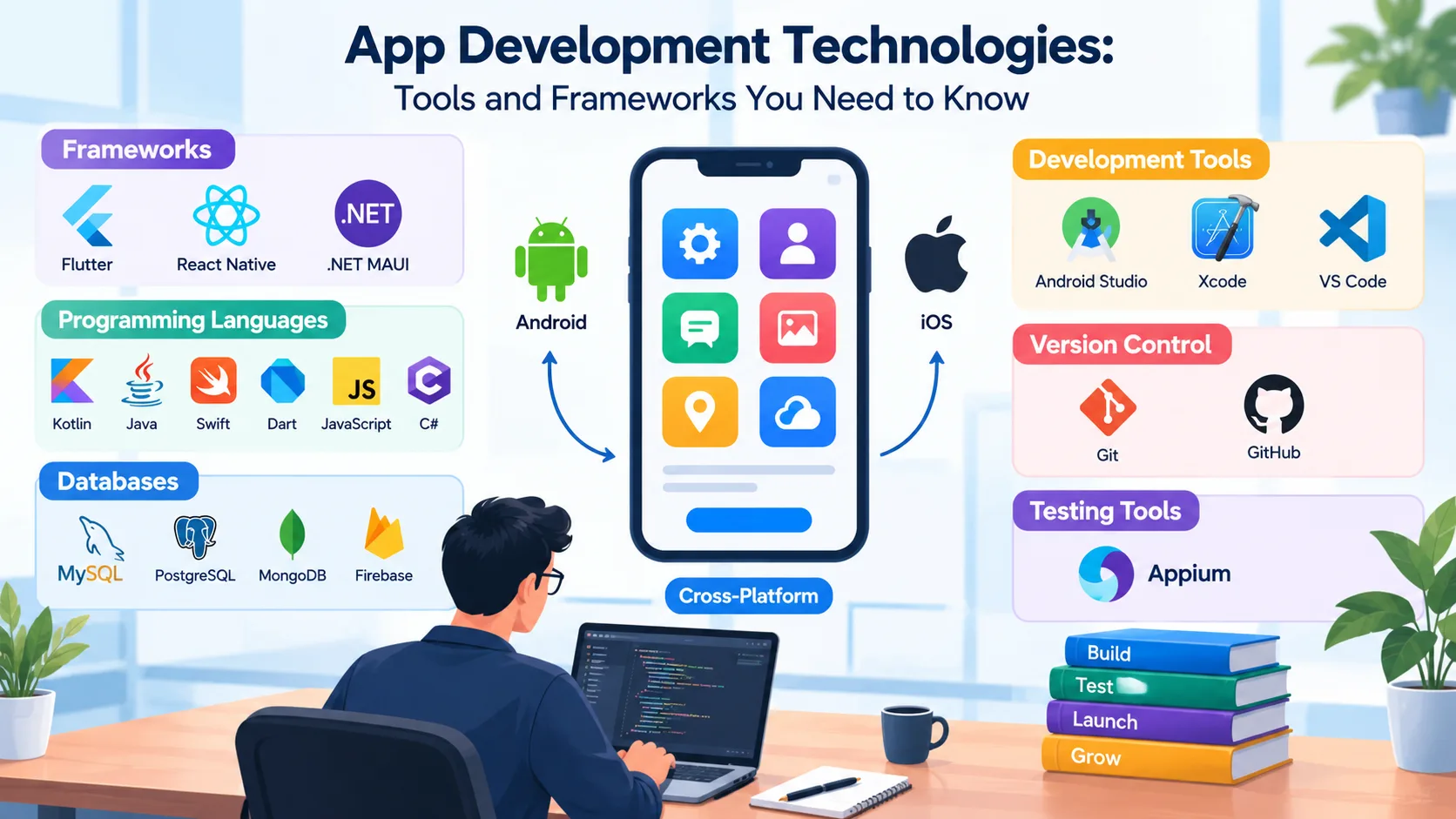
Understanding App Development Technologies: Tools and Frameworks You Need to Know
App Development Technologies: Tools and Frameworks You Need to Know include two approaches for mobile apps: native and cross-platform development. Native development creates an app for one operating system, while cross-platform development lets developers share code across platforms. The choice can affect performance, cost, development time, and maintenance.
Native App Development
Native development means creating an app specifically for Android or iOS. It gives developers direct access to platform features and tools. For Android, developers commonly use Kotlin and Android Studio. For iOS, Swift and Xcode are widely used. Native development is useful when an application needs advanced device features, high performance, or deep platform integration.
Cross-Platform Development
Cross-platform development uses a shared codebase for more than one platform. This can reduce repeated coding and help businesses develop Android and iOS apps with fewer resources.
Flutter, React Native, and .NET MAUI are popular choices. Cross-platform development can also make updates easier because shared code may reduce the number of separate changes required across platforms.
2. Programming Languages Used in App Development
Programming languages are the foundation of an application. They tell the app what to do when users tap buttons, enter information, move between screens, or use different features. The language normally depends on the platform and framework selected for the project.
Kotlin and Java for Android
Kotlin is a major language for Android development. It has concise syntax and works well with existing Java code. Java is also important because many existing Android applications use it.
Swift for iOS
Swift is Apple's modern programming language for its platforms. It is designed to be readable, safe, and fast. Developers use Swift to create applications for iPhone, iPad, and other Apple devices.
Dart, JavaScript, TypeScript, and C#
Different cross-platform frameworks use different languages. Flutter uses Dart, while React Native commonly uses JavaScript or TypeScript. .NET MAUI uses C#.
Language choice should also consider available libraries, developer experience, and how easily the team can find support when problems appear.
3. Popular Frameworks for Mobile Applications
Frameworks provide ready-made structures, libraries, components, and development features. App Development Technologies: Tools and Frameworks You Need to Know should include frameworks because the selected framework can affect development speed, maintenance, and flexibility.
Flutter
Flutter is a framework from Google that uses Dart. It allows developers to create applications for Android and iOS from a shared codebase.
Flutter provides widgets that help developers create user interfaces.
React Native
React Native is based on React and uses JavaScript or TypeScript. It allows developers to build mobile applications for Android and iOS while sharing much of the code.
.NET MAUI
.NET MAUI is a Microsoft framework for creating applications across platforms using C#. It supports Android, iOS, Windows, and macOS.
4. Databases and Data Management Technologies
A database stores information that an application needs to save and use later. This can include customer accounts, product details, orders, messages, and settings. The database should match the app's data structure, performance needs, security requirements, and expected growth.
SQL Databases
SQL databases store information in structured tables. MySQL, PostgreSQL, and SQLite are common examples.
They are useful when an application has organized information and clear relationships between records. An online store, for example, may need connected data for customers, products, orders, and payments.
NoSQL Databases
NoSQL databases use flexible data structures. MongoDB is a popular example.
They can be useful when an application handles changing data structures or needs flexible storage.
Cloud Database Services
Cloud database services allow businesses to store and manage data using cloud infrastructure. Firebase is one example often used with mobile applications.
Before choosing a cloud service, businesses should review storage needs, expected traffic, pricing, backup options, and how the service connects with the application.
5. Development, Version Control, and Testing Tools
App Development Technologies: Tools and Frameworks You Need to Know also include development, debugging, version control, and testing tools. These tools help developers write code, find problems, manage changes, and check whether an application works correctly on different devices and operating systems.
Development Tools
Android Studio is a major development environment for Android applications. It supports coding, debugging, and testing.
For Apple platforms, Xcode provides tools for building, testing, optimizing, and preparing applications for release. Visual Studio Code is another popular code editor used for different development projects.
Version Control Tools
Git helps developers track changes in project files. It allows teams to work on different parts of a project while keeping a record of previous changes.
GitHub can be used with Git to store code and support collaboration.
Testing Tools
Testing checks whether an application works as expected. Developers can perform unit testing, interface testing, integration testing, and automated testing.
Appium can support automated mobile application testing. Testing should cover different devices, screen sizes, operating systems, and common user actions.
6. How Businesses Should Choose the Right Technology
Choosing technology is not only a technical decision. It can affect development cost, delivery time, maintenance, performance, and future changes. App Development Technologies: Tools and Frameworks You Need to Know can help businesses compare these choices before development begins.
Define the App's Requirements
Start by listing the main purpose and important features. Decide whether the app needs user accounts, payments, location services, notifications, messaging, or offline access.
A clear feature list helps developers understand which programming languages, frameworks, databases, and tools may be suitable.
Compare Native and Cross-Platform Options
Native development can be suitable when maximum platform performance or deep device integration is important. Cross-platform development can be useful when a business wants Android and iOS apps while sharing much of the code.
Consider Team Skills and Support
Businesses should check whether the development team has experience with the selected language, framework, database, and tools.
They should also consider documentation, developer support, maintenance, and future updates.
7. Building a Technology Stack for Future Growth
A technology stack is the collection of programming languages, frameworks, databases, development tools, and other technologies used to build an application. A good stack should meet current requirements while supporting future updates, maintenance, and growth.
Match Technology With App Size
A small business application may not need a complex technology stack. A large application with many users, transactions, integrations, and data may need stronger backend and database planning.
Plan for Maintenance
Applications need updates after launch. Developers may need to fix bugs, improve performance, update dependencies, support new operating-system versions, and add features.
Prepare for Future Growth
Businesses should think about how the application may grow. More users, more data, new features, and additional platforms can change technology requirements.
Early planning can prevent major technology changes later and help the business add features without creating unnecessary development work.
Conclusion
App Development Technologies: Tools and Frameworks You Need to Know are important for creating reliable, useful, and maintainable mobile applications. Native technologies such as Kotlin and Swift are suitable for platform-specific development, while Flutter, React Native, and .NET MAUI can support cross-platform projects. Programming languages control app behavior, databases manage information, and development and testing tools help improve quality.
Businesses should not select technology only because it is popular. They should compare app requirements, performance, budget, team skills, development time, maintenance needs, and future growth. A well-planned technology stack can make development easier and give the application a stronger foundation for long-term success.
Frequently asked questions
What are the main technologies used in app development?
The main technologies include programming languages, frameworks, databases, development tools, version control systems, and testing tools. The right combination depends on the app's platform, features, performance needs, and future plans.
What is the difference between native and cross-platform app development?
Native development creates an app specifically for Android or iOS, while cross-platform development allows developers to share code across multiple platforms. The choice depends on performance, features, budget, and development time.
Which programming languages are commonly used for mobile apps?
Kotlin and Java are commonly used for Android development, while Swift is used for iOS. Flutter uses Dart, React Native commonly uses JavaScript or TypeScript, and .NET MAUI uses C#.
Which frameworks are popular for cross-platform app development?
Flutter, React Native, and .NET MAUI are popular cross-platform frameworks. The best choice depends on the app's features, required performance, development team's skills, and long-term maintenance needs.
How should a business choose the right app development technology?
A business should consider its app requirements, target platforms, budget, performance needs, development team's skills, maintenance requirements, and future growth before selecting a technology.