What Does AI Analyze on Social Media?
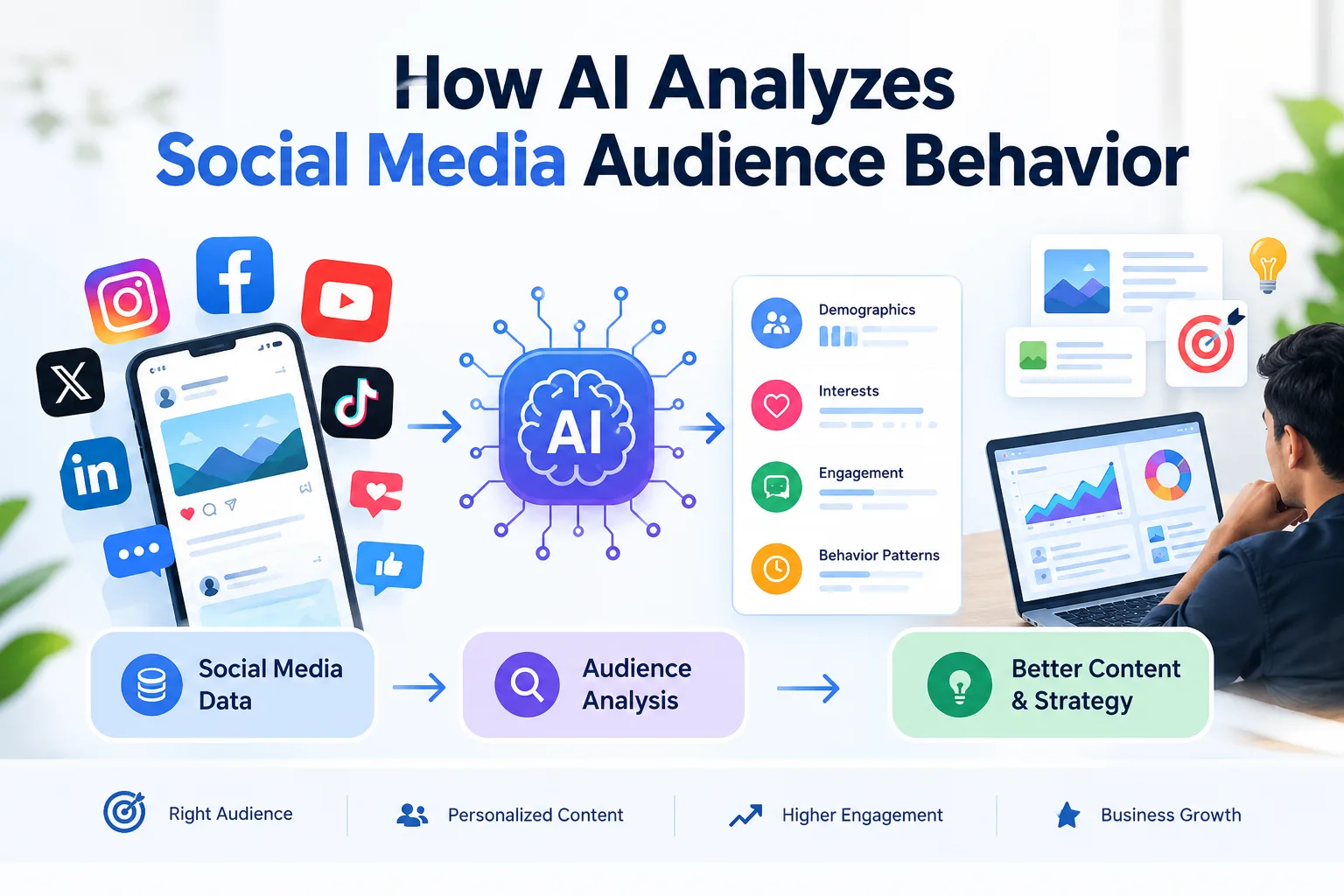
How AI Analyzes Social Media Audience Behavior becomes easier to understand when businesses look at different types of user data together. AI can connect engagement, interests, demographics, and content interactions to identify meaningful audience patterns.
One important source of information is engagement data. This includes likes, comments, shares, saves, clicks, video views, watch time, and other interactions. AI can compare these signals to identify which types of posts receive stronger responses from an audience.
For example, if a business regularly publishes educational videos and product-focused posts, AI-powered analytics can help identify which format generates more engagement. It may also reveal that short videos receive more views while detailed posts generate more comments.
AI can also analyze audience interests. It can identify common topics, categories, keywords, hashtags, and content themes that users interact with. This helps businesses understand what subjects are attracting attention within their target audience.
Demographic information can provide another layer of understanding. Depending on the platform and available data, businesses may be able to analyze factors such as age groups, location, language, or other audience characteristics. Combining demographic information with engagement behavior can create a clearer picture of who is interacting with a brand.
How AI Analyzes Social Media Audience Behavior
Businesses can use How AI Analyzes Social Media Audience Behavior to understand which audience groups respond to specific topics, formats, and messages
One common method is pattern recognition. AI systems can examine thousands or millions of interactions and look for relationships between users, content and engagement. For example, the system may identify that a particular audience segment consistently interacts with tutorial videos during certain periods of the day.
Another important area is behavior analysis. AI can examine what users do after interacting with content. A person may watch a video, visit a profile, click a website link and eventually make a purchase. Looking at these actions together can help businesses understand the customer journey.
AI can also identify changes in audience behavior over time. If engagement with a particular content category starts increasing, the data may indicate a growing interest in that topic. Similarly, declining interaction with a certain type of post can show that the content may need to be changed.
Engagement Data
Engagement data gives businesses valuable information about how audiences respond to content. AI can compare different engagement signals and identify which actions are most meaningful.
For example, a share may indicate that a user found content useful enough to pass along to others, while a comment may indicate stronger interest or a desire to participate in a discussion.
AI can analyze these signals at scale and help businesses identify high-performing content patterns.
Interests and Content Preferences
AI can analyze the subjects people interact with most frequently. If users regularly engage with content about a particular product category, problem, trend, or topic, businesses can use that information when planning future content.
This can help move content planning away from guesswork. Instead of publishing topics simply because they seem popular, marketers can use actual audience behavior to identify areas worth exploring.
Demographics
Demographic information can help businesses understand who is engaging with their content. Age groups, locations, languages and other available audience characteristics can provide useful context.
For example, a business may discover that its content is receiving strong engagement from a different location or age group than originally expected. This information can influence future targeting, messaging and content decisions.
Browsing Patterns
Browsing and navigation behavior can provide additional information about audience interests. Depending on the platform and available data, businesses may be able to understand patterns such as profile visits, link clicks, content discovery and movement between different pieces of content.
These patterns can help identify what users are interested in beyond a single interaction.
How AI Creates Audience Insights
How AI Analyzes Social Media Audience Behavior can also help marketers identify which content formats and topics are more likely to generate meaningful engagement.
For example, AI may identify that one group of users primarily engages with educational content, while another group responds more strongly to product demonstrations. A business can then create different content approaches for these groups.
AI can also help identify audience segments based on behavior rather than relying only on basic demographic categories. Users with similar interests and interaction patterns can be grouped together for analysis.
These insights can answer practical questions such as:
Which content formats receive the most engagement?
What topics are audiences interested in?
Which audience groups interact most frequently?
When are users most active?
Which posts encourage clicks or conversions?
What type of content keeps users engaged?
This information gives marketers a stronger foundation for social media planning.
AI and Social Media Personalization
Personalization is another important use of AI in social media marketing. Different users can have different interests, preferences and levels of familiarity with a brand. Showing exactly the same message to everyone may not always be effective.
AI can use behavioral signals to help businesses create more relevant experiences. For example, a user who regularly interacts with educational content may be more interested in guides, tutorials or informative videos. Another user who frequently interacts with product content may respond better to product demonstrations or offers.
Personalization can also be used in advertising. AI-powered systems can help marketers identify audiences that are more likely to respond to specific messages or offers.
The goal of personalization should be relevance rather than simply increasing the number of interactions. Businesses should use audience information responsibly and avoid making communication feel intrusive.
How AI Helps Optimize Social Media Content
How AI Analyzes Social Media Audience Behavior can also help marketers identify which content formats and topics are more likely to generate meaningful engagement.
For example, AI-powered analytics can help compare:
Short-form videos and long-form videos
Educational posts and promotional posts
Different headlines and captions
Different visual formats
Different posting times
Different calls to action
If a particular content format consistently performs better, businesses can create more content around the elements that make that format successful.
AI can also help identify content gaps. If audiences frequently ask questions about a specific topic but the business rarely creates content around it, that may represent an opportunity.
However, businesses should not rely entirely on automated recommendations. Human judgment remains important because performance data does not always explain the complete reason behind audience behavior.
Using AI Insights to Improve Social Media Strategy
Businesses can use AI-generated insights across several areas of their social media strategy.
Improve Content Planning
Audience data can help businesses decide what topics and formats to prioritize. Instead of creating content randomly, marketers can build a content calendar around proven audience interests.
Improve Audience Targeting
AI can help identify groups that show similar behaviors or interests. Businesses can use these insights to make their campaigns more relevant to specific audience segments.
Improve Posting Decisions
Analyzing historical engagement patterns can help businesses understand when their audience is more likely to interact with content. However, these patterns should be tested regularly because audience behavior can change.
Improve Advertising
AI can help businesses understand which audiences, messages and creative formats produce stronger results. This can help marketers make better use of advertising budgets.
Improve Customer Understanding
Comments, questions, reactions and content interactions can reveal what customers care about. Businesses can use these signals to identify common concerns, preferences and opportunities.
The Role of AI in Predicting Audience Behavior
AI can go beyond analyzing past activity and help identify possible future trends. By studying historical patterns, AI systems can estimate which content topics, audience segments or behaviors may become more important.
For example, if engagement with a particular subject has increased consistently over time, marketers may use that information when planning future campaigns.
However, predictions are not guarantees. Audience interests can change because of new trends, market conditions, cultural events or changes in platform behavior. Businesses should therefore use AI predictions as decision-support tools rather than treating them as certain outcomes.
Challenges of Using AI for Audience Analysis
Although AI can make audience analysis more efficient, businesses should also understand its limitations.
One challenge is data quality. If the available information is incomplete or inaccurate, the resulting insights may not be reliable.
Privacy is another important consideration. Businesses should handle audience information responsibly and follow applicable privacy requirements and platform policies.
There is also a risk of relying too heavily on numbers. High engagement does not always mean that content is producing valuable customers. A post may receive many likes but generate very few leads or sales.
For this reason, AI insights should be combined with business goals, customer feedback and human judgment.
Conclusion
Understanding How AI Analyzes Social Media Audience Behavior can help businesses make better decisions about content, targeting and customer communication. AI can process engagement data, interests, demographics, browsing patterns and content interactions to identify useful audience patterns at a scale that would be difficult to manage manually.
By understanding How AI Analyzes Social Media Audience Behavior , businesses can make more informed decisions about content, targeting, personalization, and audience engagement.
As social media continues to generate more data, AI can become an increasingly useful tool for turning audience behavior into practical marketing insights. Businesses that regularly analyze performance, test their strategies and adapt to changing audience needs can build a more focused and effective social media presence.
Frequently asked questions
How does AI analyze social media audience behavior?
AI analyzes engagement data, interests, demographics, browsing patterns, and content interactions to identify patterns in audience behavior.
How can AI help businesses understand their social media audience?
AI can identify audience interests, engagement patterns, and content preferences, helping businesses make better decisions about content and targeting.
Can AI personalize social media content?
Yes. AI can use audience behavior and interaction patterns to help businesses create more relevant content for different audience segments.
How does AI improve social media content?
AI can compare content formats, topics, captions, posting times, and calls to action to identify patterns associated with stronger engagement.
What are the challenges of using AI for audience analysis?
Common challenges include data quality, privacy considerations, and relying too heavily on metrics without considering business goals and human judgment.