Content marketing is an important way for businesses to reach people, build trust, and get new customers online. However, creating useful content regularly can take a lot of time and effort. This is where AI can help.
How to Use AI for Content Marketing is an important question for businesses that want to create content faster while keeping it useful, relevant, and original.
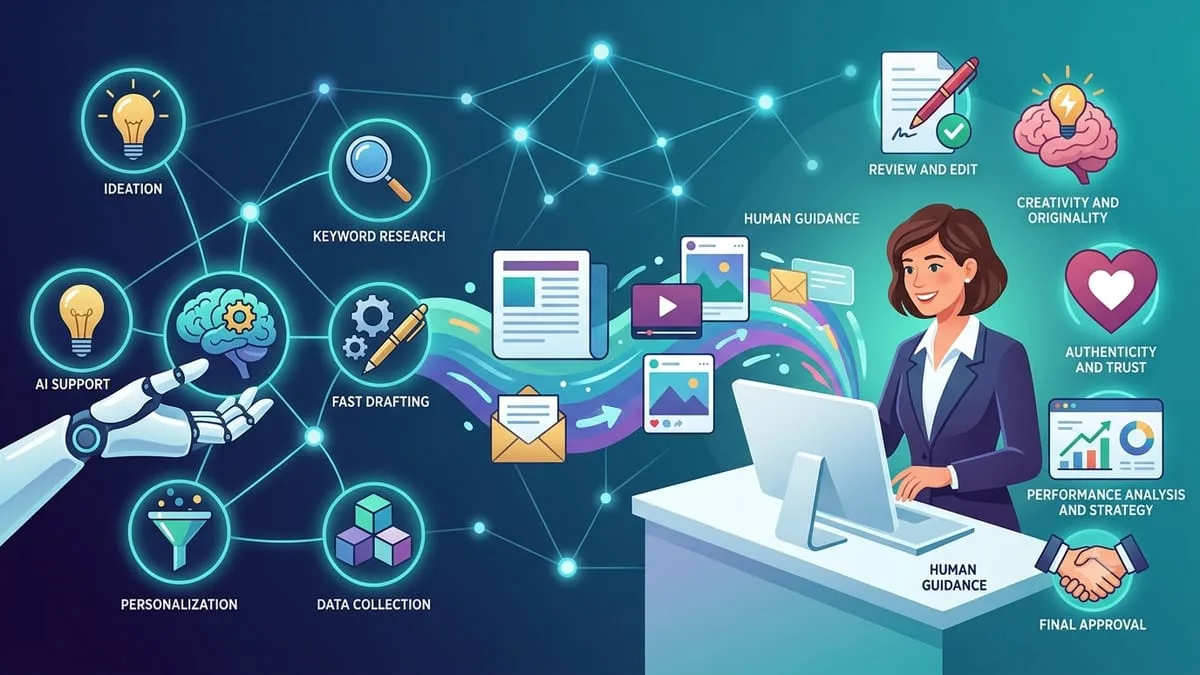
AI can help with topic ideas, keyword research, content creation, personalization, content repurposing, and performance analysis. However, AI should support human creativity and judgment rather than replace them.
How to Use AI for Content Marketing Effectively
Using AI for content marketing does not simply mean using an AI tool to write an article. It means using AI at different steps of the content marketing process.
Businesses can use AI to understand what their audience is looking for, find content topics, create first drafts, improve old content, and understand how people are responding to it. This can save time and allow content teams to focus more on planning and creative work.
Find New Content Ideas -
Finding fresh content ideas can become difficult when a business has to publish regularly. AI can help by suggesting topics based on the business, industry, target audience, products, and common customer questions.
For example,
a digital marketing agency can ask AI for blog ideas about SEO, social media marketing, paid ads, or content strategy AI can give many ideas that the content team can check and improve.
AI can also take one big topic and turn it into several smaller ideas. One topic can become a blog post, social media post, video idea, infographic, or email topic.
But businesses should not publish every idea directly from AI. They should first check if the topic is useful for their audience and fits their brand.
Use AI for Keyword Research -
Keyword research is another area where AI can help content marketers It can suggest related search terms, questions long-tail keywords, and different versions of a topic.
For example,
instead of only targeting digital marketing AI may suggest related topics such as SEO strategy, social media marketing, content planning, online advertising, and local SEO.
This helps businesses create more useful and complete content instead of repeating the same keyword many times.
Still, AI keyword suggestions should be checked using proper SEO research tools. Search volume, competition, search intent, and relevance are important when choosing the final keywords.
Create Content Faster -
One of the most common uses of AI in content marketing is creating content. AI can help with outlines, introductions, headings, social media drafts, email ideas, product descriptions, and many other formats.
For businesses, this can make the starting process much easier. Instead of starting from a blank page, writers can use AI to create a basic structure and then add their own knowledge.
AI can also help improve grammar, sentence structure, readability, and clarity. This can be useful when a business needs to create different types of content regularly.
However, AI-generated content should not be treated as the final version Writers should check the facts, add real examples, change the tone when needed, and make sure the content is actually helpful.
Personalize Content for Different Audiences -
Different customers can have different needs, even when they are interested in the same product or service. AI can help businesses create more relevant content for different groups of people.
For example,
an online software company can create different messages for new visitors, existing customers, and people who have already shown interest in a particular service.
AI can look at available customer data and help find patterns in customer interests or behavior. Marketers can then use these insights to create better emails, recommendations, landing page messages, and social media content.
However, businesses should use customer data carefully and follow privacy rules. Personalization should make content more useful, not uncomfortable or intrusive.
Repurpose Existing Content -
Businesses do not always need to create completely new content. Many already have useful blogs, videos, emails, and social media posts that can be used again in different ways.
AI can help turn a detailed blog post into several social media posts, an email newsletter, video script, short summary, or infographic idea.
For example,
a long article about SEO can become five social media posts, a short video script, an email, and a list of common questions.
This helps businesses get more value from content they have already created while keeping their main message consistent.
The content should still be checked before using it on another platform. Every platform has a different audience and style, so simply copying the same content everywhere may not work well.
Analyze Content Performance -
Publishing content is only one part of content marketing. Businesses also need to know whether their content is actually giving good results.
AI can help analyze traffic, engagement, conversions, and other content performance data. Marketers can use these insights to improve future content strategies.
For example,
if several articles about one topic regularly bring organic traffic the business can use that information to plan more content around the same subject.
AI can make large amounts of data easier to understand, but marketers still need to decide what actions are right for their business.
Improve Content Optimization -
AI can also help improve existing content. It can find areas where an article may need clearer headings, better structure, shorter paragraphs, or simpler explanations.
For SEO, AI can suggest related terms and content gaps that may make an article more useful. It can also help find questions that readers may expect the article to answer.
For businesses using AI in content marketing , content optimization is an important part of the process. Improving old content can sometimes be as useful as creating new content.
The goal should not be to add keywords everywhere. Businesses should focus on search intent, readability, useful information, and a natural experience for readers.
Why Human Review Still Matters
AI can create content quickly, but fast content is not always good content. Sometimes AI can give incorrect information, outdated details, generic examples, or writing that sounds similar to other AI-generated content.
That is why human review should always be part of the process.
Someone should check important facts, statistics, claims, brand information, and technical details before publishing. Writers should also add their own experience, examples, and useful insights.
Originality is very important in content marketing. People are more likely to trust content that feels useful and genuine instead of content that looks like it was created only to fill a website.
AI should work like an assistant, not as the complete content strategy.
A Simple AI Content Marketing Workflow
Businesses do not need a complicated system to start using AI A simple process can make things much easier.
Understand the Audience -
First, understand who the content is for. Know their problems, questions, interests, and where they are in the buying journey.
Choose a Topic -
Use customer questions, industry trends, existing data, and AI suggestions to find a useful topic.
Research Keywords -
Find the main keyword and related terms. Check search intent and make sure the topic matches what people are actually searching for.
Create an Outline -
Use AI to create a basic structure with headings and key points. Then change the outline according to the business goals.
Create the First Draft -
AI can help create the first draft, but the content team should add real examples, useful information, and knowledge about the business.
Review and Edit -
Check facts, originality, tone, grammar, readability, and SEO. Remove anything unnecessary or repetitive.
Publish and Repurpose -
Publish the final content and turn it into other formats such as social media posts, emails, videos, or short-form content.
Track the Results -
Check traffic, engagement, conversions, rankings, and other important metrics. Use the results to improve future content.
Common Mistakes to Avoid When Using AI
AI can make content marketing easier, but using it without a proper process can create problems.
One common mistake is publishing AI-generated content without checking it. This can lead to wrong information and generic writing.
Another mistake is depending too much on AI for ideas. If every business uses the same tools in the same way, their content can start looking very similar.
Keyword stuffing is another problem. AI may sometimes repeat keywords more than needed, so writers should edit the content and keep the language natural.
Businesses should also learn how to use AI effectively without relying on it only to produce a large amount of content. More content does not always mean better marketing. Useful, relevant, and original content is more important than simply publishing more.
The Future of AI in Content Marketing
AI will likely become a regular part of content marketing as businesses look for faster and smarter ways to work.
It can help marketers better understand their audiences , find new opportunities, handle repetitive tasks, and make better use of data. At the same time, human creativity, experience, storytelling, and judgment will still be important.
Businesses can get more value from AI when they use it with a clear content strategy instead of depending on automation for everything.
Conclusion
How to Use AI for Content Marketing becomes much easier when businesses use AI as a support tool instead of replacing people with it. It can help with topic research, keyword research, content creation, personalization, repurposing, optimization, and performance analysis.
But every piece of content still needs human review, originality and a clear purpose. If you want to build a practical AI-powered content strategy for your business TZAP Marketing can help you plan, create, optimize, and manage content for your online growth.
Frequently asked questions
How can AI help with content marketing?
AI can help businesses find topics, create drafts, research keywords, personalize content, repurpose posts, and analyze performance.
Can AI create content for businesses?
Yes. AI can create first drafts, outlines, social posts, emails, product descriptions, and other content that humans can review and improve.
How does AI help with keyword research?
AI can suggest related keywords, long-tail phrases, search questions, and topic ideas that can support a broader SEO content strategy.
Can AI personalize marketing content?
Yes. AI can help businesses create different messages based on audience interests, customer behavior, and different stages of the buying journey.
How can AI repurpose existing content?
AI can turn blogs into social media posts, email content, video scripts, summaries, FAQs, and other formats for different platforms.
Should humans review AI-generated content?
Yes. Human review is important for checking facts, originality, accuracy, brand tone, and overall content quality before publishing.
Can AI improve content performance?
AI can analyze content data and identify patterns in traffic, engagement, rankings, and conversions, helping marketers make better content decision
Is AI a replacement for content marketers?
No. AI works best as a support tool. Human creativity, experience, strategy, fact-checking, and originality are still important for effective content marketing.