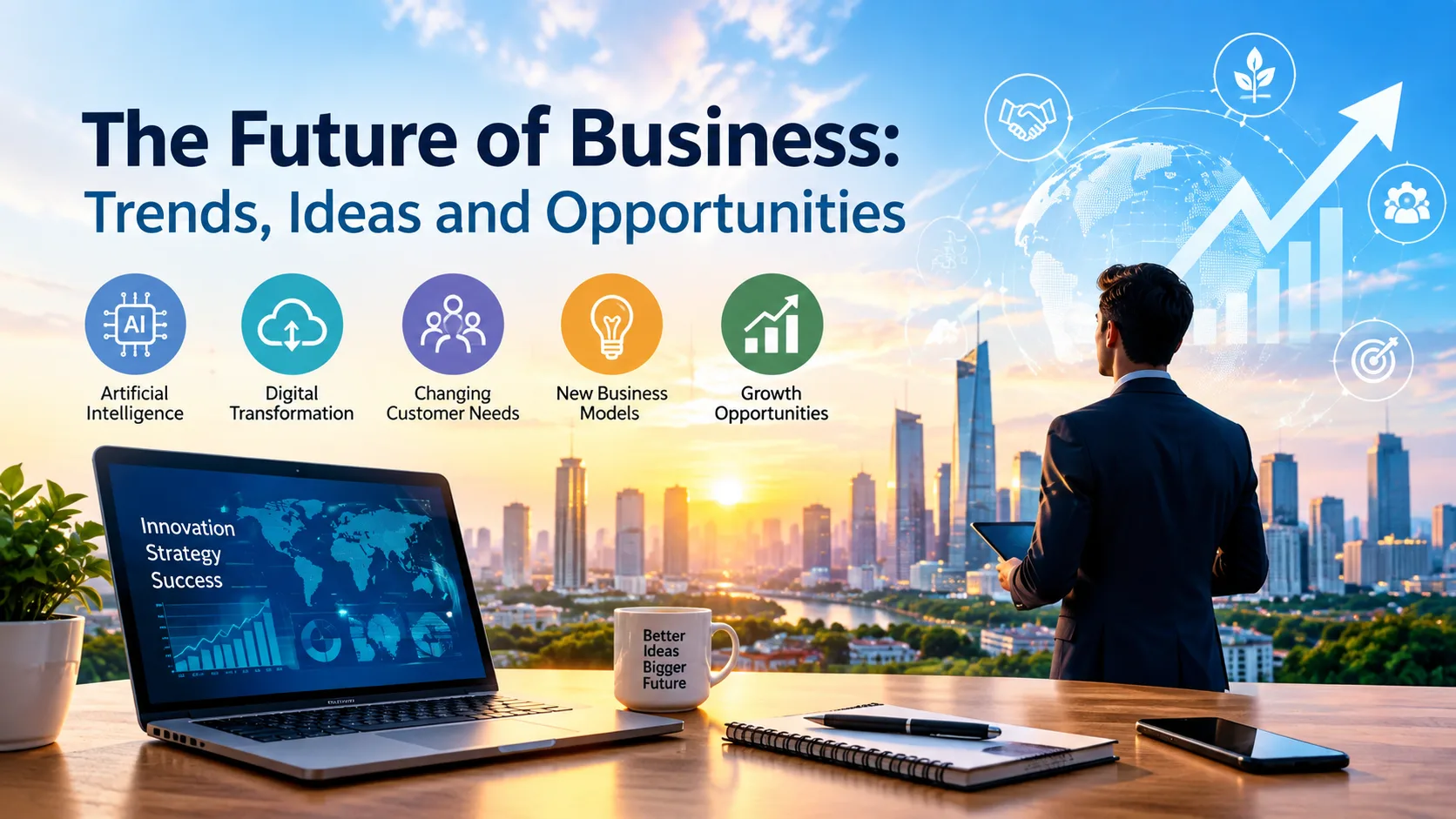
1. AI and The Future of Business: Trends, Ideas and Opportunities
Artificial intelligence is becoming an important part of modern business and is playing a major role in The Future of Business: Trends, Ideas and Opportunities. Companies can use AI to complete repetitive tasks, study information, support customers, and improve daily operations. As AI tools become easier to use, more businesses can add them to their existing workflows.
AI does not remove the need for people. Human experience, creativity, communication, and judgment are still important for business decisions.
AI for Daily Business Tasks
AI can help with many routine activities. Businesses can use it for email writing, data organization, basic reports, research, content planning, and customer questions.
Automating simple tasks can save time and allow employees to focus on planning, customer relationships, and problem-solving. This can be especially useful for small businesses with limited teams.
Businesses should choose AI tools based on real needs instead of using technology simply because it is popular.
AI for Better Business Decisions
Companies collect information from sales, websites, customers, and marketing activities. AI can analyze large amounts of information and identify useful patterns.
For example, a business can study previous sales to understand product demand. This information can support stock planning, marketing decisions, and future product development.
AI can support decision-making, but businesses should review important information before acting on it. Human judgment remains necessary for understanding business goals and customer needs.
AI-Powered Customer Support
AI chatbots and virtual assistants can answer common questions quickly. They can help customers find product information, understand services, or get basic support.
For complex issues, human support should remain available. Combining AI automation with human assistance can create a faster and more useful customer experience.
2. Digital Transformation Will Become a Business Standard
Digital transformation means using digital technology to improve business operations, customer service, and overall efficiency. It is a major part of The Future of Business: Trends, Ideas and Opportunities because customers increasingly expect businesses to offer convenient online experiences.
Cloud-Based Business Tools
Cloud technology allows businesses to store information and use software through the internet. Teams can access files, communicate, and manage projects from different locations.
Businesses can use cloud tools for accounting, customer relationship management, communication, project management, and file sharing.
Small businesses can also benefit because cloud services can reduce the need for expensive physical systems.
Data-Based Business Operations
Digital tools create useful information about sales, website visits, customer activity, and business performance.
Businesses can use this data to understand what works and where improvements are needed. Data-driven decisions can help companies plan marketing, improve services, and understand customer behavior.
For more information, businesses can also learn about digital transformation and how digital tools can improve daily operations.
Stronger Online Presence
A professional website, social media presence, search visibility, and online communication can help businesses reach more people.
A strong online presence should provide clear information, simple navigation, useful content, and easy contact options. Websites should also work properly on mobile devices.
3. Changing Customer Needs Will Shape Business Growth
Customer expectations are changing with technology. People want quick answers, simple buying processes, useful support, and convenient services. These changes are an important part of The Future of Business: Trends, Ideas and Opportunities because customer needs directly influence how companies create and improve products and services.
Personalization and Convenience
Customers often prefer products and services that match their needs. Businesses can use customer information responsibly to provide relevant recommendations, content, and support.
For example, an online store can recommend products based on customer interests. Useful recommendations can make shopping easier.
Simple websites, easy payment options, quick support, and clear product information can also improve customer experience.
Trust and Transparency
Customers want clear information before buying a product or service. They may want to know the price, features, delivery details, return policy, and how their information is used.
Businesses can build trust through honest communication, clear pricing, useful policies, and reliable customer support.
Trust will remain important even as technology changes. Businesses should provide accurate information and avoid making promises they cannot keep.
Connected Customer Experiences
Customers may discover a business through social media, visit its website, contact customer support, and later make a purchase through another channel.
Businesses should keep information consistent across these touchpoints. A connected experience can make it easier for customers to move from discovering a product to making a purchase.
4. New Business Models Will Create Fresh Opportunities
New ways of selling products and services are an important part of The Future of Business: Trends, Ideas and Opportunities. Digital technology allows businesses to serve specific audiences and offer flexible products and services.
Subscription-Based Services
A subscription model allows customers to pay regularly for continued access to a product or service. Software, education, fitness, entertainment, and professional services can use this model.
A successful subscription business needs to provide continuous value. Useful updates, new features, good support, and reliable service can help maintain customer interest.
Digital Products and Services
Digital products can include online courses, templates, software, consulting, design services, and other online resources.
These products can reach customers in different locations without requiring a traditional physical store. However, a digital product should solve a real problem and provide useful value.
Businesses should focus on quality, simple delivery, and customer needs.
Online Platforms and Marketplaces
Online platforms can connect buyers with sellers or customers with service providers.
A successful marketplace needs a clear purpose, simple user experience, active users, and safe transactions. Businesses also need to understand the needs of both sides of the platform.
5. Future Business Ideas Will Focus on Real Problems
Many future business ideas will come from real problems faced by customers and companies. Entrepreneurs can identify a problem first and then choose the right technology or business model to solve it. This approach is central to The Future of Business: Trends, Ideas and Opportunities.
AI and Automation Services
Many companies want to use AI but may not have enough knowledge or staff to implement it. This creates opportunities for businesses that provide AI and automation services.
These services can include workflow automation, customer support systems, data organization, content processes, and simple AI solutions.
The main value should come from solving a real business problem. AI is most useful when it saves time, improves work, or supports customer service.
Digital Education and Skill Services
Technology is changing many jobs and business processes. Workers and business owners need new digital skills to keep up with these changes.
Online courses, practical workshops, training programs, and skill-based services can help people learn new tools and methods.
Useful education should focus on practical knowledge that learners can apply in their work or business.
Local Businesses Going Digital
Many local businesses have opportunities to improve their online presence. Website development, local search, online booking, digital payments, and customer communication tools can help them serve customers more easily.
This also creates opportunities for digital agencies and freelancers that help local businesses move from traditional methods to digital systems.
Businesses can also explore digital marketing to understand how online channels can support customer reach and business growth.
6. Emerging Opportunities Will Support Flexible Growth
Emerging opportunities are not limited to large technology companies. Small businesses can also benefit from digital tools, focused markets, and flexible business models. The Future of Business: Trends, Ideas and Opportunities includes opportunities created by technology, customer behavior, and changing market needs.
Remote Business Services
Digital communication allows many services to be delivered remotely. Consulting, design, marketing, software development, education, and customer support can be provided without requiring a physical office.
This allows businesses to serve customers in different cities and regions. Online meetings, cloud software, and digital communication can help teams manage remote services.
Sustainable Business Solutions
Businesses are looking for practical ways to reduce waste and use resources efficiently. This can create opportunities in reusable products, efficient packaging, repair services, energy-saving solutions, and digital systems that reduce paper use.
Sustainable solutions should also provide practical value to customers and businesses. They should solve a real need while using resources responsibly.
Niche and Specialized Markets
A business does not always need to target a very large market. It can focus on a specific industry, customer group, location, or problem.
Specialized businesses can understand their target customers more closely and create products or services around their specific needs.
This can help small businesses communicate their value clearly and build services for a focused audience.
7. How Businesses Can Prepare for the Future
Preparing for The Future of Business: Trends, Ideas and Opportunities does not mean adopting every new technology. Businesses should focus on changes that support customers, improve operations, and match their goals.
A practical approach can help companies adjust without making unnecessary changes.
Start With Customer Needs
Before choosing a new technology, tool, or business model, businesses should understand the problem they want to solve.
They can study customer questions, complaints, buying behavior, and service gaps. After finding the problem, they can choose a suitable solution.
This can help businesses avoid spending money on technology that does not provide useful results.
Test New Ideas
Businesses can test new products, services, or digital tools on a small scale before making a large investment.
For example, a company can test a new service with a small customer group and study the results. If customers find it useful, the business can improve the service and expand it.
Testing can help businesses understand customer needs before making bigger changes.
Build Skills and Stay Flexible
Businesses and employees should continue learning about AI, digital tools, data, customer experience, automation, and new business models.
Technology will continue to change, so businesses need to stay flexible. They should improve their processes when customer needs and market conditions change.
At the same time, businesses should protect customer trust through responsible data use, secure systems, clear communication, and reliable service.
Conclusion
The Future of Business: Trends, Ideas and Opportunities is being shaped by AI, digital transformation, changing customer needs, and new business models. AI can improve routine tasks and customer support, while digital tools can make business operations faster and more connected.
New opportunities can come from subscriptions, digital services, AI solutions, specialized markets, and helping local businesses move online. However, technology alone cannot create a successful business. Companies need to solve real problems, understand customers, build useful skills, and provide clear value. By testing new ideas and making practical changes, businesses can prepare for changing markets and future customer expectations.
Frequently asked questions
What is the future of business?
The future of business will be shaped by AI, digital transformation, changing customer needs, and new business models. Businesses will need to use technology while continuing to focus on real customer problems.
How will AI change the future of business?
AI can help businesses automate repetitive tasks, analyze information, support customers, and improve daily operations. Human creativity, communication, and judgment will still remain important.
What are some future business opportunities?
Future opportunities can include AI and automation services, digital education, subscription-based services, digital products, remote services, and specialized business solutions.
Why is digital transformation important for businesses?
Digital transformation can help businesses improve their operations, manage information, reach customers online, and provide faster and more convenient digital experiences.
How can small businesses prepare for future changes?
Small businesses can prepare by understanding customer needs, using useful digital tools, testing new ideas, developing new skills, and staying flexible as technology and market conditions change.