Mobile App Development: Steps, Cost, Types and Benefits is the process of creating an app for phones and tablets. A mobile app can help a business connect with customers, sell products, offer services, or share useful information. The process includes planning, design, coding, testing, and launch. Businesses also need to think about app type, features, security, and cost. In this guide, we will explain mobile app development in simple words so you can understand how an app is planned, built, launched, and improved.
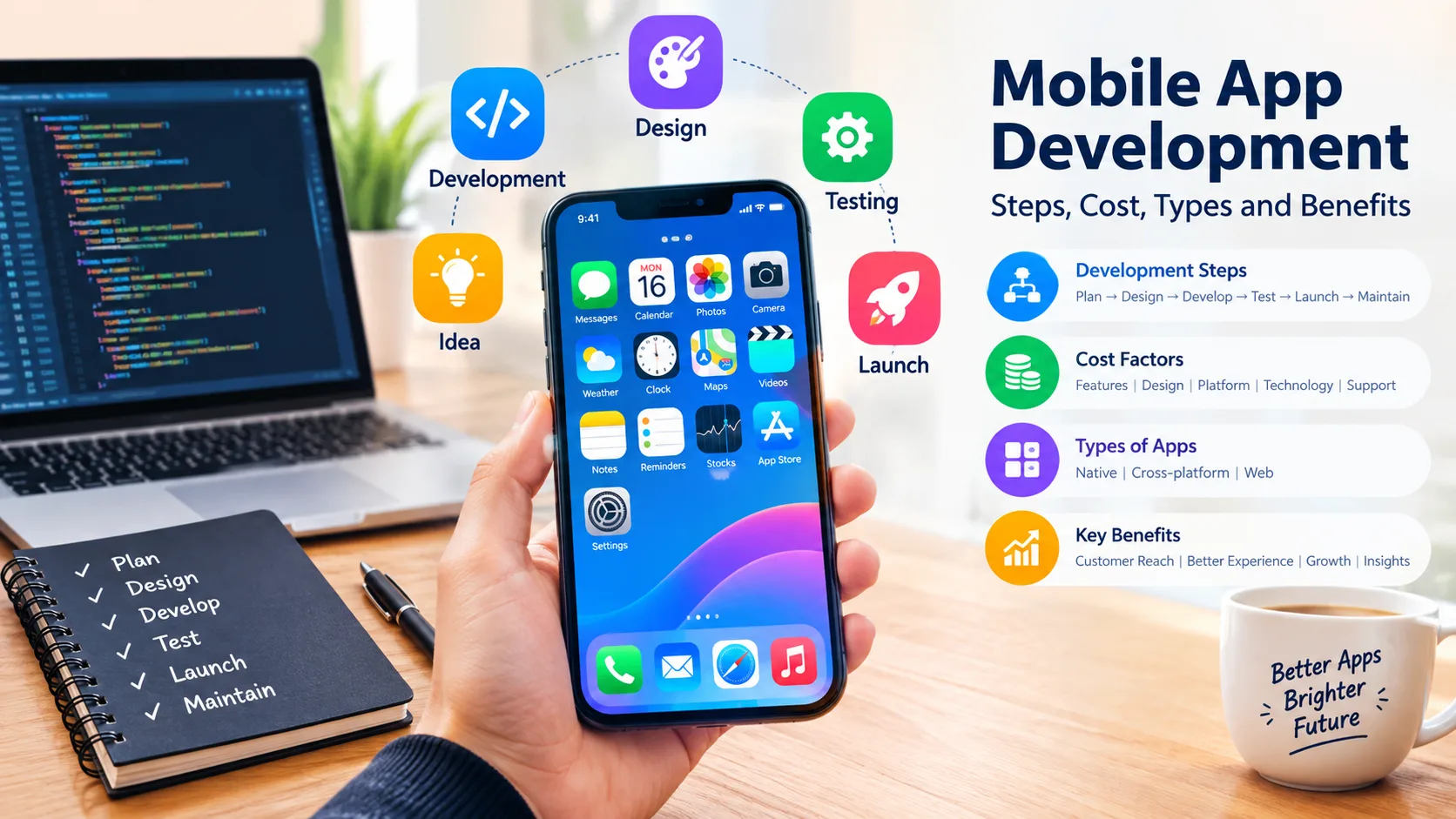
1. Understand Mobile App Development: Steps, Cost, Types and Benefits
Mobile app development means creating software that works on smartphones and tablets. The app is made to solve a problem or make a task easier. For example, a shopping app helps people buy products, while a booking app helps users reserve a service.
The process is not only about writing code. It starts with an idea and continues through planning, design, development, testing, launch, and maintenance. Every step has a purpose. Good planning can reduce mistakes and keep the project focused.
Why Businesses Build Mobile Apps
A business may create an app to reach customers directly. An app can make it easier to view products, place orders, book services, read updates, or contact support.
What a Mobile App Can Do
Features depend on the business goal. A simple app may have pages, search, forms, and contact options. A larger app may include payments, accounts, notifications, maps, chat, or booking tools.
The main goal should stay clear. Adding too many features at the beginning can make an app harder to build and more expensive.
2. Main Types of Mobile Apps
Mobile apps can be built in different ways. The three common types are native apps, cross-platform apps, and web apps. Each type works differently and has different development needs.
The right choice depends on target users, required features, budget, performance needs, and business goals. Understanding these options before development can prevent later changes.
Native Mobile Apps
Native apps are built for one mobile operating system. An Android app is made for Android, while an iOS app is made for Apple devices.
Native apps can provide strong performance and good access to device features. However, making separate Android and iOS apps can require more time and money.
Cross-platform Apps
Cross-platform apps are designed to work on more than one operating system from a shared codebase. This can reduce repeated development work.
This approach can help businesses reach Android and iOS users while keeping development manageable. The choice should still depend on the app's features and technical needs.
Web Apps
A web app works through a mobile browser instead of being installed like a traditional app. Users can open it through a web address.
Web apps can suit simple services that do not need deep access to phone features. They can also be easier to update because changes are made on the website.
3. Mobile App Development Steps You Should Know
Mobile App Development: Steps, Cost, Types and Benefits becomes easier to understand when the full process is divided into clear stages. Each stage helps turn an idea into a working product.
Step i: Plan the App Idea
First, decide what problem the app will solve and who will use it. Write down the main purpose, important features, and expected result.
A clear plan helps the team avoid unnecessary work. It also gives the business direction before design and coding begin.
Step ii: Design the User Experience
Next, plan how the app will look and work. Designers create screens, buttons, menus, and user flows.
The design should be simple enough for new users. Clear text, easy navigation, and a consistent layout can make the app comfortable to use.
Step iii: Develop the App
Developers turn the approved design into a working application. They write code, connect databases, build features, and connect required services.
Step iv: Test the App
Testing checks whether the app works as expected. The team may test buttons, forms, login, payments, speed, screen sizes, and common user actions.
Testing should also check security problems and crashes. Fixing issues before launch can improve the user experience.
Step v: Launch and Maintain
After testing, the app can be prepared for release on the required platform. The team should continue checking the app after launch.
Updates may be needed for bug fixes, security, new devices, user feedback, and business needs. Maintenance is an important part of keeping an app useful.
4. Factors That Affect Mobile App Development Cost
Mobile app development cost does not have one fixed price. The final amount depends on what the business wants to build and how complex the project is.
A basic app with a few screens usually needs less work than an app with accounts, payments, maps, chat, or advanced tools. The platform and development approach can also change the cost. This is why Mobile App Development: Steps, Cost, Types and Benefits should be planned around the actual business need.
Features and App Complexity
Features are a major cost factor. Login, payment gateways, live tracking, booking, chat, notifications, and third-party services can require extra development work.
A simple first version can be practical for a new business. More features can be added later after users provide feedback.
Design and Technology
Custom UI/UX design may cost more than a simple design system. The choice between native, cross-platform, and web development can also affect the budget.
Technology should match the app's needs instead of being selected only because it is popular.
Testing, Maintenance, and Support
The budget should include testing, updates, security work, and ongoing support. These activities continue after the first version is launched.
5. Key Benefits of Mobile App Development for Businesses
Mobile App Development: Steps, Cost, Types and Benefits can offer practical benefits when an app solves a real customer need. The value depends on how well the app is planned, built, and managed.
Direct Customer Access
An app gives customers a direct way to interact with a business. Users can access services, products, information, or support from their phones.
This can make common tasks faster and more convenient. A useful app can become a regular part of a customer's digital routine.
Better Customer Experience
A well-designed app can make important actions easier. Customers may be able to order, book, pay, track, or contact support without visiting a physical location.
Simple navigation and clear screens can reduce confusion. The app should focus on tasks customers actually need.
Business Growth Opportunities
An app can support online sales, bookings, subscriptions, service requests, or other business activities. It can also help a company create new digital services.
Useful Customer Insights
With proper privacy practices, app data can help businesses understand how users interact with features. This can show which parts are useful and where users may face problems.
6. How to Plan a Successful Mobile App Project
Mobile App Development: Steps, Cost, Types and Benefits should be approached with a clear plan rather than starting with coding immediately. A simple project plan can help control time, cost, and quality.
Define the Target Users
Start by identifying who the app is for. Think about their needs, common problems, and the tasks they want to complete.
Choose the Right Features
Separate features into essential and optional groups. Build important features first and consider extras after the main app works well.
This can help control the first version's size and budget. It also makes user feedback easier to apply.
Set a Realistic Budget and Timeline
The budget should cover planning, design, development, testing, launch, and maintenance. The timeline should include time for testing and fixing problems.
Businesses should not choose a provider only because of a very low price. Scope, quality, support, and technical approach should also be clear.
Check Security and Privacy
Apps may handle personal information, accounts, payments, or business data. Security should therefore be considered from the planning stage.
Use suitable authentication, secure data handling, regular updates, and trusted third-party services. Privacy rules should also be followed for the app's market and purpose.
7. Common Mistakes to Avoid in Mobile App Development
Even a good app idea can face problems if the project is not planned carefully. Avoiding common mistakes can save time and reduce unnecessary costs.
Building too Many Features at Once
A large feature list can make the first version difficult to build and test. Start with the main problem and create a focused first version.
Ignoring User Feedback
People using the app can reveal problems that the development team may not notice. Reviews, support questions, and usage data can provide useful clues.
Forgetting Maintenance
Launching the app is not the final step. Devices, operating systems, security requirements, and customer expectations can change.
Regular maintenance helps keep the app stable and useful. Businesses should plan for updates before the app goes live.
Focusing Only on Price
Cost is important, but the cheapest option may not meet every business need. Compare features, development process, testing, support, security, and future maintenance.
Conclusion
Mobile App Development: Steps, Cost, Types and Benefits covers the main things a business should understand before creating a mobile app. The process starts with a clear idea and moves through planning, design, development, testing, launch, and maintenance. Businesses should choose the right app type, control features, understand cost factors, and plan for security and support. A useful app should solve a real customer problem and provide a simple experience. With careful planning, businesses can build an app that supports their services and long-term digital goals.
Frequently asked questions
What is mobile app development?
Mobile app development is the process of creating applications for smartphones and tablets. It includes planning, design, coding, testing, launching, and maintenance.
What are the main types of mobile apps?
The main types are native apps, cross-platform apps, and web apps. The right type depends on the business needs, features, target users, and budget.
How much does mobile app development cost?
The cost depends on app complexity, features, design, platform, technology, testing, and maintenance. A simple app usually requires less work than an app with advanced features.
What are the main steps in mobile app development?
The main steps include planning the idea, designing the user experience, developing the app, testing it, launching it, and providing regular maintenance.
How can mobile apps benefit businesses?
Mobile apps can help businesses connect with customers, improve user experience, support online sales or bookings, and create new digital service opportunities.