People can't choose your business if they don't know it exists. 📱Building brand awareness through social media can help more people recognize your business, products, and services.
You don't need a big budget. Just share useful content, stay active, and connect with your audience. ✅
In this guide, you'll learn simple ways to increase brand visibility and reach more relevant people and reach more people on social media.
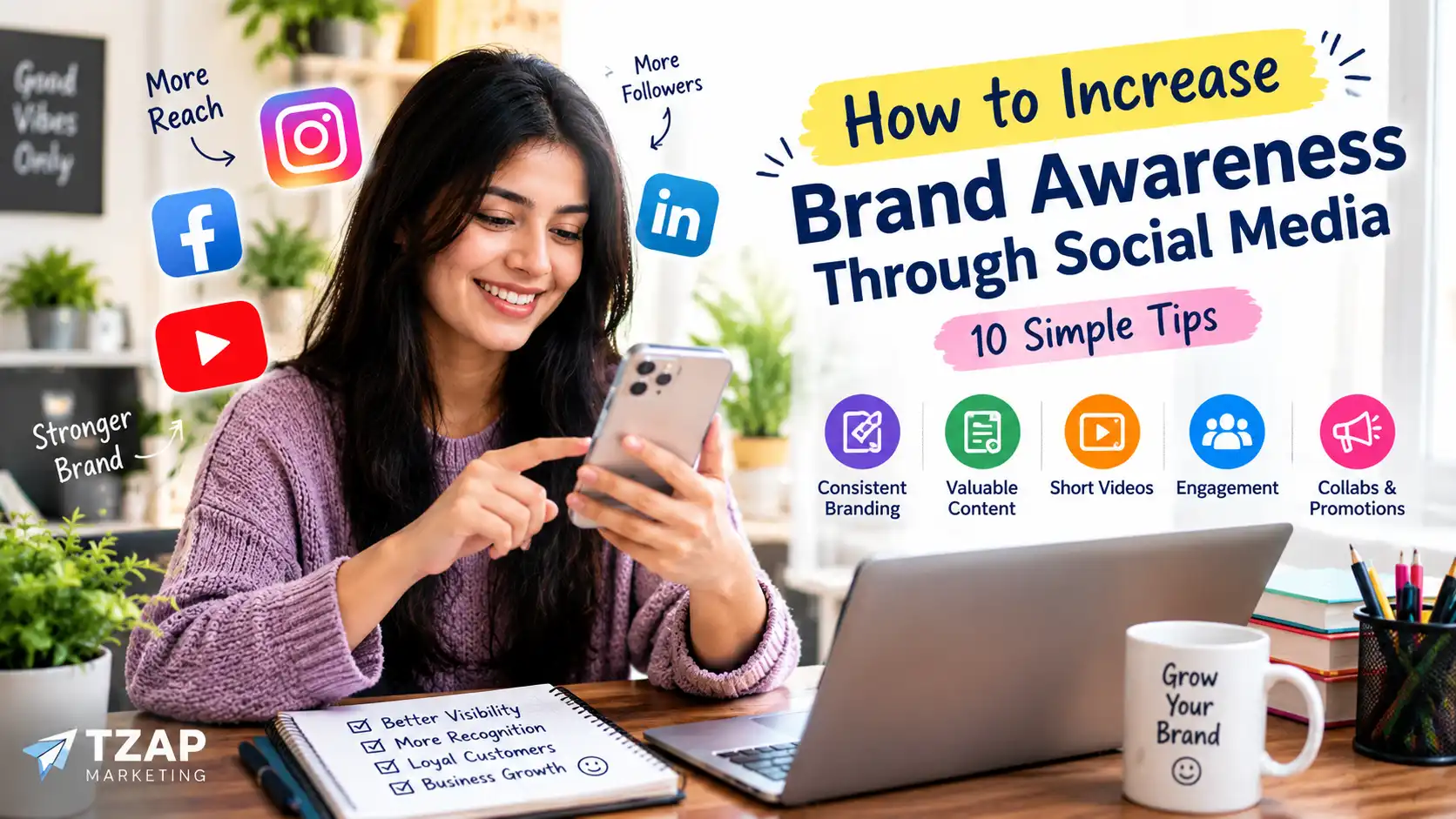
Build a Consistent Brand Identity 🎨
When people see your posts, they should gradually become familiar with your business. A consistent brand identity helps make that possible.
Your brand identity includes your logo, colors, fonts, writing style, and the way you communicate with customers.
Use the Same Colors, Logo, and Style
Try to keep your social media profiles connected through a similar design.
For example, a bakery could use the same logo, two or three brand colors, and a friendly writing style across Instagram and Facebook.
Follow these simple tips:
✅ Use the same logo across your main social media profiles.
🎨 Choose a small set of brand colors.
✍️ Keep your writing style consistent.
📸 Use clear images that match your brand.
📱 Make sure your designs look good on mobile screens.
You don't need to make every post look identical. Keep the overall style familiar while presenting fresh ideas.
Make Your Profile Easy to Understand
Your profile should quickly tell visitors who you are and what you offer.
Add a clear profile picture, a short description, and your website or contact details where relevant.
For example, a digital marketing agency could write:
“Helping small businesses grow online with SEO, social media, and digital advertising. 🚀”
This tells visitors what the business does without making them read a long description.
Quick tip: A clear and consistent profile helps people recognize your business when they see it again.
Share Valuable Content That People Remember ✍️
People are more likely to pay attention to content that helps, teaches, or entertains them.
Instead of promoting your products in every post, give your audience useful reasons to follow your page.
Create Content Around Customer Needs
Think about the questions your customers ask and the problems they want to solve.
For example, a skincare brand could share simple skincare routines, product-use tips, and answers to common questions.
A website development company could explain how to choose a domain name or improve website speed.
You can share different types of content:
✅ Educational posts: Teach people something useful.
💡 Quick tips: Share simple advice they can use.
🎥 Behind-the-scenes content: Show how your business works.
⭐ Customer stories: Share genuine customer experiences with permission.
📢 Product updates: Explain new features, services, or offers.
Choose topics that match your business and audience.
Give People a Reason to Remember Your Brand
Try to make each post useful or interesting in some way.
For example, a home cleaning business could share a short video showing three easy ways to remove common household stains.
People may remember the business because it helped them solve a problem.
You can also create a regular content series, such as “Monday Marketing Tips” or “One-Minute Business Lessons.”
A familiar series gives followers a reason to return.
Remember: Don't make every post a sales message. Build trust by sharing value before asking people to buy. ✅
Use Short-Form Videos to Reach More People 🎥
Short videos are a practical way to introduce your business to people who may not follow you yet.
You can use Instagram Reels, YouTube Shorts, and other short-video formats to show products, explain ideas, or share quick demonstrations.
Keep Videos Simple and Interesting
You don't need expensive cameras or complicated editing.
A smartphone, good lighting, and a clear idea can be enough to create a useful video.
Try these ideas:
🎬 Show how your product works.
💡 Explain one useful tip in 30–60 seconds.
📦 Show how an order is packed.
👋 Introduce your team or business.
❓ Answer a common customer question.
🔍 Show a before-and-after result when appropriate.
For example, a clothing shop could create a short video showing three ways to style one shirt.
This gives viewers a useful idea while making the shop's products more familiar.
Make the Main Message Clear
People often decide quickly whether to keep watching.
Start with the main point instead of a long introduction.
For example, a video could begin with:
“Three simple ways to style a white shirt. 👕”
Use readable text, clear visuals, and captions where helpful.
You can also include your brand name naturally in the video or closing screen.
Quick tip: Focus on one clear idea per video. Check watch time, shares, and profile visits to understand which topics interest your audience.
Engage With Your Audience and Build Relationships 💬
Brand awareness is not only about people seeing your posts. It is also about helping them become familiar with your business through real interactions.
When people receive useful replies and friendly service, they have more reasons to remember your brand.
Reply to Comments and Messages
Make time to respond to genuine questions and comments.
For example, if someone asks about delivery charges on an online store's Instagram post, provide a clear answer.
Simple habits can make a difference:
✅ Reply to relevant comments.
💬 Answer customer questions politely.
❤️ Thank people for useful feedback.
📩 Respond to messages when possible.
🤝 Join relevant conversations in your industry.
Avoid copying the same reply everywhere. A natural, personal response feels more helpful.
Use Questions, Polls, and Stories
Stories and interactive posts give people simple ways to participate.
For example, a café could ask:
“Which drink should we feature this weekend? ☕”
Followers can vote, and the café can use their responses to plan future content.
You can also ask people to share their preferences, experiences, or questions.
These interactions help you understand your audience while giving people more opportunities to notice your brand.
Remember: Don't focus only on follower numbers. Build relationships with people who may genuinely be interested in your business.
Collaborate With Creators and Use Paid Promotions 🤝
You can introduce your brand to new audiences by working with relevant creators, businesses, or communities.
Paid promotions can also help your content reach selected audiences. The right approach depends on your goals and budget.
Work With Relevant Creators and Businesses
A collaboration allows two parties to share content or introduce each other to their audiences.
For example, a local bakery could work with a food creator who makes videos about cafés and desserts.
A fitness clothing brand could collaborate with a fitness instructor who regularly shares workout content.
Before choosing a partner, check:
✅ Whether their audience matches your target customers.
📱 Whether their content fits your brand.
💬 Whether their audience interacts genuinely.
🎯 Whether the collaboration supports your goal.
🤝 Whether the partnership feels natural.
You can start with a small collaboration rather than paying for a large campaign.
Make sure sponsored content is clearly disclosed where required.
Use Paid Social Media Promotions Carefully
Organic posts can help you build an audience over time. Paid promotions can give selected content additional reach.
For example, a new restaurant could promote a short video to people in nearby areas who may be interested in its food.
Before spending money, decide what you want to achieve.
Your goal could be:
📢 Reaching more relevant people.
👀 Introducing a new product.
📱 Increasing profile visits.
🔗 Bringing visitors to your website.
📩 Generating customer enquiries.
Start with a manageable budget and test different creatives or audiences.
Review reach, impressions, clicks, profile visits, and enquiries to understand what your money is achieving.
Quick tip: More views do not always mean stronger brand awareness. Focus on reaching relevant people and making your brand easy to recognize.
Use Hashtags, Track Results, and Improve Your Strategy 📊
A clear content plan helps you stay organized, while performance tracking shows which activities are worth continuing.
You don't need complicated reports. Start with a few useful checks.
Use Relevant Hashtags and Keywords
Hashtags can help describe your content and support discovery on platforms where people use them to explore topics.
Choose hashtags related to your business, industry, location, or specific post.
For example, a local bakery might use hashtags related to baking, desserts, and its city.
Avoid adding unrelated hashtags just to make a post look popular.
You can also use clear words in captions and video titles so people can understand what your content is about.
Check Which Content Gets Attention
Review your social media analytics regularly.
Pay attention to:
Reach and impressions
Profile visits
Engagement
Shares and saves
Website clicks
Compare similar posts over time.
For example, if short product demonstrations bring more profile visits than ordinary product photos, try creating more videos and reviewing their results.
Don't assume one post tells the whole story. Test different topics, formats, and publishing times.
Quick tip: Keep what works, improve what doesn't, and continue learning from your audience. 🚀
How TZAP Marketing Can Help Your Business Grow Online 🚀
Building brand awareness takes planning, regular content, and a clear understanding of your audience.
For a small business, managing all these activities alongside daily work can be difficult.
TZAP Marketing offers digital marketing services such as SEO, Google Ads, Meta Ads, social media marketing, website development, and AI-related solutions.
These services can help businesses manage their online presence and connect social media activities with wider marketing goals.
You can explore TZAP Marketing to learn more about its services.
The right approach depends on your business, target customers, competition, and budget. Results also depend on your content and how consistently you improve your strategy.
Conclusion:
Learning How to Increase Brand Awareness Through Social Media starts with making your business easy to recognize and giving people useful reasons to remember it.
You don't need to try everything at once. Start with these practical steps:
✅ Keep your logo, colors, and message consistent.
✍️ Share helpful and interesting content.
🎥 Create simple short-form videos.
💬 Reply to comments and encourage conversations.
🤝 Collaborate with relevant creators or businesses.
📢 Test paid promotions when they fit your budget.
📊 Track results and improve your content.
Most importantly, focus on building familiarity and trust rather than chasing numbers alone.
When people repeatedly see useful content from your business and have positive interactions with your brand, they have more opportunities to recognize and remember it.
Start small, stay consistent, and improve your approach based on real results. 📱
📚 Want to Learn More?
If you want to explore more about AI, marketing, and business, these guides may help:
👉 What Is Social Media Marketing? A Complete Guide for Modern Businesses
👉 Social Media Marketing Strategy: Quick Beginner Guide
👉Best Business Ideas for the Future
👉 Business Ideas You Can Start With Low Investment
👉 SEO Marketing: How to Grow Your Business with Search Engines
Frequently asked questions
What is brand awareness on social media?
Brand awareness means how familiar people are with your business, name, products, or services. Social media helps introduce your brand to new people and keep it visible to your audience.
How can I increase brand awareness on social media?
Use consistent branding, share useful content, create short videos, reply to comments, collaborate with relevant creators, and review your performance regularly.
Which social media platform is best for brand awareness?
The right platform depends on your audience and business. Instagram and YouTube can support visual content, LinkedIn can help with professional audiences, and Facebook can help businesses connect with different communities.
Do short videos help build brand awareness?
Short videos can introduce your products, explain your services, and reach people who don't follow you yet. Results depend on the content, audience, and platform.
Can small businesses build brand awareness without paid ads?
Yes. Small businesses can start with helpful posts, phone-shot videos, customer stories, relevant conversations, and consistent branding. Paid promotions are optional.