Email is still a simple way for a business to stay connected with its customers. Instead of waiting for people to visit a website or social media page, a business can send useful information directly to their inbox. Email marketing can help businesses build relationships, promote products, find new leads, and keep existing customers connected.
Businesses can send different types of emails depending on what they want to achieve. These can include newsletters, offers, product updates, welcome emails, and helpful tips. When emails are planned properly, they can become a useful part of a business's online marketing.
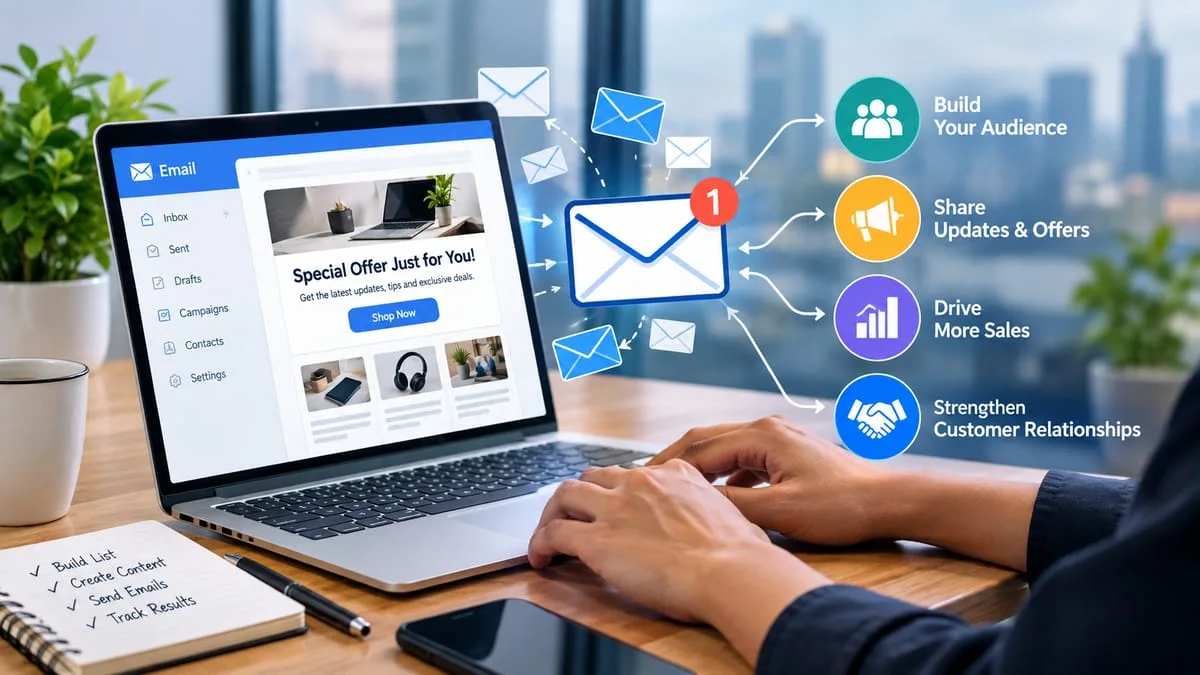
How Email Marketing Helps Businesses Connect With Customers
Email marketing simply means using email to communicate with customers and people who may become customers in the future. A business can use emails to share offers, news, useful content, product information, and updates.
One good thing about email is that it gives businesses a direct way to stay in touch with their audience. When someone joins an email list, the business can continue talking to that person instead of losing contact after one website visit.
Businesses can also send different emails to different groups of people. For example, a clothing store can send new product updates to regular customers and a special offer to people who have not purchased anything recently.
Why Do Businesses Use Email Marketing?
Businesses use email for many different reasons. Some want to get new leads, some want to sell more products, while others want to stay connected with their existing customers.
Building Customer Relationships
A business does not need to sell something in every email. Sometimes, sharing useful information is enough to keep people interested.
For example,
a company can send simple tips, helpful guides, industry news, or useful updates. This regular communication can help customers remember the business.
This is especially useful when customers need some time before buying something. Instead of losing contact with them, the business can continue sharing useful information until they are ready to make a decision.
Promoting Products and Services
Businesses can also use emails to tell people about new products, services, discounts, and special offers.
For example,
an online clothing store can send an email about its new collection. A software company can tell its customers about a new feature or plan.
The email should clearly explain what is being offered. It should also give readers an easy next step, such as visiting the website, checking a product, or contacting the business.
Getting and Nurturing Leads
Not everyone who visits a website is ready to buy something immediately. Some people may need more information before making a decision.
Businesses can collect email addresses through signup forms, free guides, newsletters, free trials, or useful resources. After that, they can send helpful emails to keep those people interested.
This is called lead nurturing. The idea is simple: instead of asking for a sale immediately, the business slowly builds interest and trust.
Keeping Existing Customers
Getting a new customer is important, but keeping existing customers is also useful for a business.
Businesses can send product updates, special offers, reminders, recommendations, and helpful information to previous customers. This can encourage them to come back again.
For example,
an online food business can send recommendations based on what a customer has ordered before.
What Are Email Campaigns?
An email campaign is a planned group of emails created for a specific purpose. The purpose could be selling a product, getting leads, promoting an event, or keeping customers engaged.
Before starting a campaign, a business should decide who will receive the emails and what it wants people to do after reading them.
Welcome Email Campaigns
A welcome campaign starts when someone joins an email list or signs up for a service.
The first email can introduce the business and explain what the person can expect. Later emails can share useful information, products, or important steps.
A simple welcome campaign can help create a good first connection with a new subscriber.
Promotional Email Campaigns
Promotional campaigns are mainly used to promote products, services sales or special offers.
For example,
an online store may run a festival sale. It can send one email about the sale, another reminder, and one final email before the offer ends.
But businesses should avoid sending too many promotional emails. If every email is about selling, people may stop opening them.
Lead Nurturing Campaigns
Lead nurturing campaigns are made for people who have shown interest but are not ready to buy yet.
A business can send useful guides, product information, case studies, tips, and answers to common questions.
This gives the person more information and can help them understand the product or service before making a decision.
How Newsletters Help Businesses
Newsletters are another common way to stay connected with an audience. A newsletter can include useful tips, company news, articles, updates, announcements, and sometimes special offers.
For example,
a digital marketing company can send a monthly newsletter with simple marketing tips, industry updates, and useful resources.
Newsletters work better when people know what kind of information they will receive. Sending them regularly can also help keep the business fresh in the customer's mind.
Why Personalization Matters
People usually pay more attention when an email feels relevant to them. This is where personalization can help.
Personalization is not only about using someone's name. Businesses can also use information such as previous purchases, interests, location, and past interactions.
For example,
an online bookstore can suggest books based on what a customer bought before. A travel company can send offers related to places someone has shown interest in.
Businesses can also divide their email list into smaller groups. This is called segmentation. It helps businesses send more suitable content to different types of customers.
What Should a Good Marketing Email Include?
A good email does not need to be complicated. It should be simple, clear, and easy to read.
A Simple Subject Line
The subject line is one of the first things people see. It should clearly tell readers what the email is about.
A short and honest subject line can make it easier for people to understand why they should open the email.
Useful Content -
The email should give people something useful. This could be information about a product, a helpful tip, an offer, or an important update.
Long blocks of text can be difficult to read, especially on a mobile phone. Short paragraphs and simple language can make the email easier to understand.
A Clear Call to Action -
A call to action tells the reader what to do next.
It could be something like Shop Now,” “Learn More,” “Book a Call,” or “Visit Our Website.”
A clear CTA makes the next step easy for the reader.
How Businesses Track Email Performance
Sending emails is only one part of the process. Businesses should also check how people respond to their emails.
Open Rate -
Open rate shows how many people opened an email. It can give businesses an idea of whether their subject line attracted attention.
However, open rates should not be looked at alone because technical factors can affect how email opens are measured.
Click-Through Rate -
Click-through rate shows how many people clicked a link or button inside an email.
For example,
if an email promotes a product, the business can check how many people clicked the product link.
Conversion Rate -
Conversion rate shows what people did after clicking.
For example,
the business may check how many people purchased a product, filled out a form, booked a service, or signed up for something.
This helps businesses understand whether their emails are actually helping them reach their goals.
Unsubscribe and Bounce Rate -
Businesses should also keep an eye on unsubscribes and bounced emails.
If many people unsubscribe, the business may need to check its content or how often it sends emails.
A high bounce rate can mean that some email addresses are no longer valid.
Simple Tips for Better Email Campaigns
Businesses should build their email list properly and get permission before sending marketing emails. Buying random email lists is usually not a good way to build a real audience.
Emails should also work well on mobile phones because many people read emails on their phones.
Sending emails at a regular time can also help Sending too many emails can annoy people while sending too rarely may make them forget about the business.
Businesses can also test different subject lines, content, buttons, and sending times By checking the results, they can understand what their audience likes.
Most importantly, every email should have a clear purpose. Before sending one, the business should know what it wants the reader to understand or do.
Email Marketing With Other Digital Marketing Channels
Email does not have to work alone. Businesses can use it with SEO social media, paid advertising, and content marketing.
For example,
a business can send its latest blog post to its email subscribers. It can also encourage social media followers to join its newsletter.
Paid ads can bring new people to a website, while email can help the business stay connected with those visitors later.
Using different channels together can make the overall marketing strategy more useful.
Common Email Marketing Mistakes
One common mistake is sending too many sales emails. If every message asks people to buy something, they may lose interest.
Another mistake is sending the same email to everyone. Different customers have different needs, so dividing the audience into groups can make emails more useful.
Businesses should also make sure their emails look good on mobile devices. If the email is difficult to read or the buttons are hard to tap, people may leave without taking action.
Using misleading subject lines is another mistake. Getting one extra click is not worth losing the trust of customers.
Conclusion
Email marketing gives businesses a simple way to stay connected with their audience. It can help with customer relationships, product promotion, lead generation, newsletters, and customer retention.
The main goal should not be to send as many emails as possible. Businesses should focus on useful content, personalization, clear messages, and regular performance tracking.
If a business needs help with its digital marketing strategy TZAP Marketing can help with marketing campaigns, content, SEO, social media, and other online marketing services. With the right plan, email can become a useful part of a business's overall digital growth.
Frequently asked questions
What is email marketing?
Email marketing is a way for businesses to communicate with customers and potential customers through emails.
Why is email marketing important for businesses?
What is an email campaign?
An email campaign is a planned series or group of emails created for a specific marketing goal.
What is a newsletter?
A newsletter is a regular email that shares useful information, company updates, articles, tips, or offers with subscribers.
How does personalization work in email marketing?
Personalization uses customer information, such as interests or previous purchases, to send more relevant emails.
How can businesses measure email performance?
Businesses can check metrics such as open rate, click-through rate, conversion rate, bounce rate, and unsubscribe rate.
How often should a business send marketing emails?
There is no fixed number for every business. The best frequency depends on the audience, content, and type of business. The main goal is to stay useful without sending too many emails.