1. Understand Your App Requirements First
Before contacting an app development company, clearly define what you want to build. Good planning helps developers understand your needs and gives you a better way to compare proposals. It can also reduce changes, delays, and unexpected costs later.
Define Your Main Business Goal
Start by writing the main reason for creating the app. You may want to sell products, accept bookings, provide online services, improve customer support, or create a digital product.
Your goal will help the development team suggest features that support your business. It also helps you explain your project clearly when speaking with different companies.
List Your Important Features
Write down the features your users will need. These could include registration, login, search, payments, chat, booking, notifications, location services, or an admin panel.
Divide the features into two groups: must-have features and future features. This can help you keep the first version focused and easier to manage.
Know Your Target Users
Think about who will use the app and what problems they want to solve. An app for students may need simple navigation and learning tools, while an e-commerce app may need product search, payments, and order tracking.
Understanding your users helps the development team create a better user experience.
2. Check Experience, Portfolio, and Previous Work
A company’s past work can help you understand its development skills and project experience. However, do not judge a company only by the number of years it has been in business.
When learning How to Choose the Right App Development Company, check whether its previous work is relevant to your project, whether the apps are still available, and whether the team has experience with similar features.
Look for Relevant Experience
Ask whether the company has developed apps with features similar to yours. Experience in your industry can be useful because the team may already understand common user needs, workflows, and technical challenges.
For example, a company that has worked on booking apps may already understand calendars, notifications, payments, and customer accounts.
Study the Portfolio
Do more than look at screenshots. If possible, download published apps and test them yourself.
Check the design, navigation, speed, features, and overall user experience. Also ask what parts of each project the company actually handled.
A live app can give you more useful information than a simple portfolio image.
Ask for Client References
When appropriate, ask for references from previous clients. You can ask about communication, timelines, quality, problem solving, and support after launch.
Client feedback should be one part of your research, along with the portfolio, proposal, and development process.
3. Evaluate Technical Expertise and Custom Development
Technology affects app performance, security, maintenance, and future updates. A development partner should have the technical skills needed for your platform, features, and expected number of users.
Do not choose technology only because it is popular. The company should explain why its recommended technology is suitable for your project.
Check Platforms and Technology
Ask whether the team works with Android, iOS, cross-platform frameworks, backend systems, databases, APIs, cloud services, and other tools your project needs.
The company should explain why a particular technology fits your app instead of simply naming tools. This helps you understand the technical plan even if you are not a developer.
Consider Custom App Development
If your business has unique workflows or special features, ask about custom app development. A custom solution can be planned around your business processes and users.
For example, a business may need a special booking system, customer dashboard, payment process, or connection with an existing business system. In such cases, a custom solution may be more suitable than a basic template.
Understand the Development Process
Ask how the company handles planning, UI/UX design, coding, testing, revisions, and app store submission.
A clear process should show what happens at each stage and when you will review the work. Also ask who will manage the project and who will be responsible for technical decisions.
4. Compare Pricing, Scope, and Overall Value
Price matters, but the lowest quote is not always the best fit for a project. Different companies may quote different amounts because their scope, technology, team size, testing, and support are different.
A key part of How to Choose the Right App Development Company is understanding exactly what the quoted price includes.
Request a Detailed Proposal
Ask each company for a written proposal. It should explain the features, development approach, estimated timeline, technology, payment stages, and included services.
A detailed proposal makes it easier to identify differences between companies. It also gives you something to review before making a contract.
Check Extra and Ongoing Costs
Ask whether the price includes design, testing, hosting, third-party tools, app store support, maintenance, and updates.
Some costs may appear after launch, so ask about them before signing an agreement. This helps you prepare a realistic budget and avoid unexpected expenses.
Compare Value, Not Only Price
A lower price may come with a smaller scope or fewer support services. A higher price may include features you do not need.
Compare the complete package, including experience, technology, development work, testing, communication, security, and support. This gives you a clearer view of what you are actually paying for.
5. Review Communication and Project Management
Clear communication is important throughout mobile app development. Even a technically skilled team can face project problems if requirements, feedback, deadlines, and responsibilities are not clear.
For businesses learning How to Choose the Right App Development Company, communication should be checked before signing a contract, not after development has already started.
Ask About Communication Channels
Find out whether the team uses email, phone calls, video meetings, messaging apps, or project management tools.
Ask who your main contact will be and how often you will receive updates. Regular communication can help you identify issues earlier and keep the project moving.
Understand the Project Timeline
Ask for major milestones rather than only a final launch date.
A plan may include research, design, development, testing, revisions, and launch. Ask what could affect the timeline and how delays or changes will be handled.
Confirm Your Responsibilities
You may need to provide content, brand information, product details, approvals, or testing feedback.
Ask what the company needs from you at each stage. Clear responsibilities on both sides can reduce delays and unnecessary confusion.
6. Check Security, Testing, and Post-Launch Support
Security and support should be discussed before development begins. An app may handle passwords, personal details, payments, business information, or other sensitive data.
Security is also an important part of How to Choose the Right App Development Company because security planning should continue from development through maintenance.
Ask About App Security
Ask how the company protects user data, manages authentication, secures APIs, controls permissions, and stores sensitive information.
For a useful security reference, businesses can review the OWASP Mobile Application Security Verification Standard (MASVS). It provides guidance for important mobile security areas such as secure storage, authentication, network communication, privacy, and code quality.
Review Testing Methods
Ask whether the company tests the app on different devices, screen sizes, operating systems, and network conditions.
Testing should cover important features, performance, usability, crashes, and common errors. A clear testing process can reduce problems after release.
Understand Post-Launch Support
Ask what happens after your app goes live. Support may include bug fixes, security updates, operating system compatibility, performance improvements, monitoring, and new features.
Check how long support lasts, what is included, and what additional work will cost. Clear support terms can help you plan for the future.
7. Compare Companies Before Signing the Agreement
After checking the main factors, compare your shortlisted companies using the same questions. This makes the process more organized and helps you focus on information instead of choosing based on one sales conversation.
Use a Simple Comparison Checklist
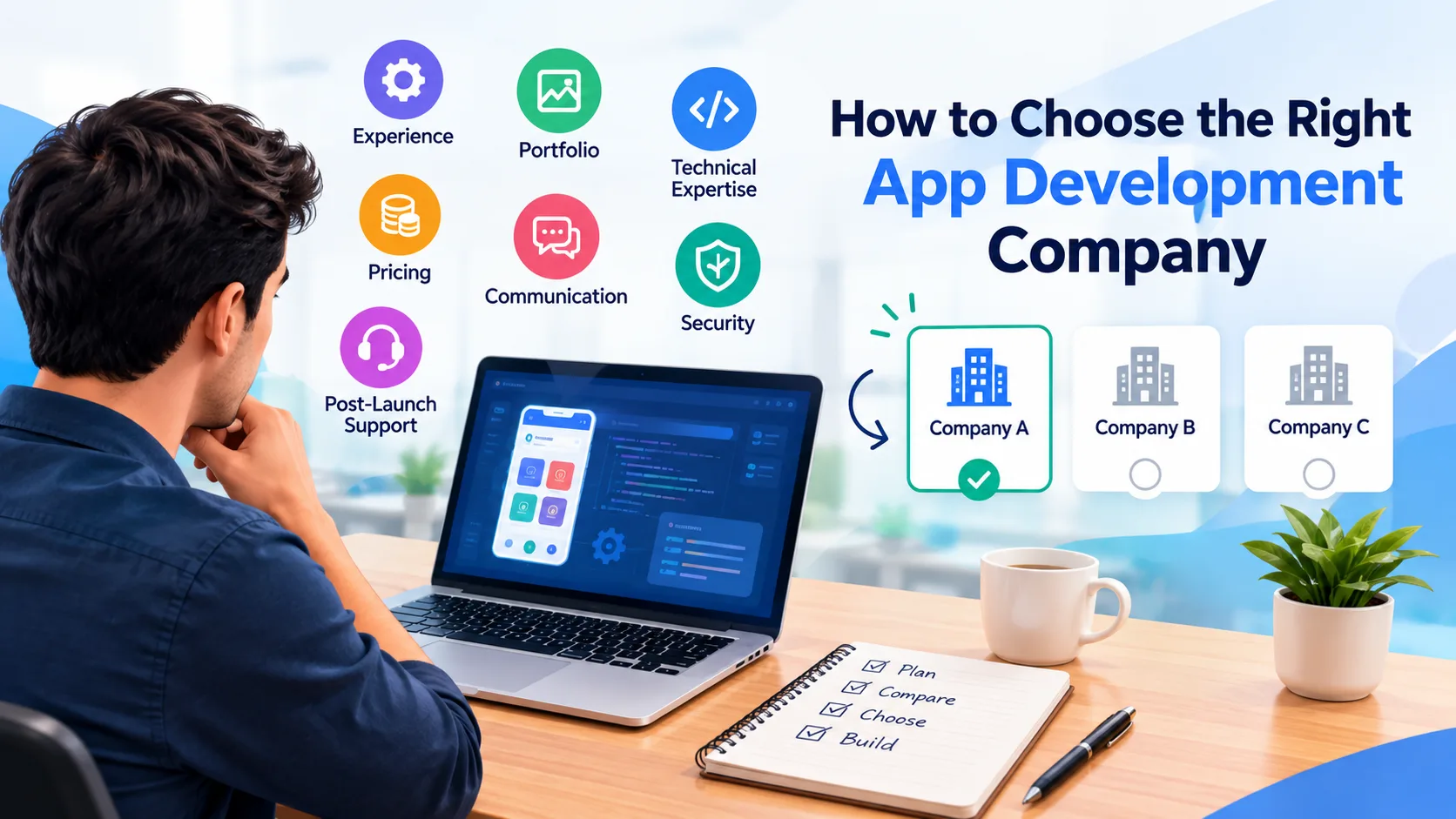
Create a table with experience, portfolio, technology, pricing, timeline, communication, security, testing, and support.
Give each company the same project information and ask for similar details. This makes differences easier to understand.
You can also compare their proposals against your original requirements before making a final decision.
Look for Warning Signs
Pay attention if a company avoids written details, gives an unclear quote, promises an unrealistic timeline, cannot explain its process, or avoids questions about security and ownership.
These signs do not automatically prove poor service, but they are reasons to ask more questions before signing.
Read the Contract Carefully
Before signing, check the project scope, payment terms, change requests, ownership of source code and designs, confidentiality, maintenance, support, and termination conditions.
Important promises made during meetings should appear in writing. If something is unclear, ask for an explanation before work starts.
A practical final step is to ask each shortlisted company to explain how it would approach your project. Compare the answers against your actual requirements.
How to Choose the Right App Development Company should be based on clear information from every company you are considering. The goal is to understand what each company offers and whether its process matches your business needs.
Conclusion
How to Choose the Right App Development Company becomes much simpler when you follow a clear checklist. Start with your business goal, target users, and required features. Then compare experience, portfolio, technical expertise, custom app development skills, pricing, communication, security, testing, and post-launch support.
Ask the same practical questions to each company and review proposals carefully. A suitable development partner should explain its process clearly, understand your requirements, and provide clear terms for future maintenance.
Taking enough time to compare app development services can help you plan your project with clearer expectations and fewer surprises.
Frequently asked questions
What should I check before hiring an app development company?
Check its relevant experience, portfolio, technical skills, pricing, communication process, security practices, testing process, and post-launch support. Also review the contract and ownership terms before starting.
How much does mobile app development cost?
The cost depends on features, platforms, design, technology, integrations, development time, testing, and support. Ask companies for detailed proposals instead of comparing only the final price.
Why is post-launch support important?
An app may need bug fixes, security updates, performance improvements, and compatibility updates after launch. A clear support plan helps keep the app working as your business and mobile platforms change.