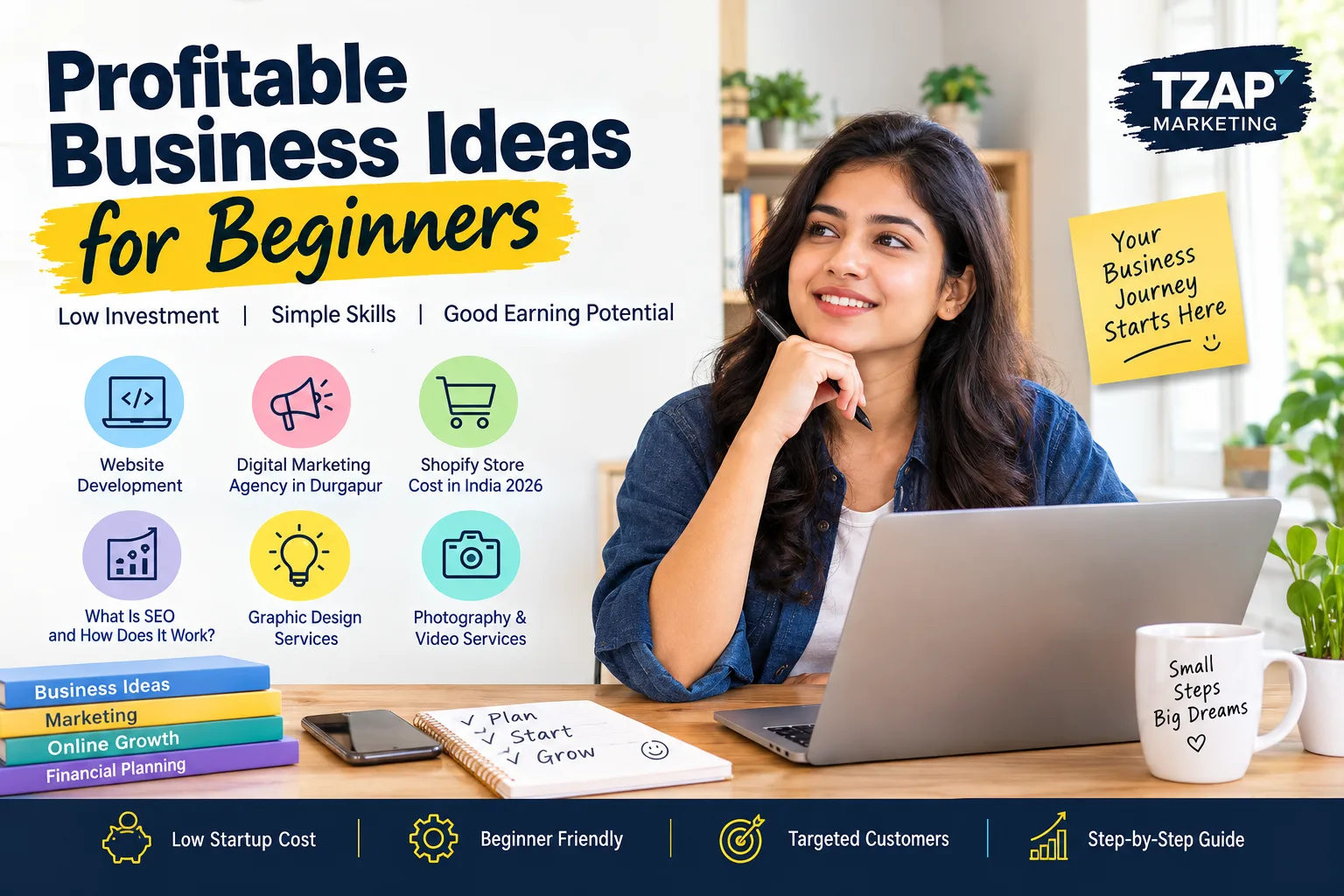
How to Choose the Right Business Idea
Before starting a business, take some time to understand what you can offer. A good business idea should solve a real problem or provide something people already need.
Consider these four points:
Startup cost: How much money do you need to begin?
Skills: What do you already know, and what can you learn?
Target customers: Who will buy your product or service?
Demand: Are enough people interested in what you offer?
You should also think about how much time you can give to the business. Some businesses can be managed part-time, while others require daily attention.
Starting small can reduce financial pressure. Once you understand your customers and get regular sales, you can slowly invest more money into the business.
1. Digital Marketing Services
Digital marketing services can be a good option for beginners who enjoy working with websites, social media, content, or online promotion.
You can provide services such as social media management, basic SEO, content writing, Google Business Profile management, or online advertising support.
Startup cost: Low. A computer, internet connection, and basic software are usually enough.
Required skills: Social media, content creation, basic SEO, communication, and marketing knowledge.
Target customers: Local shops, restaurants, startups, professionals, and small companies.
How to start: Learn the basic skills, create a few sample projects, and approach local businesses. You can begin with one service and add more services as your experience grows.
For beginners who want to build an online service business, working with local companies can be a practical way to find the first few customers.
Useful Resource for Local Business Owners
For businesses that want to understand local promotion and online growth, you can also connect this section with your Digital Marketing Agency in Durgapur article. readmore
2. Website Development Services
Many businesses need a website to show their products, services, contact details, and business information. This creates opportunities for people who know basic website development.
Beginners can start by creating simple websites for local businesses, professionals, shops, and service providers.
Startup cost: Low to moderate.
Required skills: HTML, CSS, website builders, basic design, and communication.
Target customers: Small businesses, freelancers, schools, restaurants, and local service providers.
How to start: Learn basic website development and create two or three sample websites. Show these samples to potential customers and offer simple packages.
You can begin with small websites and later learn advanced development, online stores, booking systems, and website maintenance.
A business website can also become a starting point for selling products online. Readers interested in creating an online store can explore: readmore
3. Home-Based Food Business
A home-based food business can work well in areas where people want homemade snacks, meals, cakes, sweets, or special food items.
You do not always need a restaurant to sell food. Depending on local rules, you can prepare products from home and take orders through phone calls, messaging platforms, or social media.
Startup cost: Moderate.
Required skills: Cooking, food preparation, packaging, customer service, and basic costing.
Target customers: Students, office workers, families, small events, and local customers.
How to start: Select a small menu, calculate ingredient costs, decide your selling price, and test your products with a small group of customers.
Quality, cleanliness, packaging, and timely delivery are important for building repeat customers.
4. Tuition or Online Teaching
If you are good at a school subject or a particular skill, teaching can become a simple service business.
You can offer tuition for school subjects, spoken English, computer basics, mathematics, or other skills you understand well.
Startup cost: Very low.
Required skills: Strong subject knowledge, communication, patience, and basic teaching ability.
Target customers: School students, parents, college students, and beginners.
How to start: Choose one subject or skill and decide whether you want to teach from home, at the student's home, or online.
Start with a small number of students and focus on providing clear lessons and regular practice.
5. Freelance Content Writing
Content writing is another option for people who enjoy writing. Businesses need articles, website pages, product descriptions, social media posts, and other written content.
Startup cost: Very low.
Required skills: Writing, grammar, research, editing, and basic SEO knowledge.
Target customers: Websites, agencies, online stores, startups, bloggers, and local businesses.
How to start: Create a small portfolio with sample articles on different topics. Then contact businesses or use freelance platforms to find projects.
Beginners should focus on producing useful and easy-to-read content instead of trying to handle too many topics at once.
6. Social Media Management
Small businesses often want to stay active on social media but may not have enough time to create posts and respond to customers.
A social media manager can help businesses plan posts, create simple graphics, write captions, reply to messages, and track basic results.
Startup cost: Low.
Required skills: Social media platforms, writing, basic design, planning, and communication.
Target customers: Restaurants, salons, clothing stores, gyms, local shops, and service providers.
How to start: Learn how different platforms work and create sample posts for a few imaginary businesses. Then approach local businesses with a simple monthly service package.
7. Reselling Products Online
Reselling allows beginners to sell products without manufacturing them. Depending on the business model, you can source products from wholesalers or suppliers and sell them to customers at a higher price.
Popular categories can include clothing, home products, accessories, stationery, and useful daily items.
Startup cost: Low to moderate.
Required skills: Product research, pricing, customer service, basic marketing, and order management.
Target customers: Online shoppers and customers in your local area.
How to start: Select one product category, compare supplier prices, calculate delivery and other costs, and test a small number of products before investing more money.
Do not purchase large quantities until you understand customer demand.
8. Graphic Design Services
Businesses need graphics for social media posts, advertisements, presentations, menus, banners, and websites.
If you enjoy design, you can offer simple graphic design services to small businesses and individuals.
Startup cost: Low.
Required skills: Basic design, typography, layout, image editing, and creativity.
Target customers: Businesses, students, content creators, restaurants, event organizers, and professionals.
How to start: Practice by creating sample posters, social media designs, logos, and promotional graphics. Build a portfolio and contact potential customers.
You can begin with simple designs and increase your services as your skills improve.
9. Cleaning Services
Cleaning services can be started with basic equipment and can serve both homes and businesses.
Customers may need regular home cleaning, office cleaning, shop cleaning, or move-in and move-out cleaning.
Startup cost: Low to moderate.
Required skills: Cleaning techniques, time management, reliability, and customer service.
Target customers: Families, offices, shops, rental properties, and small businesses.
How to start: Buy essential cleaning supplies, decide which services you will provide, and create clear pricing. Start within your local area and focus on getting repeat customers.
Reliability is especially important because customers need to trust people working in their homes or workplaces.
10. Photography and Video Services
Photography and video services can be useful for birthdays, small events, products, businesses, social media content, and local functions.
Beginners do not necessarily need expensive equipment at the beginning. A good smartphone can be enough for some basic services, depending on the customer's requirements.
Startup cost: Low to moderate, depending on equipment.
Required skills: Photography, video recording, editing, lighting, and communication.
Target customers: Families, local businesses, event organizers, restaurants, and content creators.
How to start: Practice by taking product photos, short videos, and event-style shots. Create a simple portfolio and offer affordable packages to your first customers.
As your business grows, you can invest in better cameras, lights, microphones, and editing equipment.
How to Start a Small Business Step by Step
After choosing one of these Profitable Business Ideas for Beginners, avoid trying to launch everything at the same time. A simple plan can make the process easier.
Step 1: Choose One Idea
Pick a business that matches your skills, interest, budget, and available time.
Step 2: Research Your Customers
Find out who needs your product or service and what they are currently paying for similar options.
Step 3: Calculate Your Costs
Write down equipment, materials, marketing, delivery, software, and other possible expenses. This helps you understand how much money you actually need.
Step 4: Start With a Small Test
Instead of spending all your money immediately, test your product or service with a small group of customers.
Step 5: Set a Simple Price
Your price should cover your costs and leave room for profit. Compare similar businesses, but do not copy their prices without understanding your own expenses.
Step 6: Promote Your Business
Use social media, local groups, referrals, business listings, and personal contacts to reach potential customers.
Step 7: Improve Based on Feedback
Ask customers what they liked and what could be improved. Use their feedback to make your product or service better.
Common Mistakes Beginners Should Avoid
Starting a business does not guarantee immediate profit. Many beginners make mistakes because they focus only on the idea and not on the business process.
Avoid these common problems:
Spending too much money before testing demand
Choosing a product without researching customers
Setting prices without calculating costs
Trying to serve everyone
Ignoring customer feedback
Poor communication with customers
Expecting quick profits
Not keeping records of sales and expenses
A small business becomes stronger when the owner understands both customers and costs.
How to Increase Your Business Income
Once your business starts getting customers, focus on improving the value you provide.
You can increase income by adding related services, creating packages, encouraging repeat purchases, improving customer service, and asking satisfied customers for referrals.
For example, a website developer can offer website maintenance. A content writer can offer SEO content packages. A home food business can introduce weekly meal plans.
The goal should not only be to get more customers. It should also be to build long-term relationships with existing customers.
Learn More About SEO and Online Growth
A strong online presence can help many small businesses reach customers and explain their services clearly. Readers who want to understand how search visibility works can readmore
For additional business, website, SEO, and marketing resources, TZAP Marketing also provides practical information for businesses looking to improve their online presence.
Conclusion
There are many Profitable Business Ideas for Beginners that can be started with limited money and simple skills. The right choice depends on your budget, knowledge, location, customer demand, and the amount of time you can give.
You do not need to build a large company on the first day. Start with one clear service or product, test it with real customers, control your expenses, and improve step by step. With patience, good customer service, and consistent effort, a small business can gradually become a stable source of income.
For more practical guidance on websites, SEO, business growth, and online marketing, explore TZAP Marketing resources.
Frequently asked questions
What are some profitable business ideas for beginners?
Some beginner-friendly options include website development, digital marketing services, content writing, social media management, graphic design, online reselling, tuition, cleaning services, and photography.
Can I start a business with a low budget?
Yes. Many businesses can be started with a low budget, especially service-based businesses such as content writing, tuition, social media management, and basic website development.
How do I choose the right business idea?
Choose an idea based on your skills, budget, available time, customer demand, and personal interest. It is also useful to test the idea with a small group of customers before investing more money.
How can beginners get their first customers?
Beginners can find their first customers through referrals, local businesses, social media, online groups, personal contacts, and business listings. Creating a small portfolio can also help build trust.
How long does it take for a beginner business to become profitable?
There is no fixed time. It depends on the business type, startup costs, customer demand, pricing, marketing, and consistent effort. Starting small and carefully managing expenses can help reduce unnecessary losses.